How Nigeria’s Budget Structure Fuels the ₦8 Trillion Controversy

The controversy over Nigeria’s alleged “shadow budget” is not really about whether ₦8 trillion was stolen, but about how the country counts, classifies, and communicates public money, and in that sense the dispute reveals a deeper conflict between legal form and public perception. To begin with, the spark came from the IMF’s 2026 Article IV Consultation and comments attributed to its representative in Nigeria, which suggested that expenditure amounting to roughly 2% of GDP was executed outside the main approved budget. That figure immediately entered political discourse as proof of a parallel fiscal system, because for a populace already sensitive to inflation above 20%, a 26.25% MPR, and debt service crowding out capital spending, the idea of trillions spent without legislative oversight confirmed existing distrust of government accounting.
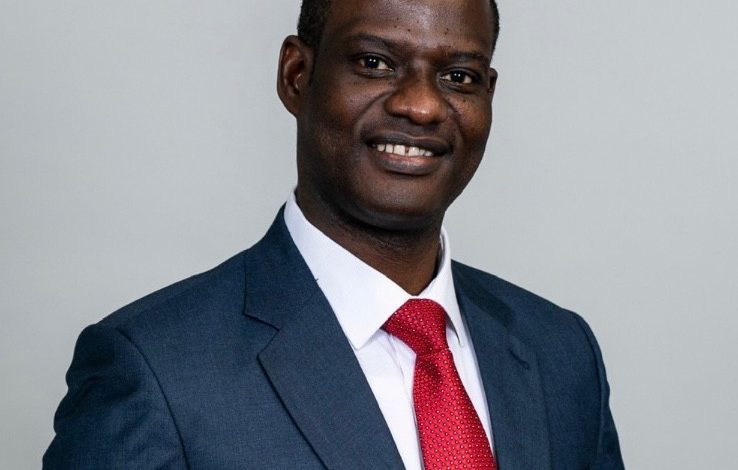
In response, the Federal Government through Finance Minister Taiwo Oyedele denied operating any “shadow budget” and grounded its defence in Sections 80 to 83 and 162 of the 1999 Constitution, which stipulate that public funds can only be withdrawn and spent as authorized by the National Assembly. Consequently, the government argues that every naira in question was spent under Appropriation Acts, Supplementary Appropriation Acts, or other statutes establishing first-line charges, cost of collection for revenue agencies, separate budgets for the FCT and parastatals, special interventions, and debt service obligations. Therefore, what critics label “off-budget” are in fact statutory transfers and mechanisms that have legal backing, are disclosed in FAAC reports, and are subject to audit, even if they do not appear as line items in the annual Appropriation Act that citizens and analysts typically read.
Yet the legal validity of those expenditures does not fully resolve the controversy, because the core issue is visibility rather than illegality. Indeed, Nigeria’s fiscal framework is fragmented by design: while the Budget Office publishes the Appropriation Act, other spending channels run in parallel through laws that pre-empt federation revenue, authorize agencies to retain collection costs, or approve separate agency budgets. As a result, when the IMF consolidates Nigeria’s accounts using Government Finance Statistics Manual 2014 standards to capture the whole of general government, items like TETFUND, UBEC, NDDC, energy subsidies, and service-wide votes show up as public expenditure that did not pass through the headline budget document. For that reason, the ₦8 trillion figure is less evidence of illegality and more a reflection of classification differences between Nigeria’s legal-budget presentation and international statistical reporting.
Nevertheless, classification has political consequences, because money that is legal but not consolidated in one place escapes the same level of parliamentary and public scrutiny given to MDAs in the Appropriation Act. Thus, while the National Assembly may debate the Ministry of Health’s allocation in detail, statutory transfers to development commissions or retention by FIRS are processed with far less public interrogation, and this creates what citizens experience as a fiscal core and a fiscal periphery. Moreover, service-wide votes and emergency interventions, though appropriated, are often disbursed without timely, granular disclosure, which allows the “shadow” label to persist even when the process is constitutional. In that light, the IMF’s observation about comprehensiveness and timing of fiscal reporting is not an accusation of theft but a technical call for Nigeria to present a unified fiscal picture so that trade-offs are explicit.
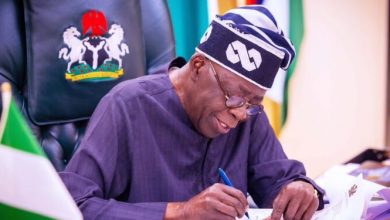
Furthermore, President Tinubu’s own request to the National Assembly on Dec 19, 2025 to end multiple and overlapping budgets acknowledges the same fragmentation the Fund highlighted, which indicates that the government itself recognizes the governance risk of dispersed appropriation. Still, until a single Appropriation Act consolidates FCT spending, statutory transfers, and special interventions, the public will continue to equate non-visible expenditure with unaccountable expenditure, regardless of the legal instruments behind it. In addition, the lag in Auditor-General reports on statutory agencies means that even lawful spending lacks timely value-for-money verification, and that audit gap reinforces the perception that money outside the main budget is money outside control.
Therefore, the real controversy is not whether ₦8 trillion was spent without law, but whether Nigeria’s budget system allows citizens and legislators to see the full cost of government in one place and trace it to results. Until then, technical differences in reporting will keep being interpreted as political deception, because in a democracy the appearance of opacity can be as damaging as opacity itself. Hence, resolving the “shadow budget” debate requires more than constitutional citations; it demands a consolidated budget, real-time disclosure of all statutory flows, and audits that are public and prompt, so that legality and transparency finally align.