International Breweries Proposes ₦191bn Clean-Up and Cash Return to Unlock Dividends

International Breweries Plc has told the Nigerian Exchange and its shareholders that it wants to reconstruct its share capital in a two-step move aimed at solving a problem that has lingered even after the brewer returned to profitability: it still cannot pay dividends.
The proposal, made under Section 131 of the Companies and Allied Matters Act 2020, will need approval from shareholders at the forthcoming Annual General Meeting and confirmation by the Federal High Court before it can take effect. At its heart, the plan is not about raising new money or cutting operations. It is about cleaning up the balance sheet so that future profits can actually reach investors.
As at the end of FY 2025, International Breweries was carrying accumulated losses of ₦191,032,749,000. Under Nigerian company law, dividends can only be paid out of distributable reserves, meaning retained earnings. No matter how well the company trades today, those historic losses sit like a block on the ability to declare any payout. The first part of the proposal therefore seeks to use part of the balance in the Share Premium Account to cancel out those accumulated losses. Share premium is the extra amount paid by investors above the nominal value of shares during past equity raises. Applying it to write off losses does not affect cash or day-to-day operations, but it resets retained earnings to zero. Once that is done, any profit made going forward can be distributed, restoring the company’s capacity to pay dividends and aligning its financial reporting with its current trading reality.
The second part of the plan goes a step further. After the losses are eliminated, the Board proposes to reduce the Share Premium Account again and return the balance to shareholders. The payout will be made pro-rata, so every ordinary shareholder will receive the same amount per share, with the total amount to be determined and approved by the Board. This is effectively a return of what management now considers excess capital. Over the years, International Breweries raised significant equity and built up a large share premium. With operations stabilizing and the backing of parent company Anheuser-Busch InBev, the world’s largest brewer with over 500 brands, the company believes it does not need all of that capital trapped on the balance sheet. Returning it gives shareholders immediate value while the business focuses on growth, brands and margins.
The implications of this move are both financial and perceptual. For shareholders, there are two potential gains. First is the immediate cash return, which comes at a time when consumer-goods stocks have been under pressure from FX volatility, high input costs and weak consumer spending. Second is the prospect of regular dividends resuming once the loss overhang is gone. That shift could change how the market prices IBPLC, moving it from a turnaround narrative to one where income and yield matter again.
For the company itself, total equity will reduce because share premium is part of shareholders’ funds. But the equity that remains will be more efficient. With the loss wiped out, metrics like return on equity should improve, and management will be judged on the profits it generates rather than on legacy losses. The court and regulators will have to be satisfied that enough capital remains to protect creditors and support working capital needs, which is why the process requires Federal High Court confirmation in addition to shareholder and regulatory approvals.
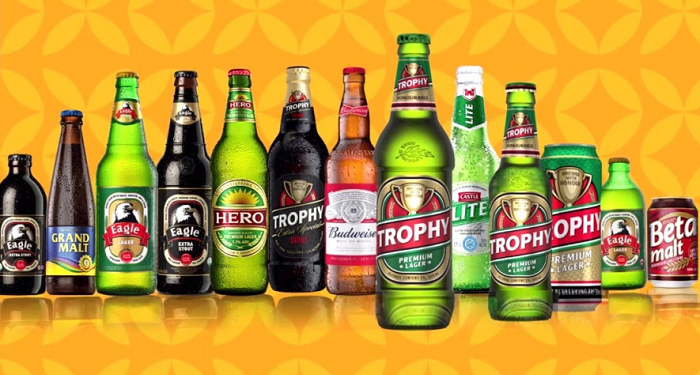
There is also a signaling effect. As a subsidiary of AB InBev, International Breweries’ decision suggests the parent is comfortable that the Nigerian business has moved past its most difficult period and can now begin normalizing shareholder returns. It also suggests confidence in the local operating environment and in the company’s portfolio of brands that are positioned around “bringing people together for a Future with More Cheers.”
Importantly, this reconstruction does not by itself sell more beer or lower costs. It does not change revenue or cash generation. What it does is remove structural barriers. For years, investors have watched profitability return but with no pathway to dividends. This proposal creates that pathway, while also putting cash back in their hands now.
The next steps will determine timing. Shareholders will vote at the AGM, after which the company will seek court sanction. The Board will also have to announce the exact amount to be returned per share once the total approved for distribution is finalized.
In essence, International Breweries is resetting its capital base to match its operational reality. The ₦191 billion write-off clears the path for future dividends. The capital return rewards patience. Together, they tell the market that the company sees its recovery as durable enough to start sharing profits again.