From Euphoria to Earnings: Nigeria’s Capital Market Reprices for Real Growth in H1 2026

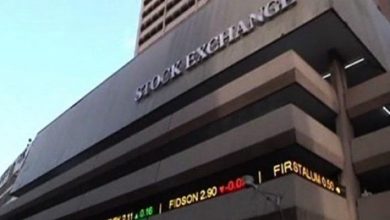
H1 2026 will be remembered as the moment the Nigerian capital market stopped chasing hype and started demanding proof. The numbers were loud: the NGX ASI up 47.43% YTD to 229,419.18 points, market capitalization crossing N147.28trn and breaching US$100bn for the first time since 2008. Jan–April felt like euphoria — a +20.36% surge in April alone driven by aggressive accumulation. Then June arrived with an 8.37% correction, and the market did something important: it called it “valuation discipline” instead of panic. That language matters, because it signals a shift from momentum to fundamentals.
The rally was not evenly earned. Leadership came from NGX 30 +90.21%, Banking +79.03%, Pension +71.26%, and Industrial Goods +59.48%. Insurance lagged at +15.57%, exposing a two-speed market where capital rushed to sectors with clear catalysts and abandoned those without. Banks benefited directly from the completed recapitalisation, with First HoldCo targeting a N1trn base. Insurers are now in a scramble to meet NAICOM’s July 2026 deadline via rights issues and M&A, and consolidation is inevitable. The market is rewarding balance sheets that can deploy capital, and punishing those that cannot.
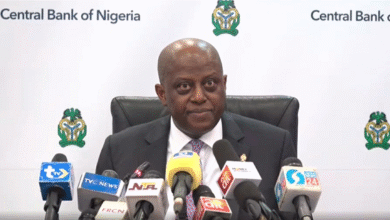
But the real story of H1 is regulatory force. Nigeria moved to T+1 settlement — first major African exchange to do so — cutting counterparty risk but also accelerating profit-taking. ISA 2025 expanded SEC’s enforcement teeth. CBN’s new guidelines for Financial Holding Companies and the revocation of 46 weak MFB licenses sent a clear message: capital without governance is no longer welcome. The June banking sell-off was the price of that message. Even the SEC’s 24-hour intervention to halt an unauthorised “Dangote Refinery shares” offer shows regulators are no longer spectators. These are not cosmetic reforms. They are rewriting the rules of who gets to raise money and on what terms.
Corporate Nigeria responded. Index rebalancing brought in NASCON and Unilever, pushed out Oando and Transcorp. Lafarge became HBM Nigeria. Abbey Mortgage upgraded to a regional bank. Deap Capital rebranded into Critical Minerals Financing. On FMDQ, fixed income dominance continued with N125.01trn outstanding, as investors rotated into T-Bills and FGN Bonds. The NASD market also grew, NSI up 21.32% YTD, though momentum slowed in Q2.
Analyst sentiment tracked the same arc: Q1 was “Buy/Accumulate” across banks, oil & gas, industrials. By Q2 it turned selective — “Hold” — as valuations expanded and the question changed from “can it rally?” to “can it earn?”. Coverage narrowed to names that can show earnings delivery: First HoldCo, GTCO, Zenith, UBA, ACCESSCORP, Aradel, Seplat, Dangote Cement.
Which brings us to H2. The catalysts are real: deployment of fresh bank capital, insurance M&A, a potential Dangote Refinery listing by September, and NGX’s push for cross-border listings. But the risks are equally real: high interest rates, inflation, pre-election fiscal spending, oil volatility, possible FPI outflows, and a FTSE Russell review.
The interpretive takeaway is simple. H1 2026 was a repricing, not just a rally. The market has moved from sentiment to structure. Durability now depends on three things aligning: position — the actual earnings and capital strength of companies; choices — where management deploys new capital and what businesses they exit; and actions — regulatory implementation, not just announcements.
If corporate boards treat recapitalisation as a license to expand without efficiency, we will repeat the scale-without-profitability trap. If regulators enforce ISA 2025 and CBN guidelines consistently, trust returns and foreign capital stays. If not, June’s correction was just the first warning.
Bottom line: The record was about hope. The next phase will be about delivery. In 2026, the Nigerian market is no longer asking “how high?” It is asking “how real?”
H1 2026 will be remembered as the moment the Nigerian capital market stopped chasing hype and started demanding proof. The numbers were loud: the NGX ASI up 47.43% YTD to 229,419.18 points, market capitalization crossing N147.28trn and breaching US$100bn for the first time since 2008. Jan–April felt like euphoria — a +20.36% surge in April alone driven by aggressive accumulation. Then June arrived with an 8.37% correction, and the market did something important: it called it “valuation discipline” instead of panic. That language matters, because it signals a shift from momentum to fundamentals.
The rally was not evenly earned. Leadership came from NGX 30 +90.21%, Banking +79.03%, Pension +71.26%, and Industrial Goods +59.48%. Insurance lagged at +15.57%, exposing a two-speed market where capital rushed to sectors with clear catalysts and abandoned those without. Banks benefited directly from the completed recapitalisation, with First HoldCo targeting a N1trn base. Insurers are now in a scramble to meet NAICOM’s July 2026 deadline via rights issues and M&A, and consolidation is inevitable. The market is rewarding balance sheets that can deploy capital, and punishing those that cannot.
But the real story of H1 is regulatory force. Nigeria moved to T+1 settlement — first major African exchange to do so — cutting counterparty risk but also accelerating profit-taking. ISA 2025 expanded SEC’s enforcement teeth. CBN’s new guidelines for Financial Holding Companies and the revocation of 46 weak MFB licenses sent a clear message: capital without governance is no longer welcome. The June banking sell-off was the price of that message. Even the SEC’s 24-hour intervention to halt an unauthorised “Dangote Refinery shares” offer shows regulators are no longer spectators. These are not cosmetic reforms. They are rewriting the rules of who gets to raise money and on what terms.
Corporate Nigeria responded. Index rebalancing brought in NASCON and Unilever, pushed out Oando and Transcorp. Lafarge became HBM Nigeria. Abbey Mortgage upgraded to a regional bank. Deap Capital rebranded into Critical Minerals Financing. On FMDQ, fixed income dominance continued with N125.01trn outstanding, as investors rotated into T-Bills and FGN Bonds. The NASD market also grew, NSI up 21.32% YTD, though momentum slowed in Q2.
Analyst sentiment tracked the same arc: Q1 was “Buy/Accumulate” across banks, oil & gas, industrials. By Q2 it turned selective — “Hold” — as valuations expanded and the question changed from “can it rally?” to “can it earn?”. Coverage narrowed to names that can show earnings delivery: First HoldCo, GTCO, Zenith, UBA, ACCESSCORP, Aradel, Seplat, Dangote Cement.
Which brings us to H2. The catalysts are real: deployment of fresh bank capital, insurance M&A, a potential Dangote Refinery listing by September, and NGX’s push for cross-border listings. But the risks are equally real: high interest rates, inflation, pre-election fiscal spending, oil volatility, possible FPI outflows, and a FTSE Russell review.
The interpretive takeaway is simple. H1 2026 was a repricing, not just a rally. The market has moved from sentiment to structure. Durability now depends on three things aligning: position — the actual earnings and capital strength of companies; choices — where management deploys new capital and what businesses they exit; and actions — regulatory implementation, not just announcements.
If corporate boards treat recapitalisation as a license to expand without efficiency, we will repeat the scale-without-profitability trap. If regulators enforce ISA 2025 and CBN guidelines consistently, trust returns and foreign capital stays. If not, June’s correction was just the first warning.
Bottom line: The record was about hope. The next phase will be about delivery. In 2026, the Nigerian market is no longer asking “how high?” It is asking “how real?”