
CBN’s 26.5% Hold: Winning the Inflation Fight While Losing the Real Sector

CBN’s 26.5% Hold: Winning the Inflation Fight While Losing the Real Sector
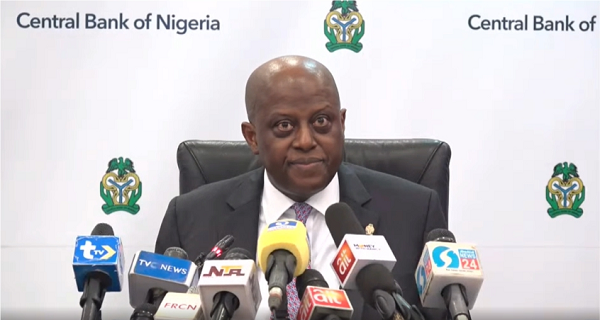
The Central Bank of Nigeria has chosen to stay the course. At its 306th MPC meeting on July 20-21, 2026, the Committee retained the Monetary Policy Rate at 26.5%, alongside an unchanged CRR of 45% for commercial banks, 16% for merchant banks, and a standing facility corridor of +50/-450bps. The logic is familiar: headline inflation eased marginally to 15.91% in June, external reserves climbed above $52 billion, the naira has stabilized, and the CBN wants to lock in those gains. But the decision has also reignited a harder debate — at what point does fighting inflation begin to cost more than inflation itself?
That is the paradox now staring the economy in the face. The CBN is using the most aggressive rate in decades to cool prices, and on paper it is working. Inflation is ticking down, core inflation fell to 15.92%, the 12-month average has moderated for six months, and FX stability has returned. Yet the tool doing that work, a 26.5% policy rate, has pushed commercial lending rates above 30%. For the real sector, that is not discipline. It is a chokehold.
Business leaders say it plainly. Sharon Nwosu, who runs a manufacturing outfit in Abuja, notes that most SMEs simply cannot borrow at those levels, and that companies are now spending more on servicing debt than on production, innovation, or hiring. Thomas Amusan of Kwik Consulting frames it as a trade-off that can no longer be ignored: “When interest rates remain elevated for an extended period, businesses postpone expansion, manufacturers face higher financing costs and private sector investment slows.” The complaint is not about inflation control in principle. It is about timing and balance. With food inflation still climbing to 17.52% due to supply and logistics problems that interest rates cannot fix, rate hikes are doing little to address the actual drivers of price pressure, while doing a lot to starve productive sectors of capital.
The data tells a contradictory story. Despite the cost of credit, CBN figures show private sector credit still rose to ₦81.04 trillion in May from ₦80.59 trillion in April. Government credit also expanded. Lending has not stopped, but it has become more expensive and more selective. Banks are lending, mostly to large corporates and government, while the SMEs that employ most Nigerians are priced out. That is why the growth we are seeing feels narrow. GDP expanded 3.89% in Q1, driven by telecoms, financial services and trade — sectors less dependent on cheap bank debt — while manufacturing and agriculture continue to complain of unaffordable financing.
Supporters of the hold argue that predictability matters. Investment banker Tunde Adeyemi says retaining the rate provides policy clarity that can keep investors on the sidelines from bolting, and analyst Hassan Oyeleke argues that price stability must come first: “Once inflation shows a convincing downward pattern, then monetary easing becomes feasible.” They have a point. No business plans in a volatile FX and inflation environment. The CBN’s credibility is part of what has kept reserves strong and the naira from sliding again.
But credibility without growth is a hollow victory. The CBN itself acknowledges the risk. Its communiqué flagged the Middle East conflict and energy price pass-through as the key external threat, not excess domestic demand. In other words, the inflation we are fighting is largely supply-driven. Raising rates cannot produce more food, fix transport costs, or increase oil output. What it can do, and is doing, is make capital prohibitively expensive at exactly the moment the government needs the private sector to invest in agriculture, manufacturing and technology to broaden the economy beyond oil.
This is the sacrifice embedded in the 26.5% rate. The CBN is protecting macroeconomic stability today by accepting weaker real-sector activity tomorrow. It is prioritizing investor confidence and exchange rate stability over immediate job creation and industrial expansion. That may be the right call in a fragile moment, but it cannot be a permanent one.
The way out is not to abandon tightening abruptly. Amusan’s call is measured: begin discussing how to gradually reduce rates if inflation continues to decelerate. With reserves at an 11-month import cover and the policy rate still more than 10 points above inflation, the CBN has room to signal that easing will come, conditional on two or three more months of sustained disinflation.
Until then, Nigeria is running an economy with two speeds. Macro indicators are improving. The real sector is treading water. The MPC has bought stability. The next test is whether it can now afford to buy growth without losing the stability it just secured. If not, the fight against inflation risks becoming a fight against the very businesses meant to drive the recovery.