
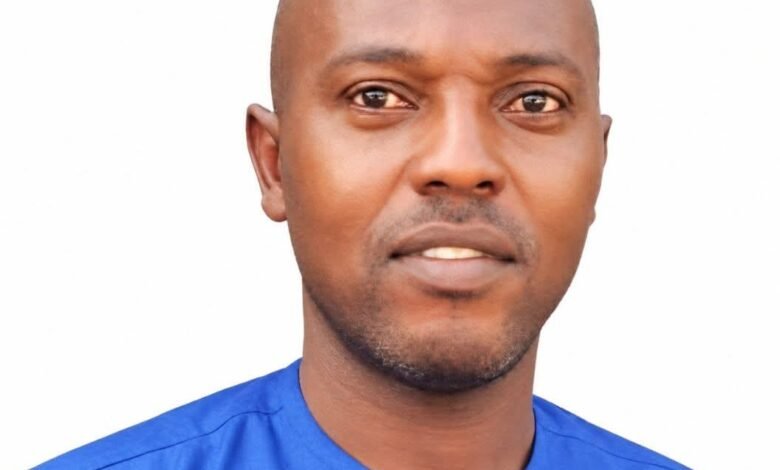
So long, Olatunde Joseph Ojelabi, 1980 to 2026, is a name that should compel Lagos State and the management of the Lagos State University Teaching Hospital to look deeply into the mirror. On the morning of Sunday the 6th of September 2026, a man woke up with his family to do what thousands of families do on the first Sunday of the month, to go to church and give thanks for the gift of life. His own birthday was the next day, September 7th, when he would have turned 46. That journey never ended in thanksgiving. Along Ijegun Road in Ikotun, a commercial tricycle popularly known as Keke Marwa made a sudden, reckless turn to pick passengers. In an attempt to avoid hitting it and killing its occupants, Olatunde swerved and his vehicle crashed into a stationary vehicle. The impact was severe enough to trigger the airbags, but the force drove the steering wheel into his face, shattering the right side. He was seriously injured, but he was alive, he was breathing, and he was savable. That is the central fact that makes what followed unforgivable.
He was first taken to a nearby private hospital which, recognising the severity of the maxillofacial trauma, did the right thing and referred him to LASUTH. According to his family, he arrived at the Medical Emergency Unit of LASUTH before 9:00 a.m. In a functional emergency system, that arrival time should have activated a chain of life-saving protocols. The golden hour in trauma care is not a slogan, it is the difference between survival and death. A facial trauma of that magnitude carries immediate risks of airway obstruction, aspiration of blood, uncontrolled bleeding, brain injury and rapid neurological deterioration. It demands immediate triage, immediate airway protection, immediate assessment by maxillofacial, ENT, neurosurgical and anaesthetic teams, and immediate imaging. What his family says they met instead was a declaration that there was no bed, and for more than six hours, a man who arrived alive after a road traffic accident was reportedly left outside the emergency ward without urgent intervention.
To leave a critically injured accident victim waiting for a bed for six hours is not a minor administrative lapse, it is a fundamental collapse of emergency medicine philosophy. Emergency does not wait for furniture. In every standard trauma protocol in the world, a patient is treated first on a trolley, on the floor, in the corridor if necessary, but he is treated. The idea that care is withheld because a bed is not free reveals a rotten system where bureaucracy has replaced clinical judgment. During those six hours, the very complications that trauma surgeons fear must have been unfolding silently, bleeding, hypoxia from a compromised airway, rising intracranial pressure, and when the body could no longer compensate, the deterioration his family witnessed happened, he convulsed and then suffered cardiac arrest. Only at that point, when death was already knocking, did the emergency team intervene to resuscitate him and perform a crash tracheostomy, cutting open the front of his neck to create an airway. That procedure, which could have been planned and done early under controlled conditions to protect his airway, became a desperate last resort after his heart had stopped. It raises the most painful question his brother now lives with, could earlier intervention have prevented the cardiac arrest that ultimately defined his final days.
The horror did not end with the resuscitation. What followed exposes a deeper culture of carelessness and institutional wickedness that Lagosians have whispered about for years but that the state has refused to confront. The family alleges they were instructed to buy a plastic bucket, towel and detergent to clean the floor where Olatunde’s blood had spilled heavily. At the moment when a family should have been supported with counselling and clear information, they were turned into cleaners in a tertiary hospital. That single instruction strips LASUTH of any claim to dignity, infection control, or respect for both patient and family. It suggests a hospital where support staff are absent, where management has abdicated, and where humanity has been outsourced to grieving relatives. It is even more distressing that a relative was reportedly told to go himself to the Intensive Care Unit to check whether there was bed space available for his brother. An emergency unit that cannot coordinate an internal transfer, that cannot pick up a phone to speak to its own ICU, but asks a traumatised family member to walk the hospital hunting for a bed, is not an emergency unit at all. It is a collection of disconnected units operating without leadership.
When he was finally moved to the ICU, the pattern of dehumanisation continued in another form. The family was informed they would need to pay for carers for an initial period of ten days. Payment before prognosis. For the first three days, they were asked to procure medications running into millions of naira, yet there was virtually no one taking adequate time to explain his condition, the purpose of the drugs, the treatment strategy, or the realistic outlook. They were left in a fog of anxiety, spending, running tests, buying drugs, without communication. They eventually had to seek the help of a senior doctor to come and brief them, and his honest assessment was devastating in its simplicity, he is still critically ill. That phrase, critically ill, meant that despite all the money spent, all the running around, the system had not stabilised him. It had only prolonged his dying. This lack of communication is not incidental, it is part of the rot, because it denies families informed consent, denies them the right to understand, and denies the patient the advocacy that comes from an informed family.
All of this points to a teaching hospital that has lost its core values. A teaching hospital is supposed to be the last hope, the place where the private hospitals send the cases they cannot handle. Before September 6th, the family, like many Lagosians, held LASUTH in high regard as a reference centre. That illusion has now been shattered for them, and for many others who have shared similar stories. The questions they raise are the right questions and they demand objective answers, not defensiveness. Why was a critically injured road traffic accident victim reportedly left waiting for hours because there was no bed, what emergency protocols were activated when he arrived, was his condition properly triaged and scored, what interventions were considered during those crucial hours, were appropriate trauma and neurological assessments conducted promptly, why was the family not adequately informed about his condition and treatment plan, and did any delay contribute to the severity of the outcome. These are not emotional questions, they are clinical governance questions.
Olatunde Joseph Ojelabi was alive when he arrived at LASUTH before 9 a.m. on September 6th. He died six days later on September 12th, five days after his 46th birthday which he spent unconscious. He was a son, a husband, a father, a brother, a relative, a friend and a member of his community. He deserved urgency, dignity, compassion and competence. Instead his family was given a bucket to wash his blood and a bill to pay for his dying. His death must not become just another unrecorded statistic in the morgue register. If Lagos State cannot guarantee that a man who arrives alive at its premier teaching hospital will receive immediate emergency care regardless of bed availability, then it cannot claim to have a health system. Somewhere in Lagos today, another family is driving towards an emergency department with a loved one whose life depends on what happens in the next ten minutes. That family should not have to wonder whether their loved one will be saved or left outside to wait for a bed.