Tinubu’s Reform Scorecard: Pain Paid, Gains Earned, Bill Still Due

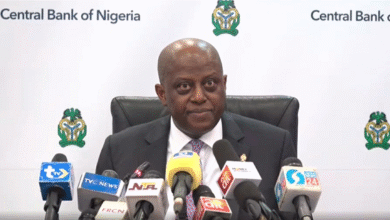
Five minutes into the Finance Minister’s presentation, the core of Tinubunomics is laid bare: the Tinubu administration chose shock therapy over slow decay, and two years later the numbers show both the cost and the payoff. According to Minister Taiwo Oyedele, the reforms from June 2023 to December 2025 generated N20.4 trillion in incremental resources. But they also created N30.64 trillion in incremental expenses. The government made new money, then spent even more of it managing the fallout and trying to invest its way out.
The most visible change came from subsidy removal. The government says it saved N15.8 trillion by ending fuel subsidy. But because of the FAAC sharing formula, the Federal Government only kept 34% of that, N5.4 trillion. The rest went to states and local governments. To cover the gap, Abuja relied on N3.1 trillion in other new revenue, mainly remittances from government-owned entities, and on N11.9 trillion in new borrowing between June 2023 and December 2025. The argument in the scorecard is that without the fiscal space created by subsidy removal and FX unification, that borrowing would have been far worse.
Where did the money go? Largely to two things: people and debt. Wage adjustments including the new minimum wage, wage awards and allowances cost N9.39 trillion. External debt service, inflated by naira depreciation, cost another N9.37 trillion. Those two items alone almost wiped out all the new resources. Add N6.47 trillion for strategic infrastructure, N3.14 trillion for electricity subsidies meant to cushion households, and N1.24 trillion in higher domestic debt service because of interest rates, and total new spending hits N30.64 trillion. In fact, wage adjustments by themselves were almost twice what the Federal Government received from subsidy savings. About two-thirds of this N30.64 trillion bill was funded by the N20.4 trillion in new money the reforms produced. The remaining N10.24 trillion was absorbed from the existing revenue base. That is why capital spending has been squeezed, because old revenue was diverted to pay for new adjustment costs.
Despite the pressure, the fiscal fundamentals have improved. The most important metric is debt-service-to-revenue. It was about 100% in 2022, meaning nearly every naira earned went to pay old loans. It is projected at 50% in 2026. Without reforms, the government estimates it could have reached 100% to 200%. The legacy N30 trillion Ways and Means overdraft from the CBN has also been curtailed. Left unchecked, the scorecard argues, it could have doubled to N60 trillion. So while Nigeria is still borrowing, the trajectory is less dangerous.
The external side tells a similar story of stabilization. Gross foreign exchange reserves rose from $35 billion in May 2023 to $52.5 billion in July 2026. Net reserves climbed from about $3 billion to $34.8 billion by end-2025. The chaotic gap between official and parallel dollar rates collapsed from over 60% to below 5%. The current account strengthened from a $1.21 billion surplus in 2023 to $14.04 billion in 2025. These buffers are what restored Nigeria’s credibility abroad.
And credibility is bringing money back. Total capital importation jumped from $1.13 billion in Q1 2023 to $10.37 billion in Q1 2026. Foreign direct investment rose from $895 million in 2022 to $4.01 billion in 2025. The stock market capitalization went from N31 trillion in May 2023 to about N150 trillion in June 2026. Nigeria’s Eurobond yields fell from 10-13% to 7-8% by mid-2026. After two years shut out of international capital markets, investors are lending to Nigeria again at cheaper rates.
On the real economy, growth and inflation are moving in the right direction, but slowly. Headline inflation fell from 22.41% in May 2023 to 15.91% in June 2026. Food inflation dropped from 24.82% to 17.52%. Real GDP growth rose from 2.31% in Q1 2023 to 3.89% in Q1 2026, and GDP per capita, which was contracting, is now positive. Non-oil GDP is projected at about 4% in 2026 compared to less than 2% before, manufacturing grew 3.29% in Q1 2026, and oil output improved from 1.2-1.4 million barrels per day to 1.6-1.75 million.
Yet the scorecard is blunt that household welfare remains a work in progress. Petrol prices moved from N185 per litre to between N1,100 and N1,400. The minimum wage rose from N30,000 to N70,000, but poverty is still high and the recovery is incomplete. The reforms created fiscal space at the top, they have not yet translated into broad relief at the bottom.
The interpretative truth in all this is about trade-offs. N20.4 trillion came in, N30.64 trillion went out. The reforms paid for about 66% of themselves. The rest was funded by stretching the old budget. The biggest costs were not theft, they were the direct price of adjustment: paying workers more to cope with inflation, paying more naira to service dollar debt, and spending on electricity subsidies to keep the lights on while prices adjusted.
Looking ahead, the government says there will be no reversal. The next phase is to implement the Nigeria Tax Act, improve budgeting and accountability, push the tax-to-GDP ratio higher, and drive inflation toward single digits. It also wants a more predictable exchange rate, more agricultural intervention to lower food prices, better coordination with states and LGs, and sharper prioritization of spending.
So where does that leave the Tinubu scorecard? The good is that Nigeria avoided a fiscal and FX collapse. Reserves are up, debt service is down, capital is returning, and growth is back. The bad is that the cost of adjustment landed first on households through higher fuel, food and interest rates. The ugly is that N10.24 trillion of the reform bill was paid from revenue that could have gone to roads, schools and hospitals.
In short, Tinubunomics has bought time and credibility. It has stabilized the macro. The test now is whether that stability can be converted into jobs, cheaper food, and infrastructure that earns more than the interest we pay. If it does, this period will be remembered as the turning point. If it doesn’t, it will be remembered as the era we fixed the books but failed to deliver the dividend.