
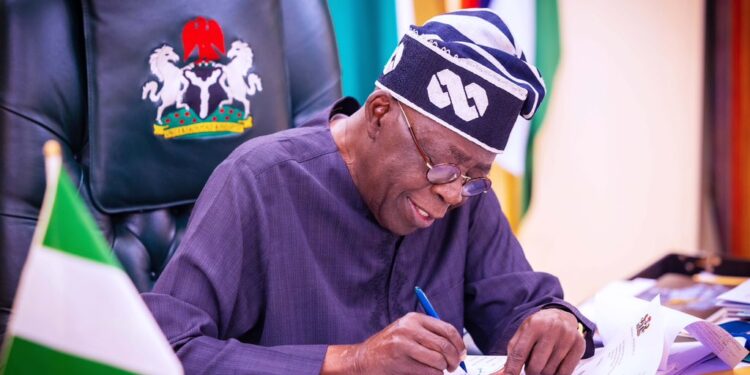
Tinubu met Nigeria at a dead end. For twenty years every government knew subsidy and multiple exchange rates could not continue, but managed them instead of removing them. By May 2023 the road ended. Debt service took 96 percent of revenue, reserves were gone. Restructuring became inescapable. What past governments treated as achievement, Tinubu treated as penalty. Fuel subsidy removal and unification of naira rates were not celebrated as bravery, they were the fine Nigeria had to pay for refusing to act early. That was the first step, making the country smaller in waste, but not yet better in value.
From that dead end he moved to reengineering, trying to make the system work faster and cleaner. The Electricity Act that allows states to generate their own power, the Supreme Court ruling that says local government money must go directly to local governments, the tax reform bills that want to collapse dozens of levies into one, the student loan fund and consumer credit scheme, the attempt to make ports run in hours not weeks, all of that is reengineering. Trying to remove needless steps and get government to face citizens, not itself.
Where reengineering worked, people felt it. States that decided to behave like challengers not laggards gained. Jigawa now tops the 2026 performance table not because it is richest but because it owes least, just 7 percent of revenue. Abia moved from 36th to 2nd because it cleaned up collection. Enugu grew internally generated revenue by 126 percent by formalizing land titles and making them digital. These states took the path of greatest opportunity. For businesses that survived the first shock, one exchange rate meant they no longer needed to hunt dollars in two markets. For local workers, direct allocation means salaries may not pass through governors. For investors, one rate is at least readable.
But reengineering without regeneration quickly shows its limit. When you save N4 trillion from subsidy and double federal allocation, what do you do with it? The 2026 index shows only Lagos, Enugu and Ogun generate more than they collect from Abuja. Eighteen of 33 states still generate less than 30 percent of what they get. Oil states on average rank lower than non-oil states and survive on just 27 percent self-reliance. The extra money went into bigger recurrent spending, more convoys, not new industries. A survey of 38,312 Nigerians scores the country 3.01 out of 5, neutral. School fees score 3.71, but finding a job 2.31, clean water 2.67, support for business 2.71, security 2.84. Citizens got cost reduction for government, not better service for customer. That is the classic problem of reengineering, it cuts cost but does not automatically create satisfaction.
The second challenge is that reengineering so far is catching up, not leading. Removing subsidy, unifying exchange rate, harmonizing taxes, Ghana did it years ago. Kenya runs a single window at port. Rwanda harmonized taxes. Necessary, but not leadership. Catching up is necessary, but it does not turn an also-ran into a leader. Becoming smaller and better is not enough, you must become different. Nigeria under Tinubu has become a bit better without becoming different. It still sells crude, still shares cash, still imports what it can produce.
This is why the next phase must be regeneration, not just reengineering. Reengineering fixes old roads, regeneration draws new roads. The questions regeneration must answer are simple but hard. Which customers are we serving today and which will we serve in ten years? Today oil buyers, tomorrow maybe electric car factories that need lithium. Through what channels will we reach them? Today through crude vessels, tomorrow through refined products, power export, creative exports online. Who are competitors? Today Saudi Arabia, tomorrow Morocco selling fertilizer and cars to us. Where will margins come from? Today from sharing FAAC, tomorrow from owning markets. What skills make us unique? Today oil trading, tomorrow lithium processing, green hydrogen, food processing, film and fintech export. Whatever market a company dominates today will change substantially in ten years. There is no such thing as sustaining leadership, it must be reinvented.
Regeneration in Nigerian terms means three practical shifts.
First, change rules of old industries. Dangote Refinery exists, but Nigeria still debates petrol price instead of owning refined products market in West Africa. Rule change would mean federal government stops being petrol trader and becomes regulator, allows refiners to export, uses crude to feed petrochemicals.
Second, redraw boundaries between industries. Jigawa grows wheat, Lagos mills flour, but there is no enforced link. Agriculture still separate from industry, education separate from jobs. Redrawing means Enugu land formalization funds technical colleges, Nasarawa lithium funds battery training, Abia garment cluster gets power from its own independent plant.
Third, create entirely new industries. Not just better old ones. Lithium processing in Nasarawa, solar assembly and installation in Sokoto sun belt, medical tourism in Abia, creative export in Lagos where 2 million youths earn dollars from music, film, coding.
The benefits of this regeneration for stakeholders are direct. For youth, it means stretch goals that actually employ, like building 10,000 megawatts of distributed solar in three years and creating installer jobs, rather than sharing palliatives. For states, it means blueprint for competence, Lagos becomes refining competence, Enugu becomes land and education finance competence, Jigawa becomes wheat competence, rather than all states competing for same FAAC share. For businesses, it means leveraging young population to create $10 billion in service export, rather than allocating bigger FAAC to recurrent. For investors, it means Nigeria preempts Ghana port with 24-hour Apapa, preempts Kenya single window with unified digital customs, preempts Morocco fertilizer with own. For citizens, it means coalition, federal government competes together with states, private sector and diaspora, not alone.
The challenges of regeneration are also direct.
First is unlearning. Firm must unlearn past. Nigeria must unlearn that federation means sharing oil money. Governors must unlearn that governance means awaiting allocation and awarding contracts. That unlearning is politically painful.
Second is talent flight. When transformation is brutal and belated, most talented flee first, first rats off ship are best swimmers. Japa is that. Doctors, nurses, tech workers left because reengineering was brutal, prices jumped before wages did. If regeneration is also brutal, more will leave. Regeneration must be calm and considered, set by our own view of future, not by rating agencies.
Third is that newcomers set agenda. Dangote set refining rules, Moniepoint set payment rules, Ghana set port rules, not government foresight. Having failed to reinvent industries earlier, incumbents transform into pale imitations of interlopers. Nigeria is transforming into imitation of Ghana port, Kenya single window, Rwanda tax system. To be leader, you must author industry transformation, not imitate.
Fourth is imagination. There is not one future but hundreds. No law says Nigeria must be follower. Getting to future first is not about outrunning Ghana to same prize, it is about having own view of what prize is. There can be as many prizes as runners, imagination is limit. What distinguishes leaders from laggards is ability to uniquely imagine what could be.
Tinubu has reengineered. Subsidy gone, FX unified, electricity decentralized on paper, local government autonomy affirmed on paper, tax reform proposed. Now task is to regenerate for full delivery of renewed agenda. Less time announcing penalties, more time building competencies. Less time allocating bigger FAAC, more time leveraging it to preempt competitors. Less time competing within existing oil structure, more time shaping future structures in power, refining, food processing, creative exports. If regeneration succeeds, scores rise, youth employment moves from 2.31, clean water from 2.67, business support from 2.71, security from 2.84, self-reliance of oil states moves from 27 percent to 60 percent. If regeneration fails, Nigeria will succeed at restructuring and reengineering but fail to create markets of future, and will find itself on treadmill, trying to keep one step ahead of steadily declining margins of yesterday’s businesses. That treadmill is where stakeholders stand today, inverter humming, generator off, new power plant still on drawing board. Move from reengineering to regeneration is move from stopping bleeding to building body, and that body must be built before next dead end appears.