
The All Progressives Congress Presidential Campaign Council on November 1, 2026, attempted to reframe one of the most quoted lines of the 2023 campaign.
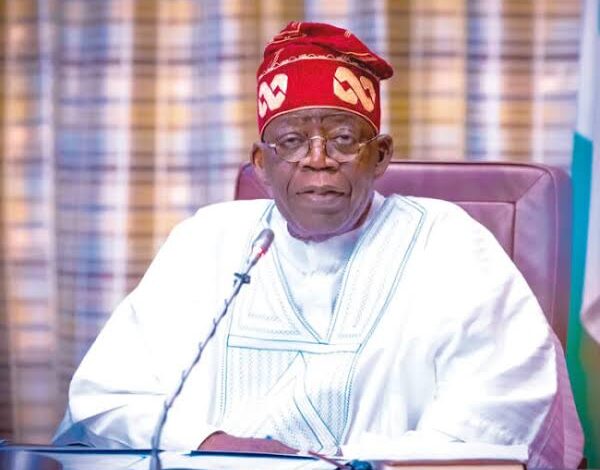
In Lagos, before the Organised Private Sector, then candidate Bola Tinubu had said: “Whichever way, by all means necessary, you will have electricity, and you will not pay for estimated bills anymore. A promise made will be a promise kept. If I don’t keep the promise and I come for a second term, don’t vote for me, unless I give you adequate reasons why I couldn’t deliver.”
For three years, public debate cut the quote after “don’t vote for me.” The APC statement now insists the operative clause is the last 13 words: “unless I give you adequate reasons why I couldn’t deliver.” The Campaign Council is essentially moving the pledge from an absolute to a conditional promise, and then proceeding to provide those adequate reasons as its scorecard for a second term bid.
On paper, the administration has moved more files on power than any government since 2015.
The first move was legal. Signing the Electricity Act on June 9, 2023, within two weeks of inauguration, removed electricity from the Exclusive List. That single act allowed states to set up markets. Lagos, Enugu, Abia, Ekiti, Oyo, Kaduna and Niger have now created their own regulators. It is the structural reform previous governments avoided.
The second move was financial triage. The sector carried over N6 trillion in legacy debts from 2015 to 2025 owed to GenCos and GasCos. The government verified N4 trillion of that and launched a N4 trillion bond programme. According to the statement, N1.2 trillion has been raised in two tranches. That liquidity has allowed some GenCos, like Geregu Power which just announced new transformers for Geregu 1, to reinvest. Without it, generation collapses.
The third was metering and commercial reform. The Presidential Metering Initiative was launched to close a 7-million-meter gap. The APC claims 1.5 million customers metered in three years. That is progress, but it also means 5.5 million remain, which is why estimated billing, the core of the original pledge, still exists for millions of households and small businesses.
The fourth was tariff and transmission. Government introduced Service Bands to make DisCos bankable and reduce subsidy exposure, while promising protection for low-income bands. On transmission, it continued the Presidential Power Initiative started by President Buhari, signing an Acceleration Agreement with German partners in December 2023. FEC approved Batch 1 of 5 TCN substation upgrades by December 2024, now nearing commissioning, and in June 2026 approved Batch 2, eight new substations and four upgrades. The Rural Electrification Agency has focused on solar for universities, hospitals and rural clusters, and government plans to modernise the 60-year-old Osogbo Grid Control Centre and build an East-West super grid.
Interpreted strictly, the pledge “you will not pay for estimated bills anymore” has not been met. Metering is incomplete. Supply remains unstable in many Band B-E areas. What the APC is arguing is that the promise should be judged as work-in-progress, not as a pass-or-fail, because power reform needs long-lead equipment, state buy-in, and debt settlement that cannot be done overnight.
That is a plausible policy argument, but it also redefines the original political threat. In 2022, the power of the line was its absoluteness: “don’t vote for me.” In 2026, the campaign wants it read as: “judge me on whether I gave adequate reasons and laid foundation.”
For voters, the test will not be the press statement, but two measurable metrics the statement itself invites: has estimated billing ended in their street, and has supply improved enough to reduce diesel cost? On the first, with 5.5 million meters still outstanding, the answer is no. On the second, with tariff now cost-reflective for Band A and grid upgrades still under construction, the answer is partial.
The APC has now presented its adequate reasons. Whether Nigerians accept reasons in place of results will determine if the qualification saves the pledge.