THE N3.147 TRILLION CUT THAT CHANGES NOTHING: FEARS OVER TINUBU’S REVISED 2026 BUDGET

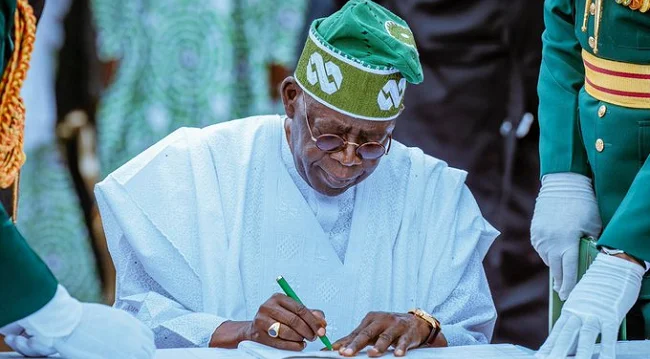
On paper, President Bola Tinubu has done something responsible. On November 24, 2026, he asked the National Assembly to cut the 2026 budget by N3.147 trillion, from N68.323 trillion to N65.176 trillion, to align spending with existing obligations and available resources. In a year of tight revenue and mounting debt, a government that admits it cannot spend what it promised should be commended. But the numbers behind the cut tell a darker story, and that is where the fear begins. This is not a budget that has been fixed. It is a budget that has been shrunk without being healed.
The first fear is arithmetic, and it is the most basic of all. If you cut spending by N3.147 trillion, you expect the deficit to fall. It has not. Expected revenue under the revised plan is N33.720 trillion. Set that against revised spending of N65.176 trillion and you are left with a gap of about N31.456 trillion, virtually identical to the stated deficit of N31.457 trillion. In other words, the government has cut the headline, but not the hole. Nigerians are being told the budget is smaller, yet the country will still spend almost twice what it earns. A smaller total that leaves the same deficit is not austerity. It is presentation. It raises the question the government has not answered: if we are spending less, why are we still borrowing just as much to survive? That question matters because a deficit is not an abstract figure. It is the amount the government must find from somewhere else, from borrowing, from loans, from obligations pushed into the future. When the deficit stays the same, the pressure on the economy stays the same, no matter how much the total is reduced.
That leads to the second fear, which is how this budget is financed, and here the silence is even more troubling. Planned new borrowing remains at N29.218 trillion. That figure alone should alarm anyone who follows public finance. Nigeria is planning to borrow N29.218 trillion in a single year to fund a budget of N65.176 trillion. Almost 45 kobo of every naira the government plans to spend will be borrowed. And even that does not close the gap. Borrowing of N29.218 trillion is less than the deficit of N31.457 trillion. Where will the difference come from? Will it be project-tied loans? Will it be other sources that have not been disclosed? Will it be new obligations that will appear later as supplementary requests? The government has not explained. A budget is supposed to be a complete account of public money, a promise about how much will be earned, how much will be spent, and how the difference will be met. This revision leaves a financing gap inside a financing gap. The fear here is not just debt. It is debt without transparency. Debt service is already one of the largest items in the budget, consuming revenue that should go to schools, hospitals and roads. If the government continues to borrow N29 trillion a year without showing exactly how the borrowing is structured, what it will fund, and how it will be repaid, then the revised budget is not a correction. It is a continuation of the same borrowing cycle that made the revision necessary in the first place. Nigerians are being asked to accept more debt without being shown the full cost of that debt.
The third fear is implementation, and it is the most practical because it is about whether anything will actually be built. The revised framework puts capital spending at N26.232 trillion, against about N32.2 trillion in the original budget. If both figures are on the same basis, that is a cut of nearly N6 trillion from the very part of the budget meant to build things: roads, schools, hospitals, water projects, power infrastructure. That is where the cut has fallen hardest, and that is not an accident. It is easier to cut capital than to cut recurrent spending, easier to delay a road than to delay salaries, easier to postpone a hospital than to postpone debt service. But it is the capital budget that touches the lives of ordinary people. When N6 trillion disappears from capital, it does not disappear from a spreadsheet. It disappears from communities waiting for a road to be completed, from children waiting for a classroom, from patients waiting for a health centre. The government says the revision will improve execution. But execution is not improved by cutting capital and hoping for better results. Execution is improved by releasing money on time, supervising contractors, and completing work. So far, the government has not told Nigerians how much of the capital budget has actually been released and spent. An allocation in Abuja does not build a road in Kaduna. Money must reach the project, work must be done, and the result must be visible. Without that information, the promise of better execution is just a phrase.
And now the timing has made execution almost impossible. The 2025 capital budget has been extended to December 31, 2026. The 2026 budget is being revised with only a few weeks left in the year. Two years of capital programmes are now approaching the same deadline together. Anyone who has watched Nigerian budgeting knows what happens next: rushed procurement, rushed releases, rushed work, abandoned projects, and unclear obligations carried into the next budget. Two capital budgets cannot be properly executed in a few weeks. What will happen is what always happens when deadlines collide: money is pushed out quickly to avoid lapsing, quality suffers, contractors are paid for work not properly supervised, and the public is left with half-finished projects and full payments. The government and the National Assembly must show how they will manage those commitments without waste. So far they have not.
That brings the fear to the level of the citizen, to the question of which projects will live and which will die. The government has not published a clear comparison of the original and revised budgets showing the effects on projects. Nigerians do not know if the road in their community has been cut, if the hospital upgrade has been postponed, or if the school project has been shifted to next year. They only know that N6 trillion has disappeared from capital spending. That silence is dangerous. A budget revision without a project-by-project account is not accountability. It is an invitation to abandon priorities quietly. Capital projects are not abstract lines. They are the promise that public money becomes public good. When N6 trillion is removed without explanation, the promise is broken without apology. The public is left to discover, months later, that a project they were promised has been quietly dropped, or delayed, or replaced with another that serves a different interest.
The fourth fear is buried in the fine print, in proposed changes covering expenses already incurred by NNPCL on behalf of the Federation, debt service obligations, capital warrants and supplementary commitments. These are not future plans. These are monies already spent. How much is involved? What did the spending cover? Who approved it, and how has it been checked? A budget revision should help the public understand what has happened, not leave them trying to piece together the story after the money is gone. When a government asks the National Assembly to approve money that has already been spent, the legislature is not exercising oversight. It is ratifying a fait accompli. That is the fear that underlies all the other fears: that the revised budget is not a plan for the future, but a cover for the past. If NNPCL expenses, debt service and capital warrants are simply folded into a revised total without a full, plain account, then the revision becomes a way to legitimise spending that was never properly approved in the first place.
All of these fears come together in a single question: what has actually improved? A smaller budget may be a sensible correction. But a smaller total does not automatically mean the country owes less, that public money is being used more carefully, or that more projects will be completed. The test is not the size of the cut. The test is whether the revised plan gives Nigerians a clearer account of the money, protects what matters most, and delivers visible results. On the evidence presented so far, it fails that test. The deficit is unchanged. Borrowing is unchanged. Capital is cut by nearly N6 trillion. Two capital budgets are colliding at one deadline. And the financing gap is unexplained. The National Assembly now has a responsibility that goes beyond approving a new total. It must demand a published comparison of original and revised budgets, a project-by-project account of what is being cut and what is being protected, a full disclosure of NNPCL expenses and debt service, and a clear explanation of how the remaining deficit will be financed. Until then, the fear will remain: that Nigeria has not cut its budget to live within its means, but has simply cut its ambitions while keeping its debts.