
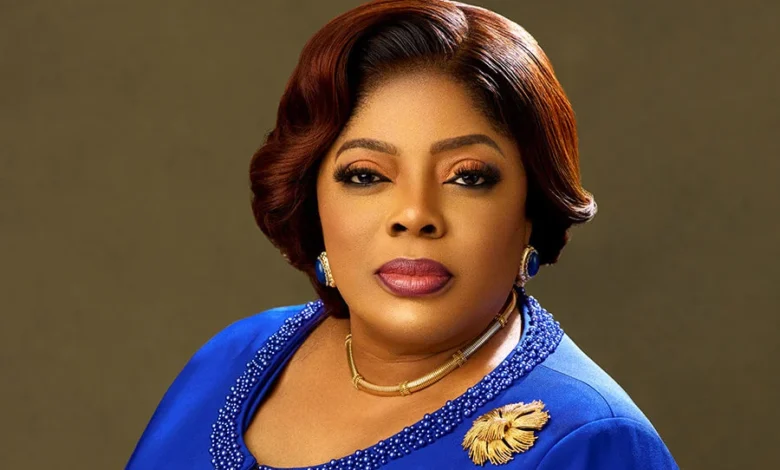
When Dr. Nneka Onyeali-Ikpe became the first female Managing Director/CEO of Fidelity Bank Plc on January 1, 2021, she did not promise steady stewardship. She promised transformation. Her blueprint was bold and explicit: lift Fidelity from a leading Tier-2 lender to Tier-1 status by 2025, and to get there she unveiled seven strategic imperatives — accelerated growth, digital transformation, innovation, brand refresh, service excellence, performance discipline, and workforce transformation. It was a plan to change not just the size of the bank, but its identity, from a solid, conservative, brick-and-mortar institution to a modern, youthful, digital-first lifestyle bank for over 14 million customers. Six years later, as she approaches the end of her tenure in December 2026 after a Board extension and an orderly internal succession process, the numbers say she largely succeeded. The substance says she did not. And that gap between numbers and substance is why the Tier-1 ambition must be judged as a failed ambition, not a completed one.
The failure is not that Fidelity did not grow. It grew spectacularly. Total assets grew 248.0% from N3.28 trillion in 2021 to N11.4 trillion in 2025. Customer base expanded from about 6.5 million in 2021 to over 14 million by late 2026. Over 92% of customer-induced transactions now occur on digital platforms. Low-cost savings deposits passed N1.1 trillion. Profit Before Tax surged 1,278.9% from N25.22 billion in 2021 to N347.7 billion in 2025, after peaking at N385.2 billion in 2024. Gross earnings crossed the trillion-naira mark in 2024 at N1.04 trillion before climbing another 45.6% to N1.52 trillion in 2025, the highest revenue in the bank’s history. Asset quality improved, with the Non-Performing Loan ratio falling to 2.4% in FY 2025, well below the 5% regulatory ceiling, with a 203.9% coverage ratio. Market capitalisation surged more than twenty-fold from N73.85 billion at year-end 2021 to approximately N1.52 trillion to N1.58 trillion as of November 2026, a compound annual growth rate of 86.08%. Those are not small achievements. They are the achievements of a CEO who executed her blueprint with discipline on growth, digital and brand.
The failure is that growth was mistaken for Tier-1 status, and capital was mistaken for scale. On capital, she succeeded. Through a multi-phase capital raise, a N175.9 billion Public Offer/Rights Issue in 2024 and a N227.05 billion Private Placement in December 2025, eligible capital reached N532.6 billion, surpassing the Central Bank’s N500 billion Tier-1 international authorisation threshold, and later reported at N564.5 billion, with total equity crossing N1 trillion for the first time. On that regulatory definition, Fidelity is Tier-1. On market value, she also succeeded. Fidelity secured a 6.32% share among Nigeria’s top 10 listed banks and 0.93% of the entire NGX equities market, overtook Access Holdings at N1.40 trillion and closed within 20% of UBA at N1.90 trillion. But Tier-1 is not a capital certificate. Tier-1 is not a market capitalisation ranking. Tier-1 is the ability to lend at scale, to finance infrastructure, to absorb shocks, to operate across continents, and to be systemically important to the real economy. On that test, Fidelity fails.
Fidelity’s total assets of about N11.35 trillion place it 6th in the industry, still well behind Access Holdings’ approximately N53.4 trillion and UBA and Zenith’s approximately N32 to N33 trillion asset bases. It remains at only 43.68% of the Tier-1 peer average market capitalisation of N3.48 trillion, trailing First HoldCo at N4.90 trillion, Zenith at N4.80 trillion and GTCO at N4.40 trillion by N2.9 trillion to N3.4 trillion. Its equity market parity with Access reflects investor appreciation for Fidelity’s strong net interest margins of 12.0% and its capital adequacy, alongside market discounts applied to larger Tier-1 peers over heavy loan-loss impairments, but it does not mean Fidelity has the same lending capacity, the same pan-African footprint, the same systemic importance, or the same ability to absorb a N225 billion judgment without a settlement. In other words, Fidelity became Tier-1 in the eyes of the regulator on capital and in the eyes of investors on valuation, but it did not become Tier-1 in the eyes of the real economy on assets, on corporate lending, on infrastructure finance, or on continental scale. That gap is the central failure of the dream, not because she did not try, but because the dream itself conflated capital with scale and valuation with substance.
The pan-African pillar exposes the same gap between promise and execution. The earlier ambition to acquire five African banks was tempered by domestic recapitalisation demands and tighter capital controls, and instead she acquired 100% of Union Bank UK in July 2023, rebranded as FidBank UK Limited, and narrowed its losses toward profitability, while launching FITCC as a trade facilitation platform rather than a full banking expansion. That was a pragmatic pivot. Defending domestic capital adequacy amid naira devaluation was more important than empire-building. But it means the pan-African pillar of her blueprint remains partially achieved, and the bank that aspired to be a continental player remains, in substance, a Nigerian bank with a London subsidiary. A Tier-1 bank is not defined by one London subsidiary. It is defined by a network, by trade flows, by correspondent relationships, by the ability to follow Nigerian corporates across Africa. Fidelity does not have that.
The governance record makes the failure deeper, because Tier-1 is also a governance standard, not just a size standard. The most consequential crisis of her tenure arrived in April 2025, when the Supreme Court of Nigeria ordered Fidelity Bank to pay approximately N225.3 billion in damages to Sagecom Concept Limited, an Ibadan-based firm, in a dispute that originated from defaulted G. Cappa Plc loans inherited from FSB International Bank in 2005, but which escalated because Fidelity sold collateral properties to Sagecom in defiance of a 2006 federal court injunction. The Supreme Court justices did not mince words, criticising the bank’s deliberate disregard for judicial authority, and the size of the judgment, nearly two-thirds of the bank’s entire 2025 pre-tax profit of N347.7 billion, sparked intense market scrutiny over solvency, forced urgent settlement negotiations, and raised a fundamental question that has haunted the rest of her tenure: how could a bank that presented itself as disciplined and well-governed have allowed a legacy dispute to metastasise into a judgment of this magnitude. The answer lies not just in the original transaction, which predated her leadership, but in what happened afterwards, in the years when the bank’s own disclosures failed to keep pace with its legal exposure. Between 2018 and 2024, Fidelity’s audited financial statements reportedly declared total litigation claims of around N14 billion with estimated potential losses of just N2.27 billion, even as lower court judgments in the Sagecom dispute were already running into tens of billions of naira, and investigative reporting accused the bank of misrepresenting its contingent liabilities to shareholders in breach of international accounting disclosure standards under IAS 37. Fidelity has not been found guilty of accounting fraud, and the bank has maintained that its disclosures followed applicable standards, but the gap between N2.27 billion in disclosed potential loss and N225.3 billion in eventual judgment is not a rounding error, it is a governance failure of disclosure, and it is the kind of failure that erodes trust faster than any bad loan, because investors can forgive a bad loan if it is disclosed, but they cannot forgive a risk they were told did not exist. A true Tier-1 bank does not have a N225 billion judgment arrive as a surprise.
That disclosure weakness was compounded by a second controversy in 2025, when the Federal Government filed a criminal charge at the Federal High Court in Lagos in February 2025 over the alleged unlawful diversion of roughly N19 billion belonging to Woobs Resources Limited, with Onyeali-Ikpe initially listed as a co-defendant alongside Fidelity Bank Plc and other individuals. In May/June 2025, the Attorney General of the Federation, Lateef Fagbemi, entered a nolle prosequi to drop the charges against her personally, stating that a review showed she was neither the account officer nor the managing director when the disputed account was opened, and that the decision was necessary to prevent a miscarriage of justice. She was cleared, but the bank was not, because the charge against Fidelity Bank Plc as a corporate entity remains active and pending before the court, and the AGF was explicit that the withdrawal did not exculpate the bank. That distinction matters enormously for any assessment of her tenure, because it leaves the institution she led under a criminal cloud even as she leaves personally exonerated. For a leader whose brand was built on integrity, on being the first woman to lead the bank, and on transforming its reputation from staid to modern, being named in a criminal charge, even if later withdrawn, is a reputational scar that no financial result can fully erase, and it feeds a broader perception that governance at Fidelity during her tenure was reactive rather than preventive, cleaning up after crises rather than stopping them before they started.
The third controversy, though smaller in legal weight, was larger in symbolic weight, because it struck at the heart of shareholder trust. In May 2025, online media reports accused Onyeali-Ikpe of insider trading and misuse of bank funds following her acquisition of 18 million shares in Fidelity Bank, valued at approximately N366 million. Fidelity Bank strongly refuted the claims as fabricated and malicious, maintaining that the share purchase was conducted transparently and fully complied with Nigerian Exchange and Securities and Exchange Commission rules governing directors’ dealings, and no regulator has sanctioned her. But the episode reveals the fragility of trust in a market where a CEO buying her own bank’s shares, normally the strongest possible signal of confidence, can be reinterpreted as self-dealing, and it shows how quickly the narrative around her tenure could flip from celebration to suspicion when disclosure was not immediate, detailed and proactive. The same pattern repeated in late 2026, as the bank initiated the formal succession process to replace her following her extended tenure, and repeatedly delayed publishing its audited half-year 2026 financial statements, with the Nigerian Exchange granting multiple filing extensions into October 2026 while the accounts awaited regulatory approval and the insider trading window stayed closed for an extended period. That delay is not proof of wrongdoing, and it mirrors delays at UBA and Access Holdings under the same CBN scrutiny of asset quality and provisioning, but for a CEO leaving office it creates a damaging final narrative, that she is leaving behind numbers the regulator will not yet clear, and that the bank’s governance timing, not its earnings, is the problem.
Those controversies expose the central weaknesses and threats that defined her tenure, even as the bank grew. The first weakness was legal risk management that lagged balance sheet growth. A bank that tripled its assets in five years needed a legal and compliance function that could anticipate, quantify and disclose legacy litigation with the same rigour it applied to credit risk, and the Sagecom case suggests it did not. The second weakness was disclosure culture. The gap between disclosed contingent liabilities and actual exposure, the silence around delayed filings, the absence of a clear, dated explanation for why H1 2026 results were late, all point to a bank that preferred to manage news rather than disclose it, and in a market built on disclosure that preference is itself a risk. The third weakness was concentration of narrative around one leader. Onyeali-Ikpe became synonymous with Fidelity’s transformation, its brand refresh, its Fidelity for You campaign, its FITCC trade fairs in London, Houston and Atlanta, and its push to 14 million customers, and when a CEO becomes the story, succession becomes a threat, because investors do not just ask who will replace her, they ask whether the growth was personal or institutional, whether the controls were hers or the bank’s. The threats that follow from those weaknesses are real and immediate for her successor: a N225.3 billion judgment to settle or negotiate, a pending criminal case against the bank, a derivative book that produced a N223.8 billion loss in 2025 after a N57.9 billion gain in 2024, a cost-to-income ratio that deteriorated from 42.9% in 2024 to 54.6% in 2025 on inflation and technology investments, and a market that now demands proof that Fidelity’s growth was built on transparent governance, not just on aggressive deposit mobilisation and high interest rates.
Her position among Tier-2 peers, by contrast, is unambiguous and is perhaps her most lasting achievement, and it proves the point about the failed Tier-1 ambition. Fidelity has decisively separated itself from traditional mid-tier rivals. Excluding Stanbic IBTC Holdings, whose N2.58 trillion valuation is heavily anchored by its dominant pension and wealth management subsidiaries rather than pure commercial banking, Fidelity is the most valuable domestic Tier-2 commercial lender. It commands 22.92% of the combined market value of the five major Tier-2 institutions, which together total N6.63 trillion, trading at more than double the valuation of FCMB Group at N718.9 billion and nearly triple that of Sterling Financial Holdings at N513.8 billion, and ahead of Wema Bank at N1.30 trillion. In the Tier-2 arena, Fidelity is no longer a peer, it is the leader, the benchmark against which FCMB, Sterling and Wema are now measured, and that dominance was not inherited, it was built during her tenure through digital scale, deposit mobilisation and capital raises that her Tier-2 rivals could not match. The irony is that her success in dominating Tier-2 makes her failure to fully join Tier-1 more visible, because the market now compares her not to FCMB or Sterling, where she wins decisively, but to Zenith, GTCO and First HoldCo, where she still trails by trillions.
Judged from different angles, therefore, her tenure looks different, and any honest assessment must hold all those angles at once. From the angle of execution, she was transformational, taking a N73.85 billion bank and making it a N1.52 trillion bank, taking a Tier-2 brand and making it a Tier-1 name. From the angle of governance, she was a leader whose controls did not keep pace with her growth, whose disclosure lagged her legal exposure, and whose bank grew faster than its risk culture could handle. From the angle of gender and symbolism, she broke a glass ceiling and proved a woman could lead a Tier-1 aspirant to record growth, but she also showed that symbolism does not protect against scrutiny, it intensifies it. From the angle of shareholder value, she delivered compounding growth and rising dividends until 2024, then a prudent but painful pause in 2025, leaving retail investors who bought the public offer with valuation gains but no dividend. From the angle of succession, she leaves a bank that is bigger, stronger and more valuable than ever, but that must still prove to the market, to the regulator and to the courts that its growth was built on transparent disclosure and respect for judicial authority.
The next CEO will inherit a N1.52 trillion bank with N11.4 trillion in assets, a 2.4% NPL ratio and a Tier-1 licence, and will also inherit a N225.3 billion judgment to settle, a pending criminal case against the bank, a delayed H1 2026 result to publish, and a market that is asking not just how big Fidelity is, but whether it can be believed. That is the true measure of Onyeali-Ikpe’s tenure: she proved Fidelity could become Tier-1 in size and in capital, she did not prove it could become Tier-1 in governance and in substance, and the succession now under way is not just about choosing a new leader, it is about closing that gap or living with it. Until that gap is closed, the Tier-1 dream must be called what it is: a brilliant Tier-2 triumph, and a Tier-1 ambition that failed.