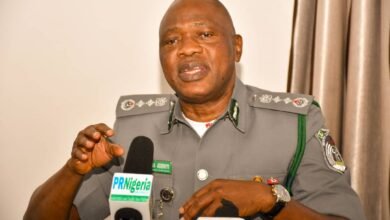

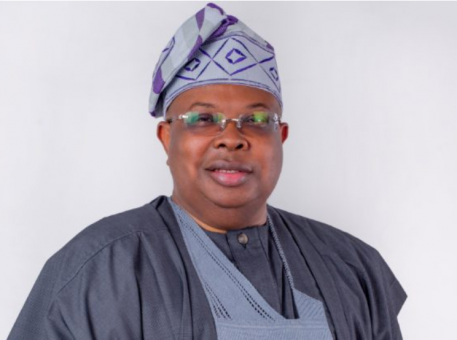
When Joseph Tegbe sat down with ARISE News on Monday, he was not speaking as a man who had just discovered the power sector. He was speaking as a man trying to manage an expectation set before he got the job, the promise made by President Bola Tinubu in 2022 that Nigerians would get reliable electricity. Tegbe does not run away from that promise. He quotes it, he owns it, and then he tries to explain why it has not yet been kept. He is not saying the promise was wrong. He is saying it was made without a full understanding of the depth of the decay.
The weaknesses he describes are not new, but his admission of them is unusually blunt. Fifty years of neglect cannot be fixed in two years, he argues, and anyone who has lived with generators in Nigeria knows the infrastructure is truly broken. Transmission lines are old, distribution networks are overloaded, substations are obsolete, and transformers fail in the rain. That physical decay is matched by institutional decay. Decades of poor planning meant projects were undertaken without considering how they would work together to strengthen the network. Nigeria built power infrastructure not as a system, but as a collection of disconnected projects, each awarded for political reasons, each abandoned when the politics changed. Money went to generation when transmission was the bottleneck. Money went to transmission when distribution was the bottleneck. The result is a grid where power is generated but cannot be delivered, or delivered but cannot be paid for. The deepest weakness, in Tegbe’s telling, is debt. The government owes Generation Companies about N6 trillion, mostly for gas supply. That debt created a vicious circle. If you do not pay GenCos, they cannot pay gas suppliers. If gas suppliers are not paid, they stop supplying gas. If there is no gas, there is no power. The debt is not just a number. It is a symptom of a broken commercial model in which tariffs did not cover costs, subsidies were promised but not paid, and GenCos carried debt on their books, made provisions for it, and still kept generating at a loss. The system survived on promises, not payments.
Those weaknesses are compounded by threats that could still break any recovery. The first is the budget itself. Tegbe says he will not support the President taking all the money for only one sector, because there are challenges in education, health, and agriculture, and the President has to balance all these things. That is Tegbe the accountant speaking, but it is also a warning. Power is competing with other urgent needs. If the government pays power fully, it starves schools and hospitals. If it pays schools and hospitals, it starves power. The remaining debt may be delayed because the treasury cannot afford it all at once. The second threat is the GenCos themselves. Tegbe warns that it would be unfair to go out and start to castigate the President after you were in the room and you agreed. The government feels it has done its part. The GenCos feel they are still owed. If they walk away from the agreement, demand full cash payment, or stop supplying, the negotiation collapses. The third threat is the tariff promise. Tegbe rules out a tariff increase, categorically. He says the assumptions built into the tariff model may need to be revised, but the tariff itself will not go up. That is a crucial promise, because every time tariff goes up, Nigerians ask: where is the light? But if the cost of gas, generation and transmission all go up, someone has to pay. If it is not the consumer, it has to be the government, and the government, as Tegbe himself admits, has to balance power with other sectors. The fourth threat is time and politics. Three to five years takes us beyond the next election. It asks Nigerians to be patient, to trust that work done now will pay off later. Nigerians have heard the story before, and the divided comments on the Facebook post showed it. Some praised Tegbe’s competence. Others demanded tangible improvements. They want to see the light, not hear about it.
Against those weaknesses and threats, Tegbe points to opportunities that are already in Nigeria’s hands. The first is gas. We own this gas, he says. It is a comparative advantage. And if we want to give power to Nigerians, let us use what we have to get what we want. Nigeria has some of the largest gas reserves in Africa, gas that is already in the ground, already being produced, already being flared and exported, while homes remain dark. The opportunity is that the solution does not need to be imported. It needs to be redirected. If gas is priced for domestic power, rather than only for export or for maximum profit, generation can rise without building a single new plant. The second opportunity is the Electricity Act of 2023, which decentralised the market and allowed states and other stakeholders to participate. The old, centralised model, where one national grid serves everyone, has failed. The new model allows states to generate, transmit and distribute, and allows private investors to enter without waiting for Abuja. If states build capacity, the Act could do for power what telecoms liberalisation did for phones. The third opportunity is a new way to pay. Tegbe does not want to pay everything in cash. He wants to net off royalties and corporate income tax. You cannot take money with one hand and give it with the other hand, he says. So let us net it off. If a GenCo owes the government royalties, and the government owes the GenCo for power, why move money in a circle? Just cancel one against the other. It saves cash, it saves time, and it clears the books. If it works, it clears the remaining N2.07 trillion by 2027 without draining the treasury.
The capability to neutralise the weaknesses and threats and to exploit those opportunities, in Tegbe’s account, already exists, but it has to be used deliberately. The first capability is negotiation and payment. He says the N6 trillion debt was negotiated down to N3.3 trillion, and that N1.23 trillion has already been paid in about one and a half years. He insists that most GenCos, especially the most important ones, were in the room and agreed. He repeats the figure, N1.23 trillion, as if to say: look, this is not talk, this is cash. Payment restores credibility. It tells gas suppliers that the chain can work. It tells investors that contracts will be honoured. It is the beginning of trust in a sector where trust had collapsed. His own background as an accountant is part of that capability. If you carry debt in your books, sometimes you make provision for it. You share in the debt. Let us give Nigerians power. You have been in business for a long time. Let us share. That is a plea for shared sacrifice, and he is using it to lock GenCos into the agreement in public, so they cannot walk away from it in private. The second capability is the ability to re-price gas through NNPC. He says the government is sitting down with the Nigerian National Petroleum Company Limited to cut the cost of gas to GenCos and gas suppliers. He wants a concessionary rate, a special price for gas for power, that will not make gas suppliers go out of business but will make power cheaper. If NNPC agrees, generation cost falls, tariff pressure falls, and collection improves. It turns the vicious circle into a virtuous one. The third capability is the ability to stop bad projects. His ministry, he says, is now reviewing ongoing projects to identify priority investments. That sounds like common sense, but in Nigeria it is revolutionary. It means stopping projects that do not make sense, even if they have powerful backers, and focusing on the ones that will actually move power from where it is generated to where it is needed. The fourth capability is time, if it is used well. Three to five years is a long time for a Nigerian who has been waiting since 2022, or since 1999, or since birth. It is also a realistic time, if you accept his argument about 50 years of decay, and it is enough time to fix transmission, to build state capacity under the Electricity Act, to clear the debt, and to re-price gas. It is not enough time to build a new grid from scratch, but it is enough time to make the existing grid work.
Taken together, the interview is not just an update on debt. It is a story Tegbe is telling about Nigeria’s power sector: a story of a promise made in ignorance, a debt that choked the system, a negotiation that cut the debt, a plan to net off what is owed, a plan to use our own gas, a plan to fix planning, and a promise that the light will come in three to five years, without making Nigerians pay more. It is a coherent story. It is also a story that depends on many things going right: GenCos staying in the agreement, NNPC agreeing to cheaper gas, states building capacity, the ministry actually stopping bad projects, and the government finding the money to pay the remaining N2.07 trillion by 2027. If any of those fail, the story falls apart.