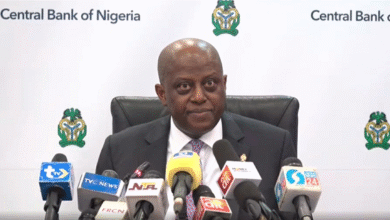
The Monetary Trilemma: Cardoso, Emefiele, and the Two-From-Three Choice


Monetary policy operates under a hard constraint: at any point in time, the central bank can realistically target only two of Unemployment, Growth, and Inflation. The third will have to adjust. This is the dilemma that defined both Godwin Emefiele’s tenure and the first three years of Olayemi Cardoso, who completed three years as CBN Governor in September 2026. The difference between them lies in which two variables they chose to prioritize, and what that meant for the economy.
When Cardoso took office in September 2023, the economy was facing a twin shock of subsidy removal and FX pass-through inflation. The market was fractured by multiple exchange rates, investors could not repatriate funds, and there was a $7 billion FX backlog undermining confidence. In response, Cardoso chose to target Inflation and FX market credibility as his two. In the first year, he collapsed all FX windows into one and allowed the naira to find a market price. The immediate result was depreciation, but it also ended arbitrage and restored the ability of investors to enter and exit without waiting for CBN allocation. To rebuild trust, the Bank verified and settled the $7 billion backlog, which reopened correspondent banking lines for airlines, manufacturers, and portfolio investors. On inflation, he deployed the same tool Emefiele used but more aggressively, with the MPC raising the Monetary Policy Rate repeatedly over three years and mopping up liquidity to anchor expectations. The CBN also stepped back from quasi-fiscal lending and programs like Anchor Borrowers, shifting development finance back to banks and fiscal authorities. Communication became central, with regular MPC communiques replacing surprise circulars to reduce the policy uncertainty that drove capital flight in 2015 and 2016.
The impact of this choice is clear three years on. The FX market is now transparent and demand-driven rather than rationed. Reserves are supported more by portfolio inflows and remittances than by CBN intervention. But the trade-off predicted by the trilemma also showed up. By prioritizing price stability and a credible FX framework, growth slowed and unemployment remained high. Monetary policy could not deliver jobs at the same time it was fighting inflation.
Emefiele faced a different crisis when he took office. Oil had crashed, the naira was in free-fall to over N365/$1 in the parallel market in August 2017, and the economy had slipped into recession. His choice was to target FX stability and Growth support as his two. To do this, the CBN managed scarcity through administration. It created multiple windows including NAFEX for investors and exporters and NIFEX for weekly auctions, and restricted 41 items from accessing official dollars. Between 2016 and 2018, the Bank pumped roughly $20 billion into the market to close the gap and deter speculators. That intervention was made possible by oil, which rose from $30 per barrel in mid-2016 to about $80 by 2018. As earnings improved, external reserves climbed from $30.360 billion in May 2017 to $47.4 billion a year later, with projections then of $55 billion by end-2018. The supply of dollars helped stabilize the official rate around N305/$1. Inflation also eased, falling from a peak of 16.25% to 12.48% in April after the MPR was held at 14% from July 2016. Financial stability was maintained with no systemic bank failures, and the economy was pulled out of five consecutive quarters of contraction.
But the costs of that model accumulated. The IMF argued that multiple rates created distortions and discouraged investment. Portfolio investors agreed, and net portfolio investment fell to -$1.704 billion in 2016 as foreigners complained of unclear policy direction and difficulty repatriating funds. Unemployment kept rising, reaching 18.8% in Q3 2017 from 16.2% in Q2, so that even as inflation fell, the misery index remained high. The market was stable only as long as oil and reserves could fund intervention, which made it vulnerable once those conditions changed.
Comparing the two approaches, Emefiele’s model was crisis management through controls. It bought temporary stability while oil was high and reserves were flush, but it left the economy dependent on CBN allocations and created uncertainty that chased away investment. Cardoso’s model is reform management through markets. It accepted short-term pain on growth and jobs to fix the plumbing: one rate, cleared obligations, and a central bank focused on the price of money rather than the price of dollars.
Neither governor escaped the trilemma. Emefiele sacrificed inflation discipline to protect FX and growth. Cardoso sacrificed growth and jobs to protect inflation and FX credibility. Both maintained financial system stability, but through different means, Emefiele by avoiding bank failures during recession, Cardoso by stronger supervision and stress tests.
The verdict after three years is that Cardoso’s option is likely better for long-term sustainability. A rule-based, transparent market is less vulnerable to oil shocks than an intervention-based one. But its success is not complete within the CBN. Just as Emefiele’s achievements ultimately depended on fiscal actions such as domestic refining to cut fuel imports, Cardoso’s ability to translate FX and inflation stability into lower prices and jobs will depend on fiscal discipline, infrastructure, and real sector reforms outside monetary policy. The central bank can set the stage by choosing two variables and living with the cost to the third. It cannot do the whole play alone.