Nigeria’s capital market is showing both depth and discipline this week, even as volatility persists in equities. Investors are navigating a market shaped by high sovereign yields, steady corporate fundraising, and regulatory-driven capital raises, and the result is a pipeline of offerings worth about N1.66 trillion across government and corporate issuers.
The sovereign is again the biggest borrower. On July 15, the Debt Management Office went to the market with a N600 billion Treasury Bills Primary Market Auction, split across the 91-day, 182-day and 364-day tenors. This comes just a week after the DMO settled N1.06 trillion in T-bill allotments, with demand heavily skewed to the long end. The 364-day bill alone saw N1.86 trillion in subscriptions against a N500 billion offer, and the DMO allotted N935.32 billion. That rationing pushed the stop rate up 36 basis points to 17.70%, giving investors a true yield of about 21.51%. The 91-day rate edged up 2bps to 16.30%, while the 182-day held flat at 16.50%.
That pattern tells the story of the market right now. Investors are chasing duration to lock in yields before rates potentially ease, and the government is using T-bills as its primary tool for near-term liquidity management. With no FGN bond auction this week, the 364-day bill at 17.70% is effectively the benchmark for short- to medium-term corporate pricing. Attention now shifts to next week’s N1.20 trillion FGN Bond auction scheduled for July 20. The DMO will reopen three lines: N400 billion each of the 22.60% JAN 2035, 15.45% JUN 2038 and 16.2499% APR 2037 bonds. These are not new issuances but part of a deliberate strategy to build size at benchmark points. At the last reopening in June, the JAN 2035 and APR 2037 cleared at 18.34% and 18.35% respectively, well above May levels. If that trend continues, it will confirm that institutional money is still demanding higher compensation for duration, even as pension funds and banks use the bonds to meet liquidity and tax-exempt requirements.
Corporate funding has not slowed despite the high-rate environment. The commercial paper market is led this week by Cardinal Torch Company Limited, offering up to N10 billion under its N30 billion programme. The 180-day to 364-day notes are being marketed at indicative yields of 21.0% to 24.5%, with proceeds earmarked for agro-commodity procurement and export. Last week, Homeport Non-Interest Funding SPV closed a N20 billion CP with yields of 22.50% and 23.50%, showing that investors will still buy quality names if the cash flows are clear. In the bond space, LAPO MFB SPV had its N4.64 billion, 5-year, 20% coupon bond admitted on FMDQ, giving microfinance lenders another route to lock in medium-term funding.
The most coordinated activity is in insurance, where the NIIRA 2025 recapitalisation deadline is forcing balance-sheet action. Regency Alliance is opening a N7.37 billion private placement today, targeting strategic investors to boost solvency and fund technology upgrades. Fortis Global Insurance is preparing a N23.54 billion raise through a mix of rights, public offer and private placement. Veritas Kapital and Coronation Insurance are also progressing with private placements of N15 billion and N9.26 billion respectively. The message is consistent: insurers are moving now to avoid a last-minute scramble, and we should expect more rights issues and possibly M&A as smaller players look for partners.
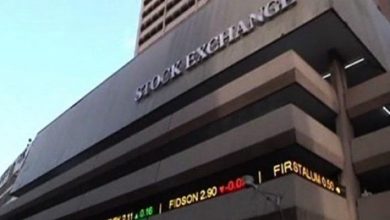
Equities are in a different phase. After an exceptional first half that pushed the ASI up over 47%, the market is consolidating. Profit-taking has hit banking, industrial and consumer names, and some institutional money has rotated into T-bills and bonds where yields of 17-21% are hard to ignore. That rotation is healthy. It suggests the rally was not just liquidity-driven, but that investors are now being selective. Structural reforms are also helping sentiment. Nigeria’s engagement with FTSE Russell, the move to T+1 settlement, and the country’s placement on the S&P Dow Jones 2027 Frontier Market Watchlist are all reinforcing the reform narrative for foreign investors.
Looking forward, three things will define allocation decisions. First, the outcome of today’s T-bill auction and next week’s N1.20 trillion bond sale will set the tone for sovereign yields. Second, how quickly insurance companies close their capital raises will determine sector consolidation. Third, second-quarter corporate earnings will tell us whether equity valuations have caught up with fundamentals or if fixed income remains the better risk-adjusted bet.
For now, the market is offering something for every investor type. Government paper provides yield and safety, corporates are paying a premium for working capital, and insurance stocks offer a regulatory-driven growth story. With N1.66 trillion in active offerings and another N1.20 trillion bond on the way, Nigeria’s capital market is proving it can fund both the state and the private sector, even in a high-rate cycle. The challenge for investors is choosing between locking in those sovereign yields today, or betting that equities will resume their H1 momentum once earnings prove the rally was real.