Nigeria’s Economy of Politics: The Candidate, the Cake and the Queue

Nigeria’s political economy is shaped not only by formal policy choices but also by the financing, coalitions and expectations that surround the acquisition of public office. For investors and businesses, this relationship matters because expensive political competition can influence appointments, procurement, project selection, regulatory access and the allocation of public resources. Where political support is treated as recoverable capital, the resulting obligations may weaken competitive neutrality, raise transaction costs and divert economic decisions from productivity and public value.
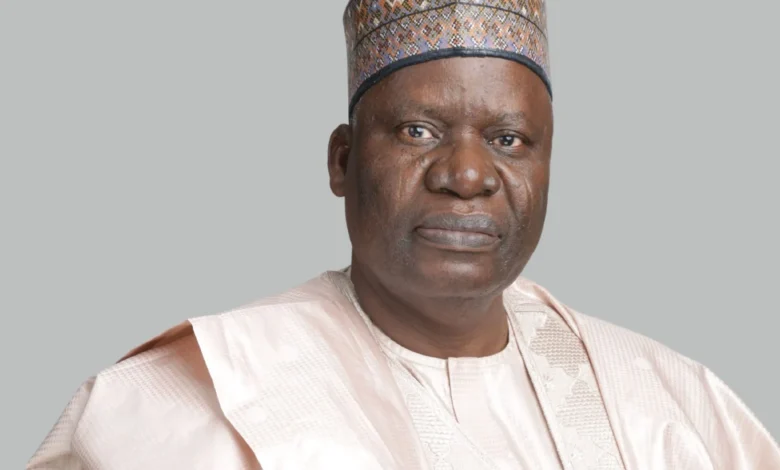
Dr Suleyman A. Ndanusa distinguishes between the political economy, through which power distributes wealth, and the economy of politics, through which wealth acquires power and seeks a return. His argument traces the cycle from campaign financing and coalition-building to patronage, political access and the financing of the next electoral contest. It also recognises why the system persists: weak public institutions and limited social protection make political relationships a substitute for rights, services and economic security. Patronage therefore survives not only because politicians supply it, but because citizens and communities often depend on it.
The reform implication extends beyond changing leaders or adopting a different constitutional model. Nigeria’s execution test lies in reducing the lawful cost of political participation, enforcing transparent campaign-finance rules, publishing credible party accounts, protecting open procurement, applying evidence to public appointments and projects, and making institutions more dependable than personal access. Stronger rules would reduce the private value attached to controlling government and improve the credibility of economic policy. The investable signal is institutional: political victory should confer a temporary mandate to govern, not control of a distribution network whose obligations distort markets and public finance.
Nigeria’s Two Interlocking Economies
Nigeria has two economies. There is the official economy monitored by the National Bureau of Statistics. That is where we find inflation, GDP, unemployment, exchange rates and enough decimal points to persuade us that our suffering has been carefully calculated.
Then there is the economy of politics.
This second economy is not fully captured in official statistics, although it may be one of the fastest growing sectors in the country. It has investors, brokers, wholesalers, retailers, consultants, apprentices and professional praise singers. Its branches extend from Abuja to every state capital, local government, ward and WhatsApp group.
It may also be the only sector in which nobody complains about a shortage of liquidity during an election year.
Around it sits Nigeria’s political economy, the arrangement through which political power influences who receives appointments, contracts, licences, waivers, concessions, projects and the ever valuable opportunity to “see somebody.”
The political economy asks how power distributes wealth. The economy of politics asks how wealth acquires power and what it expects after making the acquisition.
One concerns the sharing of the national cake. The other determines who supplied the flour, who baked it, who brought the knife and who has been waiting since 1999 for his own slice.
Nigeria’s difficulty is that the two have become inseparable business partners.
The Electioneering Marketplace
We are now in another electioneering season. The political drums are sounding again. Aspirants are consulting, supporters are urging, groups are endorsing and posters are beginning to appear before the candidates have officially agreed to the demands of “millions of concerned citizens.”
A Nigerian politician rarely announces that he wants to contest an election. He is usually compelled by his people.
The people may consist of twelve gentlemen seated in a hotel conference room, but their pressure can be overwhelming.
Soon, declarations will multiply. Politicians who have spent years avoiding ordinary citizens will suddenly remember that the masses are the heartbeat of democracy. Those who travelled with police escorts and tinted windows will begin entering markets, carrying babies and inspecting roasted corn with expressions of deep national concern.
Food vendors should prepare. Election season is the only period when some senior politicians remember that Nigerians eat by the roadside.
The Coalition and Its Claims
Long before a candidate wins, an entire industry gathers around him. There are campaign financiers, party leaders, delegates, coordinators, strategists, mobilisers, support groups, youth leaders, women leaders, elders, stakeholders and people whose official designation is simply “one of those who made it possible.”
Some contribute ideas. Some contribute money. Some contribute vehicles. Others contribute prayers so vigorously that they may later request a special adviser position on spiritual mobilisation.
Everybody is investing something.
By the time the votes are counted, and the winner takes the oath of office, he does not enter an empty room. He enters a crowded marketplace of promises, debts, ambitions and expectations.
The queue has already formed.
Party leaders expect recognition for delivering their structures. Campaign financiers await the dividends of political investment. Communities demand appointments. Contractors anticipate projects. Support groups want inclusion. Political associates remember every journey they made during the campaign, including those for which the candidate paid the transport fare and provided refreshments.
Even distant acquaintances suddenly recover lost memories.
Someone who last spoke to the winner thirty years ago remembers that they once shared groundnuts at boarding school. Another shows a photograph of him standing behind the candidate at a rally. The photograph may be blurred, and he may be several hundred metres away, but loyalty is not measured by image resolution.
A third announces that his late uncle, the winner’s grandfather, once travelled in the same railway compartment.
Victory, in Nigeria, is a powerful genealogical research tool.
Telephone numbers thought lost return miraculously. Old classmates emerge. Former neighbours send congratulatory messages beginning with, “Your Excellency, as you will recall.” People the winner cannot recall assure him that this is understandable because leadership comes with pressure.
The successful candidate soon acquires more brothers, sisters, cousins and childhood friends than his parents could reasonably have produced.
Not all these expectations are improper. Democracy requires coalitions. Political supporters deserve to be heard. Regions and communities need fair representation. No government can be formed entirely from people who opposed its election and spent the campaign season praying for its defeat.
But there is a difference between legitimate inclusion and the conversion of government into a political repayment platform.
In Nigeria, that difference occasionally becomes shy.
The Cost of Entry and the Invisible Ledger
Politics here is expensive to enter, costly to contest and financially traumatic to win. A serious candidate must purchase nomination forms, establish campaign offices, travel across a large constituency, advertise, mobilise supporters, protect votes and maintain an army of political relationships.
Then come the consultations.
Consultation is an important democratic activity during which an aspirant visits influential persons to seek wisdom, blessings and, depending on the direction of the conversation, an account number.
Around the visible campaign sits an even larger informal economy whose accounts are neither published nor audited. There are transport allowances, accommodation expenses, media bills and the feeding of supporters who appear to develop exceptional appetites whenever democracy is under discussion.
Democracy may belong to everybody, but its admission ticket is not cheap.
When politics costs so much, the important question is not merely who won. It is also who paid?
Some contributors sincerely believe in the candidate. Others are investing in access. They do not regard their contributions as donations to democratic development. They see them as fixed deposits in a political bank, with interest payable in contracts, appointments, regulatory consideration or unrestricted access to the new government.
A campaign donation can therefore be a loan that neither the candidate nor the public remembers formally borrowing.
The winner may enter office carrying an invisible ledger. On one page are promises to citizens. On another are obligations to those who financed the journey.
Unfortunately, the second page is usually printed in a larger font.
Appointments begin to settle accounts. Contracts reward loyalty. Projects are sometimes located according to electoral arithmetic rather than economic need. Public institutions must create space for individuals whose principal qualification is that they were present during “the struggle.”
What exactly they struggled against is not always clear.
Some struggled against sleep by attending late-night meetings. Some struggled against hunger at campaign venues, although refreshments eventually arrived. Others struggled bravely to move from the losing party to the winning one before the final results were announced.
All struggles are not equal, but every struggler expects recognition.
When Political Finance Shapes Government
This is how the economy of politics enters government and begins to shape the political economy. Money helps to acquire power. Power provides access to economic opportunity. Some of the resulting wealth returns to finance the next election.
The wheel turns again, well lubricated by public resources and private expectations.
Government as an Economic Prize
This helps explain why political contests in Nigeria sometimes resemble battles for economic survival. Elections are not always competitions between different ideas about how society should be governed. They can become struggles over access to appointments, contracts, influence and the commanding heights of public opportunity.
To lose an election may therefore mean more than losing the privilege of implementing a manifesto. Indeed, the manifesto may not be the main concern. Some manifestos enjoy a quiet and undisturbed retirement immediately after the inauguration.
Losing can mean exclusion from the networks through which opportunities circulate.
The stakes become dangerously high because government is not merely the referee. It is often the largest player on the field, the owner of the stadium, the supplier of the ball and, on difficult days, the authority responsible for interpreting the final score.
The businessman with the best product must still worry about the businessman with the best telephone numbers. The community with the greatest need may watch another community with stronger political representation receive the project. A job applicant may possess the required qualifications but still be advised to find somebody who can “speak” for him.
Apparently, certificates can introduce you, but connections must conclude the meeting.
In this environment, proximity to power becomes an economic asset. Knowing the right person can be more profitable than knowing the right thing. Relationships become working capital. A photograph with an important official may appreciate faster than some investments on the stock exchange.
The photograph need not even reflect a relationship. It only needs to be displayed prominently in the sitting room.
Why Citizens Also Depend on Patronage
Naturally, citizens adapt. We cannot discuss patronage as though politicians invented it entirely for their private amusement while the rest of society watched innocently from the visitors’ gallery. Nigerians are also shareholders in the enterprise.
Where jobs are scarce, social protection is weak and institutions are unreliable, access to a politician becomes a form of insurance. Citizens approach officeholders for school fees, medical bills, employment, funerals, marriages, rent and emergencies that sometimes began long before the politician was elected.
A legislator elected to make laws soon discovers that his constituents expect him to operate a scholarship board, employment bureau, hospital fund, microfinance bank, road construction company and marriage support programme.
If he attends a wedding without making a generous contribution, the marriage may survive, but his political future could be uncertain.
If he fails to attend a funeral, some voters may conclude that he lacks respect for the living.
Communities demand roads, boreholes and transformers from legislators because the institutions formally responsible for these services are often missing in action. The politician becomes a parallel government. To remain popular, he must continue distributing assistance. To finance that distribution, he must retain access to public resources or wealthy patrons.
Patronage survives because it performs functions that institutions have abandoned.
When Favour Becomes More Dependable Than Rights
This is why sermons alone cannot defeat it. A citizen may condemn patronage during a morning radio programme and seek it before sunset when a hospital bill arrives. A politician may promise institutional reform but soon meet voters who prefer an immediate bag of rice to a long-term lecture on structural transformation.
Structural transformation is important, but rice can be cooked this evening.
Everyone complains about the system, yet many people must use it to survive. The tragedy is not simply that citizens depend on political favour. It is that the state has frequently made favour more dependable than rights.
That is the heart of Nigeria’s political economy of access.
It also explains why changing leaders, although important, is never sufficient.
Every election arrives with promises of transformation. Candidates assure us that the old order will disappear. Supporters announce that their man is different. If he has previously held office, we are told that circumstances prevented him from displaying the full extent of his difference.
Yet even a well-intentioned leader enters government through established networks of financiers, party structures, regional alliances and social expectations.
He may intend to change the system, but the system has prepared a welcome package for him.
The furniture is arranged. The files are waiting. The queue has collected numbered tickets, although several important people have no intention of waiting according to their numbers.
Constitutional Change Is Not Behavioural Reform
This is why Nigeria’s debate over presidential and parliamentary government must move beyond constitutional labels. A parliamentary system may reduce some election costs, strengthen political parties and make executive leadership more accountable to the legislature. These are serious possibilities deserving careful consideration.
But a change of constitutional vocabulary will not automatically produce a change of political behaviour.
If candidates are still selected by money, parties remain vehicles for capturing office, elections remain prohibitively expensive and public resources continue to finance political survival, a parliamentary arrangement may reproduce familiar conduct under a more distinguished title.
Nigeria could import Westminster and still operate it like Wuse Market.
We might replace the President with a Prime Minister, only to discover that the same political creditors have updated the name on their invoices.
The Prime Minister may face Parliament more often, but he could still arrive carrying the same invisible ledger. Indeed, if party structures remain weak, he may spend so much time managing political creditors within Parliament that the rest of the country will need an appointment to see him.
Reforming the Relationship Between Money and Power
The real reform must therefore reach both the political economy and the economy of politics.
We must change how political power distributes economic opportunities. Public contracts should be governed by open competition, not private access. Appointments should reflect legitimate diversity without treating competence as an inconvenience. Projects should follow evidence, population and need not merely the political volume of the representative requesting them.
We must also change how money acquires political power. Campaign finance rules must be realistic, transparent and enforceable. Political parties must publish credible accounts. Candidate selection should not be an auction in which the highest bidder emerges with the party flag, an exhausted bank account and several urgent promises to recover his investment.
The cost of lawful political participation must be reduced. When only the extremely wealthy or those sponsored by powerful interests can realistically contest elections, public office begins with a debt to money.
Institutions Must Replace Political Benevolence
Above all, institutions must replace political benevolence. A citizen should not need to know a commissioner to obtain healthcare, a legislator to receive a scholarship or a minister to secure a fair opportunity. Every public service delivered as a right reduces dependence on patronage. Every transparent process removes another commodity from the political marketplace.
The objective must be to make access to institutions more valuable than access to individuals.
This is not an argument against politics. Politics is necessary. Coalition building is unavoidable. Representation matters. Patronage, within lawful and reasonable limits, exists in every political system.
The danger begins when patronage becomes the operating system of the state and public policy is merely an application struggling to open.
Changing What Political Victory Means
Nigeria’s challenge is therefore larger than deciding who wins the next election. It is to change what winning means.
If political victory continues to confer control over an enormous distribution network, elections will remain expensive, desperate and divisive. If institutions become stronger than their temporary occupants, political power will become less commercially valuable, losing elections will become less terrifying, and politicians may even discover that opposition is a constitutional role, not a medical emergency.
Whoever wins the next election will inherit the existing political economy. No President is sworn into an imaginary country. The winner must begin with the system as it is.
But he need not end there.
The real test of leadership will not be whether the winner successfully takes his seat at the centre of this vast economy of access, patronage and expectation. It will be a matter of whether he has the courage to reform its incentives, strengthen the institutions around it, and change the relationship between money and power.
Nigeria must reform how politics affects the economy. It must also reform how the economy has affected politics.
Otherwise, the next election will change the people seated at the table, while the table, the menu, the sharing formula, and the gentlemen patiently waiting to collect the bill remain exactly where they have always been.
ABOUT THE AUTHOR:
Suleyman A. Ndanusa, PhD, OON, is an economist, lawyer, strategic studies scholar, and public policy thinker and practitioner with extensive experience in financial markets, regulation, governance, national security, and development.