Nigeria’s Debt: The Naira Lie, The Dollar Truth, And The Reality In Between

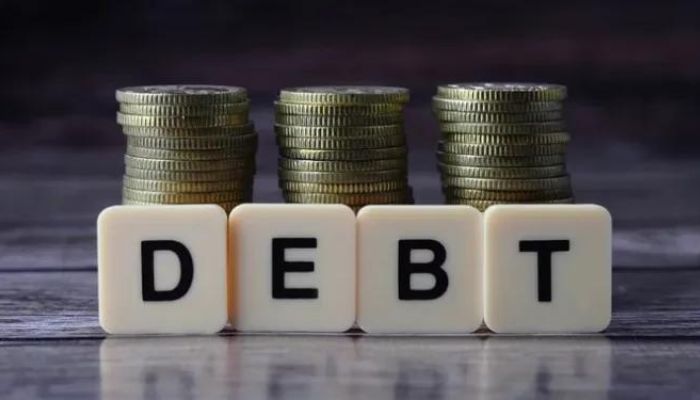
Nigeria is not arguing about debt. Nigeria is arguing about arithmetic. And in that argument, the exchange rate is the weapon both sides use, and the weapon both sides hide. The opposition says it simply, and powerfully: in 63 years, 16 Nigerian leaders borrowed N46 trillion, while in three years, Bola Tinubu borrowed N120 trillion and still removed subsidy. It is a sentence designed to shock, and it works because it is easy to remember. The government and its supporters say it is propaganda. They say the N120 trillion figure is a maths trick that compares old naira to new naira, ignores debt that was already spent but hidden, and pretends that devaluation is borrowing. Both sides are telling a part of the truth, and neither side is telling the whole truth. The reality of Nigeria’s debt position lives in between, and it can only be understood if you understand what the exchange rate did to the numbers.
The opposition is right about one thing that matters to ordinary Nigerians, and that is that debt feels heavier. In naira terms, Nigeria’s public debt has exploded. The Debt Management Office puts total public debt today at about N166.8 trillion. In December 2022, the same DMO put it at N46.25 trillion. Subtract one from the other and you get about N120 trillion. That is where the viral figure comes from. It is not invented. It is subtraction. But subtraction is not analysis. The N46.25 trillion figure was never the full debt. It excluded N22.7 trillion in Ways and Means, the overdraft the Central Bank printed for the Buhari government and kept off the official debt register. That money was already borrowed. It was already spent. It was already owed. It was only formally added to public debt in May 2023, days before Tinubu took office, when the Senate securitised it. To say Tinubu inherited N46 trillion is therefore to inherit a lie by omission. He inherited N46.25 trillion plus N22.7 trillion plus about N5 trillion borrowed between January and June 2023, about N74 trillion even before you touch the exchange rate. The opposition is also right that new borrowing has continued. The government has issued Eurobonds, taken multilateral loans, and issued record amounts of domestic Treasury bills and bonds to fund deficits. Gross borrowing since 2023 has been far larger than the net figure the government quotes. To pretend that borrowing stopped in 2023 would be false. But to call the entire increase from N46 trillion to N166 trillion new borrowing is also false, because a large part of that increase was not borrowing at all. It was revaluation.
This is the heart of the matter, and it is where most Nigerians are misled, not by malice, but by confusion. In June 2023, Nigeria unified its exchange rate. Before unification, Nigeria had a foreign debt stock of about $43 billion. At the old official rate of N460 to $1, that debt was recorded as N19.9 trillion. The day after unification, at N770 to $1, the exact same $43 billion of debt was suddenly recorded as N33.2 trillion. Nigeria had not borrowed one extra dollar. It had not spent one extra dollar. It had not signed one extra loan agreement. Yet on paper, it had added N13.4 trillion to its debt. That is what devaluation does. It makes old debt look like new debt. If you add the Ways and Means securitisation and the revaluation together, the true debt at the start of Tinubu’s administration was not N46 trillion. It was about N87.4 trillion, as government supporters correctly argue. From N87.4 trillion to N166.8 trillion is still a large increase, about N79 trillion, but it is not N120 trillion. And even that N79 trillion is not all new borrowing, because the naira continued to fall after June 2023, from N770 to over N1,500 at times, revaluing the same dollar debt again and again.
This is why the government insists on looking at debt in dollars. In dollars, DMO data shows total public debt rose from $113.4 billion in June 2023 to $120.9 billion in June 2026. That is an increase of $7.5 billion in three years. In dollar terms, the entire debt stock of Nigeria since 1960 is $120.9 billion. $113.4 billion was already there when Tinubu arrived. $7.5 billion was added net. That dollar figure is a powerful corrective. It exposes the trick of comparing naira across a devaluation. It reminds Nigerians that a country does not become twice as indebted just because its currency loses half its value. But the dollar figure is also a trick of its own, if it is used alone. It proves that the N120 trillion number is not new borrowing. It does not prove that borrowing under Tinubu has been small in fiscal terms, or that debt is sustainable, or that subsidy savings have translated into better living standards.
The government is right that the N120 trillion claim is misleading. It is right that Ways and Means was hidden debt. It is right that unification created paper debt. It is right that Nigeria has repaid significant debt, including the $3.4 billion IMF COVID loan in full by April 2025, and $9.9 billion in foreign debt payments in 2024 to 2025, according to CBN data. But the government is wrong if it suggests that a $7.5 billion net increase means borrowing has been small. Net is not gross. Net is what remains after you subtract repayments from new borrowing. If you borrow $20 billion and repay $12.5 billion, your net increase is $7.5 billion, but you still went to the market for $20 billion, paid fees and interest on $20 billion, and added $20 billion of obligations that must be managed. The government is also wrong to imply that dollar debt is the only debt that matters. Most of Nigeria’s debt is domestic, in naira. When the government issues new Treasury bills and bonds in naira to fund a budget deficit, that is real borrowing, even if the dollar value of the total stock looks stable. It must be repaid in naira, with naira interest, from naira revenue. And naira interest rates have been punishingly high. That is why debt service, not debt stock, is the real burden. Even if the stock in dollars rose only modestly, debt service in naira rose sharply because interest rates rose and the naira fell. A government can have a stable debt stock and still be suffocating under debt service.
The government is also silent on the question that matters most to citizens, which is what was the borrowing for. If new debt built power, rail, schools, and security, Nigerians would feel it. If it funded recurrent spending, subsidies for the rich, or refinancing of old debt, they will not. The video that sparked this debate says FAAC allocations rose from about N656 billion in one month before subsidy removal to N2.4 trillion in one month after. That is true, and it shows subsidy savings were shared. But sharing money to states is not the same as delivering services. Nigerians have not seen a proportional improvement in roads, hospitals, power, or security to match the extra FAAC. Until they do, the argument that subsidy removal was worth it will remain unconvincing, no matter how correct the debt arithmetic is. More money shared does not automatically mean better outcomes, and a government that celebrates higher FAAC while citizens pay more for food, transport, and power will always lose the argument in the market and in the home, even if it wins it on a spreadsheet.
The reality is this. Nigeria did not borrow N120 trillion in three years. That figure is a product of devaluation and hidden debt, not new loans. Nigeria also did not borrow only $7.5 billion in a way that means borrowing is under control. That figure is a net, dollar-denominated figure that hides the scale of gross domestic borrowing and the pain of debt service. Nigeria inherited a debt stock that was larger than officially reported, and then added to it, in a period when its currency lost value and interest rates rose. That is a triple squeeze: more debt, weaker naira, higher rates. It is the worst combination for debt sustainability. The opposition wants Nigerians to believe the government is reckless. The government wants Nigerians to believe the opposition is ignorant. Both want a simple number. There is no simple number. There is a stock, a flow, a currency, and a cost. The stock in dollars is $120.9 billion. The flow in naira is enormous because the naira is weak. The cost in naira is enormous because rates are high. The test is not whether Tinubu borrowed more than 16 leaders. He did not, in real terms. The test is whether the borrowing since 2023 has created enough growth, revenue, and jobs to pay for itself.
On that test, the jury is still out. FAAC is up. Debt is up. Inflation has eased from its peak but remains high. The naira has stabilised but not recovered. If the government can show that new borrowing is funding infrastructure that generates revenue, and that debt service as a share of revenue is falling, then its dollar argument will become a real economic argument. If it cannot, then the opposition’s naira argument, even if arithmetically flawed, will continue to feel true to Nigerians who pay more for food, transport, and power, while hearing that debt is not really debt. Nigeria’s debt debate will not be settled by a viral post or a rebuttal video. It will be settled by budgets that are transparent, by borrowing that is tied to projects Nigerians can see, and by a naira that is stable enough that Nigerians no longer need a PhD in exchange rates to understand how much their country owes.