Lagos State is set to hit a major milestone in Nigeria’s power sector reform, with the first state-licensed independent power producers expected to begin commercial operations between 2026 and early 2027. The move signals a shift from policy to execution under the country’s new decentralised electricity framework.
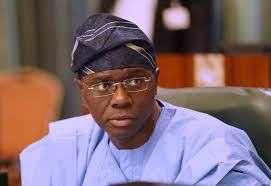
Governor Babajide Sanwo-Olu disclosed the timeline at the BusinessDay Energy Conference 2026, themed ‘Beyond the Grid: How States Can Rewrite Nigeria’s Power Story’. Represented by Commissioner for Energy and Mineral Resources Biodun Ogunleye, the governor said the upcoming IPPs will operate under Lagos’ newly established electricity market structure, marking the first tangible outcome of reforms driven by the Lagos State Electricity Law 2024.
“We expect the first state-licensed independent power producer to begin commercial operations between 2026 and early 2027,” Ogunleye said. He noted that the projects are targeted at high-demand areas, including industrial clusters and critical infrastructure.
The development follows Lagos’ completion of its transition from federal to state-level electricity regulation in 2025, making it the first state to fully assume control of its power market under the Electricity Act 2023.
On Sunday, Lagos signed Power Purchase Agreements and concession arrangements with three IPPs — Mainland Power Limited; Fenchurch Power Limited, in partnership with Aggregate Utilities Limited; and Viathan Engineering Limited. The deals, formalised at Lagos House, Marina, are part of plans to expand electricity generation capacity to between 200MW and 400MW within the next few years.
“This agreement is about the people and how quickly we can solve problems. We must keep our promises on both sides. When people benefit, life becomes easier. This marks the beginning of the reforms we are driving in the energy sector,” Sanwo-Olu said.
The governor stressed that reliable electricity is central to economic transformation, describing energy as the “oxygen of development” and a prerequisite for industrialisation, healthcare delivery, and modern urban systems. Lagos alone spends an estimated $2.7 billion annually on self-generation, a cost that could be redirected into productive investment if stable grid-alternative supply is achieved.
If fully realised, the state’s electricity market reforms could significantly expand economic output. Sanwo-Olu suggested that reliable power could potentially double the size of Lagos’ economy over time.
While acknowledging ongoing challenges around coordination, regulation, and financing, the governor said the focus must now shift from legislation to implementation. “The question is no longer whether states have the authority,” he said. “It is whether they have the will to act.”With the first state-licensed IPP now on the horizon, Lagos appears poised to test that resolve and potentially redefine the trajectory of Nigeria’s power sector.