
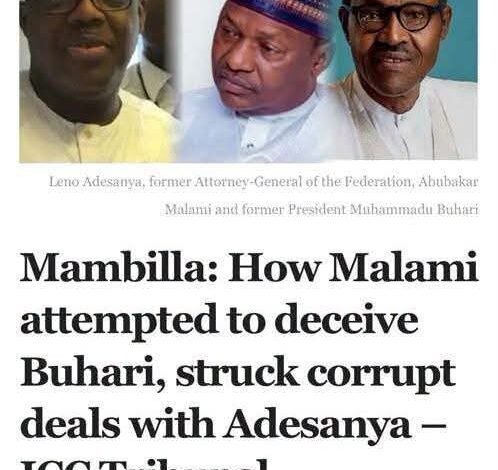
The story of Mambilla is no longer just about a dam that was never built. The ICC tribunal has shown how Nigeria almost lost $400 million in a settlement negotiated in Abuja.
The transaction started on 2 January 2020 with a Settlement Agreement committing Nigeria to pay Sunrise Power $200 million. Nine weeks later, on 25 March 2020, an Addendum was introduced adding another $200 million as a financial-default sanction. If Nigeria defaulted on the first $200 million, it would automatically owe $400 million. The tribunal said the timing of that increase raised serious concerns.
Why would a government that had no money for $200 million agree to expose itself to $400 million just 63 days later? The tribunal found the answer in the relationship between Leno Adesanya for Sunrise and Abubakar Malami, then Attorney-General of the Federation.
Adesanya testified that in a conversation with Malami and former Power Minister Saleh Mamman, he was told Nigeria would not pay the $200 million at once but would pay half and release the rest after he had done “what is needed.” That phrase is the classic language of a kickback. Adesanya told the tribunal he had audio and video recordings of the solicitation, but he and Sunrise withheld those recordings. The tribunal noted those recordings could have been significant evidence of the arrangement. Withholding them suggests they did not just capture a demand, but complicity.
The tribunal also found direct WhatsApp coordination between Malami and Adesanya at different times, even though they were supposed to be opposing parties. The Attorney-General of the Federation does not privately coordinate settlement terms with the man suing the Federation unless the interest being served is no longer Nigeria’s.
Against this background, the role of President Muhammadu Buhari emerges as the only institutional brake. On 20 April 2020, in his own handwriting, Buhari withheld approval because “FG hasn’t got USD 200m to pay (Sunrise).” On 18 January 2021, his Chief of Staff again conveyed Buhari’s handwritten “not approved” to Malami. The tribunal found that Malami failed to provide Buhari with correct information and kept pushing the settlement despite repeated rejections. That, the tribunal said, was acting against Nigeria’s interest, motivated by “other incentive(s).” Malami then failed to appear before the tribunal to defend himself.
Saleh Mamman’s alleged presence in the conversation where “what is needed” was mentioned places him in the chain of solicitation. Adesanya appears as both solicited and willing, recording officials but refusing to produce the recordings, claiming resistance while coordinating on WhatsApp.
The tribunal’s final conclusion is unambiguous: “a corrupt deal was reached between Mr Adesanya on the one hand, and Mr Malami on the other hand, rendering the Settlement Agreement and the Addendum thereto a product of corruption.”
This was a three-stage plan that failed only because Buhari kept saying no. First, create a $200 million settlement for a case Nigeria was winning. Second, insert a $200 million default penalty nine weeks later. Third, make the second half payable after a private arrangement. Nigeria won the main Mambilla claim, but the award leaves a permanent indictment: when the chief law officer is found to have reached a corrupt deal with a claimant and misled his own President, the settlement was never about settling a dispute, it was about sharing its proceeds.
The story of Mambilla is no longer just about a dam that was never built. The ICC tribunal has shown how Nigeria almost lost $400 million in a settlement negotiated in Abuja.
The transaction started on 2 January 2020 with a Settlement Agreement committing Nigeria to pay Sunrise Power $200 million. Nine weeks later, on 25 March 2020, an Addendum was introduced adding another $200 million as a financial-default sanction. If Nigeria defaulted on the first $200 million, it would automatically owe $400 million. The tribunal said the timing of that increase raised serious concerns.
Why would a government that had no money for $200 million agree to expose itself to $400 million just 63 days later? The tribunal found the answer in the relationship between Leno Adesanya for Sunrise and Abubakar Malami, then Attorney-General of the Federation.
Adesanya testified that in a conversation with Malami and former Power Minister Saleh Mamman, he was told Nigeria would not pay the $200 million at once but would pay half and release the rest after he had done “what is needed.” That phrase is the classic language of a kickback. Adesanya told the tribunal he had audio and video recordings of the solicitation, but he and Sunrise withheld those recordings. The tribunal noted those recordings could have been significant evidence of the arrangement. Withholding them suggests they did not just capture a demand, but complicity.
The tribunal also found direct WhatsApp coordination between Malami and Adesanya at different times, even though they were supposed to be opposing parties. The Attorney-General of the Federation does not privately coordinate settlement terms with the man suing the Federation unless the interest being served is no longer Nigeria’s.
Against this background, the role of President Muhammadu Buhari emerges as the only institutional brake. On 20 April 2020, in his own handwriting, Buhari withheld approval because “FG hasn’t got USD 200m to pay (Sunrise).” On 18 January 2021, his Chief of Staff again conveyed Buhari’s handwritten “not approved” to Malami. The tribunal found that Malami failed to provide Buhari with correct information and kept pushing the settlement despite repeated rejections. That, the tribunal said, was acting against Nigeria’s interest, motivated by “other incentive(s).” Malami then failed to appear before the tribunal to defend himself.
Saleh Mamman’s alleged presence in the conversation where “what is needed” was mentioned places him in the chain of solicitation. Adesanya appears as both solicited and willing, recording officials but refusing to produce the recordings, claiming resistance while coordinating on WhatsApp.
The tribunal’s final conclusion is unambiguous: “a corrupt deal was reached between Mr Adesanya on the one hand, and Mr Malami on the other hand, rendering the Settlement Agreement and the Addendum thereto a product of corruption.”
This was a three-stage plan that failed only because Buhari kept saying no. First, create a $200 million settlement for a case Nigeria was winning. Second, insert a $200 million default penalty nine weeks later. Third, make the second half payable after a private arrangement. Nigeria won the main Mambilla claim, but the award leaves a permanent indictment: when the chief law officer is found to have reached a corrupt deal with a claimant and misled his own President, the settlement was never about settling a dispute, it was about sharing its proceeds.
The story of Mambilla is no longer just about a dam that was never built. The ICC tribunal has shown how Nigeria almost lost $400 million in a settlement negotiated in Abuja.
The transaction started on 2 January 2020 with a Settlement Agreement committing Nigeria to pay Sunrise Power $200 million. Nine weeks later, on 25 March 2020, an Addendum was introduced adding another $200 million as a financial-default sanction. If Nigeria defaulted on the first $200 million, it would automatically owe $400 million. The tribunal said the timing of that increase raised serious concerns.
Why would a government that had no money for $200 million agree to expose itself to $400 million just 63 days later? The tribunal found the answer in the relationship between Leno Adesanya for Sunrise and Abubakar Malami, then Attorney-General of the Federation.
Adesanya testified that in a conversation with Malami and former Power Minister Saleh Mamman, he was told Nigeria would not pay the $200 million at once but would pay half and release the rest after he had done “what is needed.” That phrase is the classic language of a kickback. Adesanya told the tribunal he had audio and video recordings of the solicitation, but he and Sunrise withheld those recordings. The tribunal noted those recordings could have been significant evidence of the arrangement. Withholding them suggests they did not just capture a demand, but complicity.
The tribunal also found direct WhatsApp coordination between Malami and Adesanya at different times, even though they were supposed to be opposing parties. The Attorney-General of the Federation does not privately coordinate settlement terms with the man suing the Federation unless the interest being served is no longer Nigeria’s.
Against this background, the role of President Muhammadu Buhari emerges as the only institutional brake. On 20 April 2020, in his own handwriting, Buhari withheld approval because “FG hasn’t got USD 200m to pay (Sunrise).” On 18 January 2021, his Chief of Staff again conveyed Buhari’s handwritten “not approved” to Malami. The tribunal found that Malami failed to provide Buhari with correct information and kept pushing the settlement despite repeated rejections. That, the tribunal said, was acting against Nigeria’s interest, motivated by “other incentive(s).” Malami then failed to appear before the tribunal to defend himself.
Saleh Mamman’s alleged presence in the conversation where “what is needed” was mentioned places him in the chain of solicitation. Adesanya appears as both solicited and willing, recording officials but refusing to produce the recordings, claiming resistance while coordinating on WhatsApp.
The tribunal’s final conclusion is unambiguous: “a corrupt deal was reached between Mr Adesanya on the one hand, and Mr Malami on the other hand, rendering the Settlement Agreement and the Addendum thereto a product of corruption.”
This was a three-stage plan that failed only because Buhari kept saying no. First, create a $200 million settlement for a case Nigeria was winning. Second, insert a $200 million default penalty nine weeks later. Third, make the second half payable after a private arrangement. Nigeria won the main Mambilla claim, but the award leaves a permanent indictment: when the chief law officer is found to have reached a corrupt deal with a claimant and misled his own President, the settlement was never about settling a dispute, it was about sharing its proceeds.