From Reform to Results: Can Oyedele’s 16-Member Committee Deliver ?

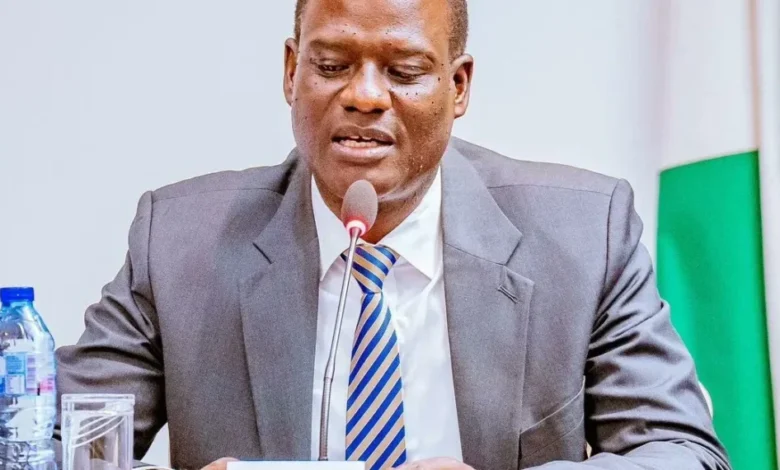
On July 14, 2026, Finance Minister Taiwo Oyedele admitted what households and businesses have felt for three years: announcing reforms is not the same as delivering them. To close that gap, he inaugurated a 16-member Ministerial Advisory Committee chaired by Sterling Bank MD Abubakar Sulaiman, with economist Dr. Ayo Teriba as Vice Chairman. The group, made up of bankers, development-finance economists, capital-market professionals and business chamber leaders serving pro bono, was framed as a “public policy–private partnership” to move the Tinubu administration “from reform to results.” Its mandate is not theory. It is execution: advise on economic policy, strengthen public financial management, force coordination across federal, state and local governments, and tie everything to measurable outcomes like jobs, lower inflation, a stable naira and progress toward the 7% growth and $1 trillion economy target by 2030. That is a clear signal to markets that the administration wants external scrutiny as it enters the harder phase of delivery.
This moment mirrors 2012, when four finance ministers were honored globally for turning crisis into structural change. Tharman Shanmugaratnam in Singapore responded to a sharp slowdown by shifting the economy away from cheap foreign labor and toward productivity. He used fiscal tools aggressively: incentives for older workers and homemakers to re-enter the workforce, employment credits for SMEs to hire them, and funding to push firms into innovation and skills. Even with growth at 1.5%, unemployment for locals fell below 3%. Andris Vilks in Latvia faced the opposite problem, a 25% GDP collapse. He accepted a brutal 15% of GDP fiscal adjustment under an IMF program, cut spending, raised fees, and communicated that the pain was temporary. By 2012 Latvia was growing at 5.6%, the fastest in the EU, with a deficit under 2% and an early IMF repayment. Charles Koffi Diby in Côte d’Ivoire came out of civil war and debt distress. He secured HIPC relief that cut external debt from $8bn to $4.7bn and dropped debt-to-GDP from 67% to 36%, freeing a third of the budget. He then restructured a defaulted $2.3bn Eurobond and pushed cocoa-sector reforms, taking growth from -5% in 2011 to an expected +8.5% in 2012. Luis Castilla in Peru chose to lock in growth rather than cut it. With 6% GDP growth and record foreign investment, he broadened the tax base, introduced a new mining tax, improved pensions, and tied half the 2013 budget to performance-based spending on social inclusion and infrastructure. What linked all four was sequencing. Macro stabilization was immediately followed by visible supply-side wins that citizens could feel.
Nigeria under President Tinubu and now under Oyedele has followed a similar starting point but with a different pace. Like Vilks, the administration began with shock therapy: fuel subsidy removal and FX unification to end distortions and restore fiscal credibility. Like Diby, the focus has been on debt sustainability and unlocking capital through a push for higher revenue-to-GDP, clearing FX backlogs, and seeking concessional funding. Like Shanmugaratnam, there is a productivity narrative around CNG rollout, tax reform, and incentives for manufacturing and agriculture. And like Castilla, there is an emphasis on inclusion through direct cash transfers and student loans, even as the budget aims for deficit reduction. The contrast, however, is in how quickly pain is paired with payoff. The 2012 ministers delivered tangible wins alongside reforms. Singaporeans saw skills programs. Latvians saw exports recover with EU market access. Ivorians saw debt service fall and infrastructure plans restart. Peruvians saw pensions and capital markets upgraded. In Nigeria, three years after the reset, macro indicators have stabilized but micro relief is still pending. Inflation remains high, power, logistics and FX access are still binding constraints, and the tax overhaul is still being implemented while revenue-to-GDP remains among the lowest globally. States control land, security and much of the investment climate, yet federal reforms often move without alignment, so policy runs into friction on the ground.
That is why the challenges before Oyedele’s committee are structural, not technical. The most urgent is the cost-of-living squeeze. Subsidy removal and FX unification were necessary, but they fed directly into inflation and weakened purchasing power. Until growth translates into jobs and cheaper goods, public support for reform will keep eroding because macro stability without micro relief is politically unsustainable. On revenue, widening the tax base is only half the battle. Leakages and weak budget execution mean resources do not always reach productive areas, so the committee’s work on public financial management will have to confront that reality directly. The hardest task may be coordination. Economic policy in Nigeria has long been made in silos, with the CBN, the Finance Ministry, regulators and states often moving in different directions. Without a harmonized playbook with governors on investment incentives, land processes and infrastructure planning, even well-designed federal policies will not land.
To turn this committee into results, three things must happen. First, feedback must be institutionalized. Recommendations need to be tied to specific fiscal decisions within a clear timeframe, and the government should publicly state which advice was accepted, rejected, and why. That transparency is the only way to avoid becoming another advisory body whose reports outlive their influence. Second, the government should prioritize a few deliverables that citizens can feel within 12 months, such as easing one major constraint for job-intensive sectors like agro-processing, light manufacturing, or digital services. Visible wins build the political capital needed for tougher reforms. Third, federal and state economic teams must work from the same agenda because the 7% growth target cannot be achieved from Abuja alone. The credibility of the exercise will also rest on independence. Sulaiman and Teriba carry weight because they are not political appointees, and that distance must be protected. The moment the committee becomes a rubber stamp, its value disappears.
In the end, Nigeria has completed the announcement phase of reform. Subsidy removal, FX unification and tax changes have reset the macro framework. What remains is execution, turning policy into jobs, stable prices, and investment. The 2012 ministers proved that credibility without delivery erodes fast. Oyedele’s committee has the right people and the right moment, but it does not have time. If its counsel starts showing up in budgets, in better coordination with states, and in fewer bottlenecks for businesses, this will be remembered as the pivot. If not, it will join the long list of well-intentioned initiatives that were excellent on paper and absent on the street.