
CBN’s 23% Reset: The End Of Divergent Rates And The Start Of Real Monetary Policy Transmission

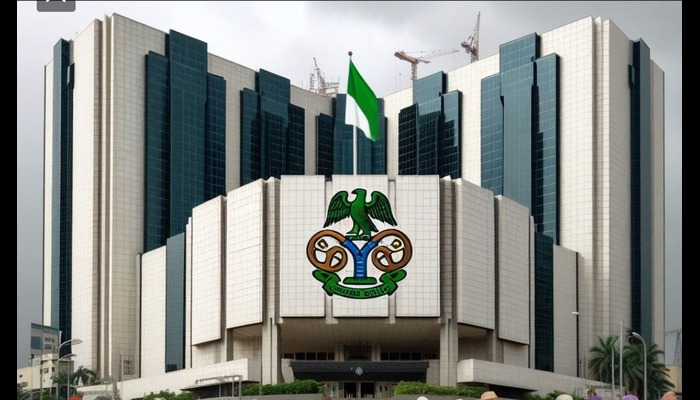
For nearly a year, Nigeria ran two monetary policies at once. There was the official policy, with a Monetary Policy Rate of 26.50 per cent that signaled strong tightness. And there was the real market policy, where overnight money traded far below that, signaling looser conditions. The result was a broken transmission mechanism where the Central Bank of Nigeria’s loudest signal was quietly ignored by banks.
On September 21 and 22, 2026, at its 307th meeting with 11 members in attendance, the Monetary Policy Committee led by Governor Olayemi Cardoso decided to end that duality. In Communiqué No. 164, Ref: CBN/MPC/COM/164/307, it announced a decision that looks like a rate cut but is far more fundamental: reset the MPR to 23.00 per cent, recalibrate the Standing Facilities Corridor to +50/-300 basis points around the MPR, and retain the Cash Reserve Requirement at 45.00 per cent for Deposit Money Banks, 16.00 per cent for Merchant Banks and 75.00 per cent for non-TSA public sector deposits.
The most important sentence in the entire document is not the 23 per cent, but the disclaimer that follows it: “The recalibration does not constitute a change in the current monetary policy stance, but rather an operational reset to enhance effectiveness and support transition to an inflation targeting framework.” The CBN is telling the market, do not mistake alignment for easing.
To understand the critical angle, you must understand the corridor surgery. Under the old regime of +500/-100, the Standing Lending Facility, where banks borrow from CBN, was MPR+500, or 31.50 per cent, while the Standing Deposit Facility, where banks park excess cash at CBN, was MPR-100, or 25.50 per cent. That created a 600 basis point wide, asymmetric band. Banks could lend to each other at 20 per cent and still be inside the policy band. The MPR at 26.5 per cent was therefore not the anchor, it was an outlier.
The new corridor of +50/-300 changes everything. SLF is now 23.50 per cent and SDF is 20.00 per cent. The lending window is now only 50bps above MPR, making it less punitive to be short, while the deposit window is now 300bps below, making it highly punitive to simply park cash at the CBN. The operational implication is deliberate: force banks to trade liquidity among themselves in the interbank market, pull the interbank rate to cluster tightly around 23 per cent, and restore the MPR as the principal signal of policy. For the market, this means the era of earning high, risk-free 25.50 per cent at CBN is over. Banks must now price loans, T-bills, and commercial papers around a real 23 per cent anchor. That improves transmission.
Why now? The MPC listed four interlocking considerations that created headroom. First, the repair of the framework itself. The Bank adopted NOFR, the Nigerian Overnight Funds Rate, as a transaction-based operational benchmark. This removed opacity in money market operations and made the divergence between MPR and market rates undeniable and measurable.
Second, external sector resilience has improved dramatically. The balance of payments surplus rose to $3.51 billion in Q2 2026 from $2.38 billion in Q1. The current account surplus surged by 67.92 per cent to $7.54 billion from $4.49 billion. Gross external reserves stood at $55.25 billion on September 18, the highest in 18 years, sufficient for 11.3 months of imports of goods and services. That reserve buffer means the CBN can defend exchange rate stability, which is critical for disinflation, even while adjusting rates.
Third, the banking system can absorb it. Members noted the strengthening of the industry following the successful recapitalisation programme, which has enhanced capital buffers, resilience and capacity to finance long-term projects. A corridor tightening when banks are weak would trigger stress. Done when banks are well-capitalised, it forces efficiency without systemic risk.
Fourth, policy coordination is now institutionalised. The MPC welcomed the Presidential Initiative on National Affordable CNG Transit Programme, which is expected to lower transportation costs, a major driver of core inflation. More structurally, it acknowledged the Memorandum of Understanding on fiscal-monetary coordination between the Federal Ministry of Finance and the CBN. This MoU provides a structured framework to harmonise policies toward low and stable inflation, addressing the longstanding problem where fiscal expansion undermines monetary tightening.
That is why the price and growth developments matter. Headline inflation slowed to 15.39 per cent year-on-year in August from 15.43 per cent in July, its third consecutive monthly decline. Food inflation declined to 19.57 per cent from 20.31 per cent on moderation in palm oil, vegetables and meat. Core inflation moderated more sharply to 13.29 per cent from 14.97 per cent on lower transport and health care services. The more telling trend is the 12-month moving average at 16.30 per cent from 16.89 per cent, marking 20 consecutive months of moderation, indicating sustained easing in underlying pressures. The immediate pulse, month-on-month inflation, slowed to 0.71 per cent from 1.57 per cent, driven mainly by food.
Growth complemented disinflation. Real GDP grew 4.43 per cent in Q2 2026 from 3.89 per cent in Q1. Non-oil expanded 4.31 per cent from 3.94 per cent, driven by ICT, crop production, real estate, livestock, financial services and trade. Oil accelerated to 7.31 per cent from 2.57 per cent on increased production and investment. The composite PMI rose to 52.7 from 51.1, suggesting further expansion. This is a rare window where growth is rising while inflation is falling, which allowed the MPC to do surgery without hurting output.
Global developments provided both caution and cover. Global growth is projected at 3.0 per cent in 2026 versus 3.5 per cent in 2025, reflecting Middle East conflict, persistent trade policy uncertainty and constrained fiscal space, partly offset by tech investment. Growth prospects are uneven, with energy-importing and low-income economies facing greater pressure. Risks to global inflation remain tilted upside from supply chain disruptions, elevated crude oil and commodity prices, and trade fragmentation, which could delay normalization elsewhere. For Nigeria, higher crude helps reserves but raises imported costs.
Consequently, the outlook and market implications are nuanced. For banks, profitability from risk-free CBN deposits will shrink, forcing them to create credit. For borrowers, this is not yet cheaper loans, but more transparent loan pricing. For the CBN, it finally has a policy rate that the market respects, which is a prerequisite for true inflation targeting. The risk is that election-related spending in late 2026 could flood liquidity and test the new corridor. The MPC is aware, which is why it retained CRR at a very tight 45 per cent and said future decisions remain data-dependent.
The next test of whether this reset worked will be at the next meeting on November 23-24, 2026, when the Committee will evaluate if interbank rates now truly orbit 23 per cent.