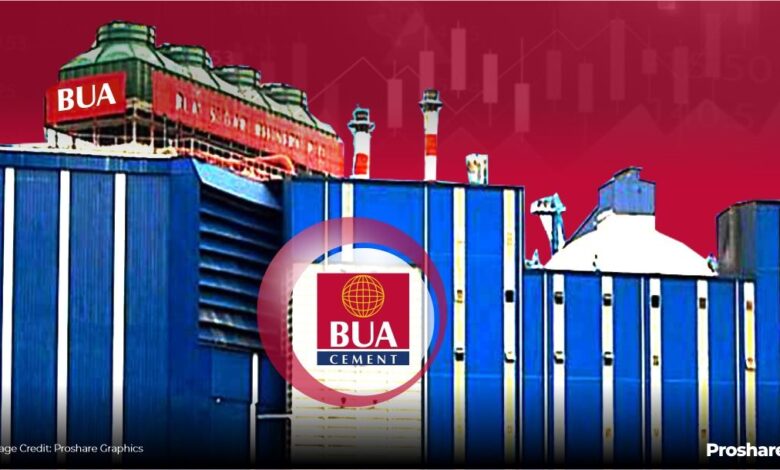
BUA Cement was cut down on September 9, 2026. The stock crashed ∼10% in a single session — one of its worst days since listing. Billions in market value were wiped out. This is the same company that investors bought for 3 years as the ultimate “inflation hedge.” Yesterday, the market said that thesis is dead.
The first reason is the death of the pricing-power story. For years BUA worked because cement is non-negotiable. Government projects, housing, and construction had to buy, no matter the price. So when diesel, gas, and FX costs went up, BUA passed it on. Revenue grew. Margins expanded. The stock was treated like a bond with volume.
That broke yesterday. With construction slowing, real estate demand soft, and government capex delayed, buyers pushed back. If you cannot raise prices without killing volume, you are not a hedge. You are a cyclical. And cyclicals get punished when rates are 26.50% and money is expensive.
The second reason is valuation that no longer flatters. BUACEMENT traded for years at premium multiples because investors assumed 20%+ earnings growth was locked in. But if margins are now at risk, a 15x-20x P/E is no longer cheap. It is dangerous. The -10% move was the market pulling the multiple back to what a commodity producer deserves, not what a monopoly deserves.
The third reason is contagion and credibility. Cement led the market higher in 2023-2024 because it was “safe.” If the safest name can drop 10% in a day, then no large-cap is safe. Investors rotated out first, asked questions later. Add FX volatility, energy costs, and debt servicing at these rates, and the model that made BUA a darling now makes it a target.
Compare the narrative shift to what happened to banks and brewers this week. Access Holdings fell 4.2% to ₦26.50. Nigerian Breweries fell 9.8% to ₦74.00. The common thread: companies that grew by raising prices are now being asked if they can grow by selling more. The answer for BUA yesterday was no.
The implications are immediate. Technically, a 10% drop opens the door to a retest of prior support zones and shakes out leveraged holders. Fundamentally, the market is now asking BUA to prove earnings are not just a function of inflation. Can they hold market share if they cut prices? Can they protect margins if input costs stay high? Can they service debt if volumes fall?
BUA Cement is not broken. It still has 3 plants, export capacity, and brand strength. But the cataclysmic selloff was the market’s verdict: the era of automatic price increases is over.
Until Rabiu shows BUACEMENT can grow tons, not just naira, ₦… is not a dip to buy. It is the price of a company being moved from “inflation hedge” to “margin trap” in real time.