
Ahead of CBN MPC: How Global Rate Divergence Resets Nigeria’s Policy Choices

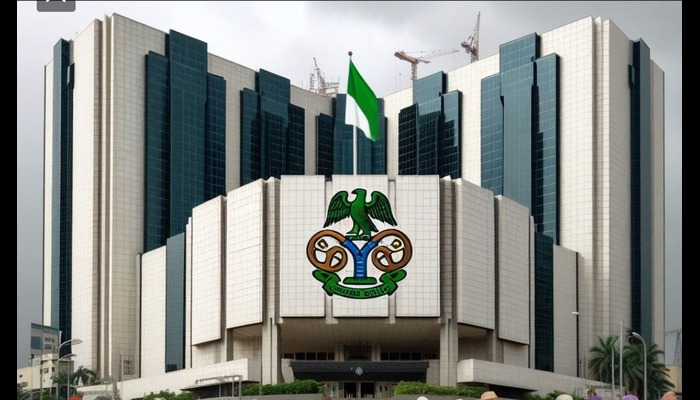
Nigeria heads into the 307th meeting of the Monetary Policy Committee on September 21 and 22 with the global monetary map in sharp divergence, and that divergence now matters more for Abuja than it has in three years.
The week before the MPC is unusually crowded. The US Federal Reserve on September 16 is priced for a 25 basis point hike to 3.75% – 4.00%, its first increase in about three years, with Chair Kevin Warsh expected to frame whether this is a one-off energy price response or the start of a new tightening sequence. Brazil on the same day is expected to cut Selic to 13.75% from 14.00%. On September 17, the Bank of England is expected to hold at 3.75% despite UK inflation rising to 3.1% in August, and Taiwan is expected to hold at 2.00% by a 28-3 margin in a Reuters poll. On September 18, the Bank of Japan is expected to hike to 1.25%, its highest in over three decades. This follows the ECB’s 25bp hike on September 10 that took its deposit facility to 2.50%.
This is not synchronized easing or tightening. It is a fragmented response to the same shock: energy prices above $100. For Nigeria, the July MPC communique already named this exact risk. At its 306th meeting, the Committee held everything – MPR at 26.50%, Standing Facilities Corridor +50/-450bps, CRR at 45.00% for commercial banks, Liquidity Ratio at 30.00% – and flagged pass-through of higher global energy prices as the principal risk.
In July, Proshare Research set two conditional tests for a September cut: that July and August inflation confirm June’s disinflation, and that the Middle East conflict does not escalate further.
On the first test, Nigeria has largely passed. Headline inflation printed 15.43% in July and 15.39% in August, a third straight decline from 15.91% in June. Month-on-month headline slowed to 0.71% in August from 1.66% in June. Core inflation eased to 13.29% in August from 15.92% in June. This is durable disinflation. The exception remains food, which rose to 20.31% in July from 17.52% in June before easing to 19.57% in August. Transport’s contribution to August headline at 1.64 percentage points shows that energy is already feeding through, but the overall direction is down.
On the second test, the external environment has deteriorated. US crude above $100 on September 10, domestic fuel prices already pushed up according to Proshare’s September 14 report, and a hawkish turn by the Fed, ECB and BOJ means imported inflation pressure is returning. This is precisely the risk the July communique warned about.
What changes the equation for the CBN is that Nigeria’s buffers are materially stronger than in July. Gross external reserves rose to $54.13bn as at September 4 from $52.52bn on July 17. The naira firmed to N1,320.56/$ from N1,375.31/$. Real GDP grew 4.43% in Q2 2026, above the 4.22% forecast and up from 3.89% in Q1. The real policy rate, on Proshare’s computation, has widened to 11.11 percentage points from 10.59 at the July meeting. Even if the Fed hikes 25bps, Nigeria’s MPR will still sit 22.50 percentage points above the upper bound of the US target. The Committee does not need to respond to the Fed with its own hike to defend the naira.
There is also a new variable that did not exist in July: index inclusion. J.P. Morgan’s inclusion of FGN bonds in its new GBI-EM Edge index at a 7.40% weight, representing about $17.47bn of eligible FGN debt across 16 instruments, puts Nigeria back in the global portfolio flow map. The Nigerian securities in the index carry an average yield of 17.1% against a benchmark average of 10.39%. This creates a powerful incentive for a measured easing, but also a risk. A cut in MPR will bear directly on domestic yields just as index-tracking funds begin positioning. Too aggressive a cut could compress the carry that makes the 7.40% weight attractive.
This leaves the MPC with a genuine choice between credibility and accommodation. A hold at 26.50% would extend the credibility-first posture identified in July. It would signal that three months of disinflation is not yet enough to offset energy-price risk and global tightening, and that the Committee prefers to protect the real rate buffer and reserve gains. A measured 50bp reduction, on the other hand, would still leave the real policy rate at 10.61 percentage points, above its level at the July meeting, while acknowledging that domestic conditions have improved, growth is stronger, and reserves can absorb external tightening.
The market will read the decision not just from the rate itself, but from three signals on September 22. First, the vote distribution and whether the Standing Facilities Corridor or the 45% CRR is adjusted to ease liquidity without touching MPR. Second, the language on energy-price pass-through and food inflation, particularly whether the Committee sees August’s 1.02% month-on-month food print as durable. Third, the forward guidance ahead of the 308th meeting on November 23-24, and ahead of the September CPI release.
For fixed income and FX, the transmission is clear. Higher US and Japan rates lift US Treasury yields and the dollar, tightening global liquidity. For Nigeria, that would normally mean pressure on foreign participation in naira assets. But with reserves at $54bn, a firmer naira, and a 17.1% average yield entering a major global index, Nigeria is better placed to absorb that tightening than it was in July. The real test will be foreign participation at the next FGN bond and Treasury bill auctions as GBI-EM Edge positioning begins.
In short, the global window has turned hawkish, but Nigeria’s domestic window has turned more dovish. The MPC’s job on September 22 is to decide which window matters more.