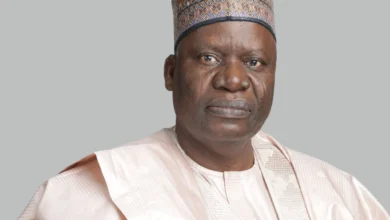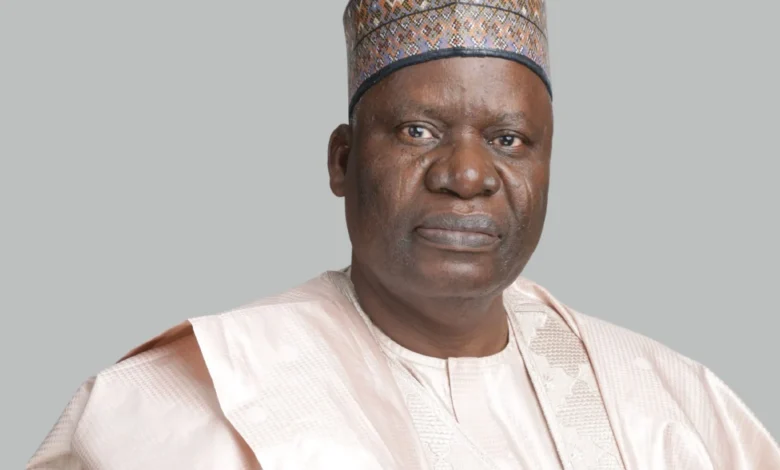
Nigeria is running two economies at the same time, and only one of them appears in the statistics. The first is the official economy tracked by the National Bureau of Statistics with inflation, GDP, and unemployment. The second is what public policy scholar Suleyman A. Ndanusa calls “the economy of politics” — a vast, informal market where wealth is used to buy power, and power is then used to distribute wealth. According to him, “The political economy asks how power distributes wealth. The economy of politics asks how wealth acquires power and what it expects after making the acquisition.” The trouble is that the two have become inseparable business partners, and that partnership now shapes who gets jobs, contracts, projects, and even basic services.
Elections have become the main trading season in this second economy. Long before ballots are cast, an entire industry gathers around aspirants: financiers, party leaders, delegates, mobilizers, youth and women leaders, and a large category Ndanusa describes simply as “one of those who made it possible.” Some bring ideas, some bring money, some bring vehicles, and others bring prayers that will later be converted into requests for appointment as special adviser. By inauguration day the winner does not walk into an empty office. He walks into a marketplace of debts. “By the time the votes are counted, and the winner takes the oath of office, he does not enter an empty room. He enters a crowded marketplace of promises, debts, ambitions and expectations. The queue has already formed.” Party structures expect recognition. Financiers expect returns. Communities expect appointments. Even people who have not spoken to the candidate in 30 years reappear with photographs from rallies or stories about shared groundnuts in boarding school. Ndanusa notes dryly that “Victory, in Nigeria, is a powerful genealogical research tool.”
This happens because politics in Nigeria is prohibitively expensive to enter and to contest. Candidates must buy forms, rent offices, travel widely, advertise, mobilize, protect votes, and fund an army of relationships. Beyond the visible campaign is a larger informal economy of transport allowances, accommodation, media bills, and feeding supporters who develop “exceptional appetites whenever democracy is under discussion.” Because the cost is so high, contributions are rarely seen as donations. They are investments. Ndanusa puts it plainly: “They see them as fixed deposits in a political bank, with interest payable in contracts, appointments, regulatory consideration or unrestricted access to the new government.” A campaign donation thus functions like a loan that no one formally records. The new officeholder inherits two ledgers. One contains promises to citizens. The other contains obligations to those who funded the journey. “Unfortunately, the second page is usually printed in a larger font.” That is why appointments settle scores, contracts reward loyalty, and projects are sited according to electoral calculations rather than need.
The consequences go beyond government. In this system, proximity to power becomes an economic asset. Ndanusa argues that “Knowing the right person can be more profitable than knowing the right thing. Relationships become working capital. A photograph with an important official may appreciate faster than some investments on the stock exchange.” The businessman with the best product still loses to the businessman with the best telephone numbers. Communities with the greatest need lose projects to communities with stronger political representation. Job seekers with the right qualifications are told to find someone who can “speak” for them. Government ceases to be just a referee. It becomes the largest player, the owner of the stadium, and the one interpreting the final score. When losing an election means exclusion from the networks that circulate opportunity, political contests turn into battles for economic survival.
Yet citizens are not innocent bystanders. Patronage survives because institutions have failed to deliver basic rights. Where jobs are scarce, social protection is weak, and public services are unreliable, access to a politician becomes insurance. People approach officeholders for school fees, medical bills, rent, funerals, and weddings. A legislator elected to make laws ends up running a scholarship scheme, employment bureau, and microfinance bank. Communities demand roads and transformers from lawmakers because the agencies responsible are absent. Ndanusa is blunt about the bind: “The tragedy is not simply that citizens depend on political favour. It is that the state has frequently made favour more dependable than rights.” This is why moral lectures do not work. People can condemn the system in the morning and seek help from it in the evening when a hospital bill arrives. “Structural transformation is important, but rice can be cooked this evening.”
Changing leaders or even changing the constitution will not break this cycle on its own. Ndanusa warns that importing a parliamentary system will achieve little if candidate selection is still an auction, parties are vehicles for capturing office, and elections remain expensive. “Nigeria could import Westminster and still operate it like Wuse Market.” The real reform must target both how power distributes wealth and how wealth acquires power. That means reducing the lawful cost of political participation so that only the rich or the sponsored are not the only ones who can run. It means enforcing transparent and realistic campaign-finance rules and compelling parties to publish credible accounts. It means protecting open and competitive procurement, and ensuring that appointments and projects follow evidence, population needs, and competence rather than political pressure.
Above all, institutions must replace political benevolence. “A citizen should not need to know a commissioner to obtain healthcare, a legislator to receive a scholarship or a minister to secure a fair opportunity. Every public service delivered as a right reduces dependence on patronage.” The goal is to make access to institutions more valuable than access to individuals. Politics itself is not the problem. Coalitions, representation, and even limited patronage exist in every democracy. The danger begins when patronage becomes the operating system of the state and public policy struggles to function.
Ndanusa’s core conclusion is that Nigeria’s challenge is not just who wins the next election, but what winning means. If victory continues to confer control over a massive distribution network, elections will remain desperate and divisive. If institutions become stronger than their temporary occupants, political power will become less commercially valuable and losing will be less terrifying. “Otherwise, the next election will change the people seated at the table, while the table, the menu, the sharing formula, and the gentlemen patiently waiting to collect the bill remain exactly where they have always been.” The test of leadership, therefore, is not taking a seat at the center of access and expectation. It is having the courage to reform the incentives, strengthen institutions, and change the relationship between money and power.