
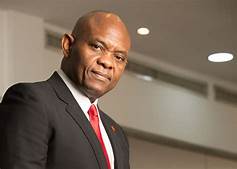
As Tony O. Elumelu steps down as Group Chairman of United Bank for Africa on August 21, 2026 after hitting the CBN’s 12-year limit, Nigeria is revisiting the central argument of his career. To his admirers, Elumelu is the disruptor-in-chief — the man who “squeezed water out of stone” at Crystal Bank, built Standard Trust Bank into an acquisition machine, and then swallowed UBA itself to create a brand with continental swagger. They describe him as a T-shaped megamind with the innovator’s DNA: constantly questioning, observing, networking and experimenting. In this telling, UBA, Heirs Holdings and Transcorp all carry an “innovation premium.” He didn’t just grow assets to 20 countries and 50 million customers. He forced Nigerian business to think African first, and gave UBA a new lease of life through branding, purpose and audacity.
To his critics, Elumelu’s exit only re-echoes the doubt. They remember the bank he left as GMD in 2010 — PAT down to ₦598m, then a ₦8.7bn loss in 2011 — and the 17-year shareholder ordeal that began with the ₦34 IPO in 2007. They see a banker who was brilliant at timing, leverage and narrative, but whose “everywhere” strategy delivered scale without the ROE, margins and cost discipline that let Zenith and GTCO compound. With Emmanuel Nnorom now named successor, the question moves from Elumelu to UBA itself. Does the new chairman defend the map Elumelu bought, or do the surgery he avoided: shrink to grow, price for returns, and prove that Africa’s bank can finally be best somewhere instead of just big everywhere?
Tony Elumelu stands out as a builder of strategic architecture with rare foresight, the kind of leader who saw early that Africa’s economic future would be unlocked not by aid but by institutions, capital, and a generation of entrepreneurs. Through UBA’s pan-African expansion, Heirs Holdings’ sector-spanning investments, and the Tony Elumelu Foundation’s direct funding of thousands of businesses, he deliberately constructed an ecosystem designed to outlive him, connecting banking, energy, healthcare and philanthropy into a coherent theory of “Africapitalism.” Yet for all that structural vision, critics argue he has often neglected the twin levers of stretch and leverage: he builds wide but rarely pushes portfolio companies to their aggressive growth limits, and he prefers patient, reputational capital over the hard-edged financial leverage and risk-taking that turn good African firms into global champions. As a result, Elumelu’s architecture is admired and durable, but it sometimes feels more like a well-designed foundation than a skyscraper — proof that foresight without relentless scaling and leverage can produce influence without the full transformation he set out to achieve.
At UBA under Tony Elumelu, the interplay of position, choices, and actions tilted decisively toward ambition over discipline, and the results show it. Strategic position said UBA was a Nigerian bank with strong brand equity but a cost base and operating model built for a domestic market, not 20+ countries at once. Instead of reading that truth, leadership made strategic choices obsessed with scale — pushing length and breadth across Africa, the US, UK and UAE, chasing the “bank for Africa” narrative while treating efficiency, cost-to-income, and subsidiary profitability as secondary. That choice forced strategic actions: rapid country entries, heavy spend on expansion, branding and infrastructure, while consolidation, process automation, and pruning underperforming units lagged. The line became Position → Wrong Choices → Misaligned Actions. Because the choice to expand outran the position’s capacity to fund and manage it efficiently, actions scattered resources thin, margins stayed pressured, and efficiency suffered despite top-line growth. The alignment broke down: position told the truth about needing depth before width, choices placed a bet on empire, and actions proved the bet by funding footprint over profitability. When position, choices, and actions don’t pull together, scale becomes motion without power — and UBA’s Elumelu era illustrates how chasing industry leadership through size alone can look like strategy while actually being just movemen
The Good , The Bad , The Ugly .
A detailed analysis of Elumelu years confirms the above view. Under Elumelu, the “good” is undeniable — balance sheet multiplication, brand reach, and capital fortification to beat CBN recapitalization. The “bad and ugly” linger in the volatility of returns and the cost of that scale. But factually, his footprints turned UBA from a Nigerian bank into Africa’s global bank, and left Emmanuel Nnorom a balance sheet 20 times larger to prove whether size can finally convert to sustained profitability.
The Good
The numbers tell the story of scale that defined Tony Elumelu’s imprint on UBA across two eras — as Group Managing Director and CEO from 2005–2010, and later as Group Chairman from 2014–2026 before retiring on August 21, 2026 at the CBN’s 12-year limit. In 2007, midway through his MD tenure, UBA was a ₦1.64 trillion balance sheet bank earning ₦109.5bn in gross income and ₦21.4bn in PAT, with a ₦971.8bn deposit base largely anchored in Nigeria.
By 2025, under his chairmanship, that same institution had ballooned into a ₦33.17 trillion Pan-African powerhouse with ₦27.21 trillion in customer deposits, ₦4.25 trillion in shareholders’ funds, and ₦3.09 trillion in gross earnings — evidence of the aggressive “everywhere” expansion across 20 African countries and key global markets that he drove from the board. Even with 2025 profits softening to ₦404.7bn PAT amid provisions and derivative losses, and Q1 2026 showing a normalised ₦146.6bn PAT and 13.7% RoAE, the trajectory is clear: UBA moved from a domestic player to a continental giant with capital adequacy of 23.2% and a loan book of ₦7.17 trillion.
The Bad
The legend of Elumelu as a turnaround genius runs into its first wall with the numbers from his last years as GMD. When he and the board were forced to step down by the CBN in 2010, he did not leave UBA at its peak. Profit After Tax had collapsed to ₦598m in 2010, down from ₦2.4bn in 2009, ₦40.8bn in 2008 and ₦21.4bn in 2007. The fall was not over. A year after his exit, UBA posted a ₦8.7bn loss in 2011, the most controversial marker of that era. Some blame the 2007-2008 global financial crisis, but that excuse wears thin when other CEOs navigated the same storm with less damage. The rot was traced largely to bad loans, raising a question that still lingers without proof: were these bad loans artificially created, as happened in other banks during Nigeria’s era of repeated sector collapses? No facts have surfaced, but the suspicion persists. What is clear is that the bank Elumelu left was bleeding, under-capitalized in confidence, and forced into a regulatory clean-up.
The Ugly
The most controversial chapter, however, began earlier, in February 2007. UBA, then Nigeria’s biggest bank, launched a ₦54bn hybrid offer — 1.12bn shares at ₦35 and a rights issue at ₦34 — priced at a discount when the stock was trading at ₦37.99. The pitch was simple: buy into “Africa’s next banking champion” at a bargain. That ₦54bn was indeed deployed. It funded the aggressive expansion across 20 African countries and global offices that defined Elumelu’s chairmanship. The map got built.
Unfortunately, the shareholders were at the receiving end. Seventeen years later that “bargain” reads like a case study in wealth destruction. A ₦500,000 investment at ₦34 in 2007 bought 14,705 shares. At ₦33.95 in December 2024, that stake was worth ₦499,000 in nominal terms, a round trip to zero. With CPI up nearly tenfold, the real loss is close to 90%. The stock collapsed below ₦10 within months of the 2008 crisis and drifted below ₦8 for most of 2012-2022, with the jinx only broken in 2023.
Compare that to peers and the ordeal sharpens. While UBA shareholders were marking time, Zenith and GTCO were compounding. Both banks overtook their pre-2008 share price highs years before UBA could even reclaim ₦34. By 2024 UBA was closing at ₦33.95, the same nominal level investors paid in 2007, while Zenith and GTCO were trading well above ₦50 and ₦60 respectively. In market value terms the contrast is starker. In early 2023 UBA was valued at about ₦268.5bn, the smallest among the tier-1s, while Zenith commanded ₦689.2bn and GTCO ₦532.6bn. Even Stanbic IBTC, with a far smaller footprint, was worth ₦461.3bn. Size did not translate to value. UBA had the bigger balance sheet at ₦10.9 trillion in 2022 compared to GTCO’s ₦6.5 trillion, yet the market kept pricing it at a discount because assets alone were not producing returns.
The profitability gap explains why. Between 2018 and 2021 UBA’s profit after tax crawled from ₦78.6bn to ₦109bn. In the same period GTCO moved from ₦184.7bn to ₦174.8bn and Zenith from ₦193bn to ₦270bn. Even in 2022 when UBA briefly overtook GTCO with ₦170.2bn in PAT, the quality of those earnings was weaker. UBA’s net profit margin was 20% against GTCO’s 31.4%. Earnings per share told the same story: UBA delivered ₦4.84 while GTCO did ₦6.14 and Zenith ₦7.14. Investors were getting less profit for every naira of equity they committed, and they were paid less for waiting. UBA’s dividend payout in 2022 was 21%, the worst among tier-1s, compared to 52% at GTCO and 45% at Zenith. The P/E ratio captured the market’s verdict: UBA traded at 1.7x, Zenith at 3.4x and GTCO at 3.9x. Cheap, but not because it was a bargain. Cheap because the market did not believe the earnings would compound.
That is the core of the ordeal. Zenith built its moat on trust and the cheapest deposits in Nigeria, banking blue-chip corporates and government agencies that park cash for safety. GTCO built its moat on ruthless efficiency, running a cost-to-income ratio below 30% and turning retail salary accounts into a funding machine. UBA built its moat on geography. Twenty countries, 1,000 branches, 25 million customers. But presence is expensive. In Nigeria it had to buy deposits with higher rates. In Africa it had to absorb regulatory risk, currency devaluation and loan losses before any subsidiary could earn its cost of capital. The 2025 results exposed the trade-off. After years of FX gains and high interest rates flattered the numbers, profit after tax fell 47% to ₦404.7bn once those tailwinds reversed. A bank with durable fundamentals does not halve earnings when one cycle turns. So the ₦54bn raised in 2007 did what it was meant to do. It built the map. But the map did not build wealth for the people who funded it. While Zenith and GTCO chose to dominate Nigeria first and let Africa come to them, UBA exported capital and imported complexity. The shareholders got 17 years of dividends as compensation for stagnation, while the bank got scale. That is why the ordeal sharpens when you line UBA beside its peers. It is tier-1 by assets and ambition, but tier-2 by valuation, because in banking the market does not pay for courage. It pays for compounding.
The contradiction extends beyond numbers. While shareholders funded the ₦54bn expansion and got stagnation, management lived in affluence. UBA’s MD earned ₦128m in just six months in 2022. Meanwhile Elumelu pivoted to philanthropy and conglomerate building. To critics, this is the contradiction at the heart of the story: investors took the pain for “Africapitalism” while the architect built a new brand elsewhere.
Elumelu’s genius, therefore, is not in banking discipline. It is in narrative, timing and scale. He used the controversial ₦54bn offer to build UBA into Africa’s Global Bank before Africa was ready to pay for one. He chose footprint over ROE, presence over margins, map over moat. That leaves Emmanuel Nnorom with the surgery Elumelu avoided: shrink to grow, close 5-7 sub-scale subsidiaries, price for ROE, and turn the balance sheet into a fortress. Until UBA chooses to be best somewhere instead of everywhere, it remains tier-1 by assets and ambition, tier-2 by valuation.
For the 2007 investor, the footprints are clear. The good is a continental brand built with their money. The bad is a 2010 collapse and 2011 loss. The ugly is 17 years where ₦54bn built an empire, but the people who funded it are still waiting for returns.