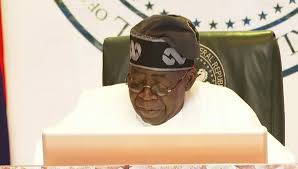
Three years into the Bola Ahmed Tinubu presidency, Nigeria is in the middle of a very deliberate and very painful economic experiment. From the first day in office on May 29, 2023, the direction was set. The administration chose to end the fuel subsidy, unify the exchange rates, and tell the world that Nigeria was done borrowing to fund consumption. The idea behind it was simple and bold: take the big, difficult decisions now, create fiscal space, and by 2027 Nigerians would begin to see the payoff in the form of a bigger, more disciplined, investment-driven economy. That is the strategic position the government set out to achieve — a market-led Nigeria with a $1 trillion economy target, where states are productive because they have more money, where investors return because the rules are clear, and where government can build infrastructure without the crutch of subsidy.
To get there, the administration deployed its clearest strengths. The first is political will. No president in recent memory has moved this fast on subsidy and FX. That decisiveness immediately stopped the daily bleeding of trillions into subsidy payments and ended the arbitrage of multiple exchange rates. As a result, FAAC allocations to federal, state and local governments more than doubled. For once, states have money in their accounts. The second strength has been economic diplomacy. The president and his economic team have spent much of the last three years on the road, pitching Nigeria as a reforming economy. The message to investors is that the distortions are gone and the country is open for business. That has produced a wave of MOUs and renewed conversations with the IMF, World Bank, and major economies like the UAE, India and Germany. The third strength is a push to grow revenue from within. Through FIRS, Customs, and a restructured NNPC, government is collecting more money from taxes and oil. That is what is funding the big-ticket projects now being talked about — the Lagos-Calabar Coastal Highway, the Sokoto-Badagry road, Renewed Hope Cities, CNG buses, and the student loan scheme. On paper, these are the foundations of the new Nigeria the administration promised.
But foundations do not feed people, and that is where the gap between the desired position and the reality on the ground becomes obvious. The same reforms that created fiscal space also triggered a cost-of-living crisis that has defined daily life for most Nigerians. Inflation has crossed 30 percent. Food, transport, and electricity have become significantly more expensive. The Naira was unified, but it has not stabilized. It continues to swing, and that volatility makes it almost impossible for businesses to plan or for families to budget. The promise was “short-term pain for long-term gain.” For many households, it has so far only been pain. Security is another area where the gap is wide. Despite new service chiefs and more funding, banditry in the Northwest, separatist violence in the Southeast, and oil theft in the Niger Delta have not gone away. People still cannot travel on certain highways without fear, and farmers still cannot go to their farms in many parts of the country. You cannot credibly sell Nigeria as an investment destination abroad when citizens do not feel safe at home.
Part of the problem is also how the reforms were sequenced and how they are being felt. The government removed the two biggest subsidies at almost the same time, but the alternatives arrived late. CNG buses, mass transit support, and targeted food programs did not come quickly enough to cushion the shock. In addition, more money to states has not automatically translated into better schools, hospitals, or roads. Nigeria’s governance challenge was never only about revenue. It is also about capacity, corruption, and accountability at state and local levels. The federal government can reform the center, but it cannot force 36 governors to spend wisely. Finally, there is a deep trust deficit. After decades of promises that did not materialize, telling citizens to “sacrifice now and enjoy later” sounds like another slogan. When the message from government feels elitist and disconnected from the reality in the market, even good policy is read as punishment.
Closing this gap in the next 18 months will require a shift from talking about reforms to showing relief. Nigerians need to touch and feel three things quickly. First, cheaper and more reliable power in a few industrial clusters so that businesses can actually benefit from a more stable macro environment. Second, a measurable drop in food inflation through direct support to farmers, transport, and storage, so that the price of rice and tomatoes stops being the daily headline. Third, oil production pushed back above 2 million barrels per day so that dollar supply improves and the Naira can find some stability. Beyond that, the government must show where the new money is going. Publishing how increased FAAC allocations are being spent state by state, and tying it to visible projects, would help rebuild credibility. Security also needs results that people can see — fewer kidnappings reported, more arrests made, safer roads — not just press statements. And the narrative itself has to change. Instead of asking people to endure, the government must start showing what their endurance has built.
In the end, Tinubu’s first term will be remembered as the period when Nigeria finally stopped pretending. The subsidy is gone. The FX round-tripping is gone. Those are real structural changes and they are strengths the country will not easily reverse. But a reform is only as good as the life it improves. Right now the country is in a dangerous middle. The old system has been dismantled, but the new one has not yet delivered enough to the average person. If by 2027 a trader in Kano, a teacher in Enugu, and a driver in Lagos can say they are feeling something different in their pockets and in their communities, then the gamble will have worked. If not, these three years will be remembered as a technically correct economic answer to the wrong human question.