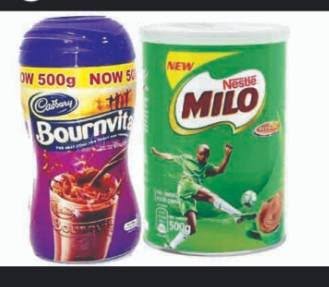
Walk into any Nigerian home at 6am and you’ll see the quiet rivalry playing out on the kitchen counter. The yellow tin and the red tin. Bournvita and Milo. For over three decades these two have been fighting for the same thing: a place in your cup, in your child’s flask, and in your monthly shopping budget. Both promise energy, both promise growth, and both feel like home. But in 2026 the fight is no longer just about taste. It’s about money, survival, and who can change fastest while still selling to millions of Nigerians every day.
If you look at the companies behind them, Nestlé is the bigger giant. Nestlé Nigeria makes well over a trillion naira a year and Milo is its biggest star. Cadbury Nigeria is smaller, about a tenth of that size, but almost everything Cadbury earns comes from just a few brands, and Bournvita is the biggest of them. That’s why this feels like a heavyweight fight. Industry people estimate that Milo controls more than half of the malted drink market in Nigeria, while Bournvita holds about a quarter to a third. Walk into any school, sports event, or distributor’s warehouse and Milo is everywhere. Nestlé has factories across the country and trucks that reach the smallest towns, so Milo is simply easier to find. That wide reach is why Milo can also charge a bit more. Today a 400g Milo costs around ₦4,500 to ₦4,700 while Bournvita is usually around ₦4,200. People still buy both, but Nestlé has more room to push price and Cadbury has to be careful not to price people out.
So why do people stick with each one? Milo has built itself around energy and winning. For years it has sponsored school sports, football academies, and TV ads about champions. For many parents, Milo means “this will help my child perform.” That message is so strong that many shoppers don’t even say “malt drink” in the shop. They just say “Milo.” Bournvita wins differently. It wins on memory and trust. If you grew up between the 80s and early 2000s, Bournvita was the drink that felt richer and more nourishing. It tastes less sweet and more malty, and parents have come to see it as the more serious nutrition option. In a time when every naira matters, that trust is powerful. People will cut back on data, transport, even meat, before they cut Bournvita from breakfast.
But that strength comes with pressure. Being number one is expensive for Milo. Nestlé has to keep spending on ads, on sports, on keeping products in every corner shop. And like Cadbury, Nestlé buys a lot of its milk powder and cocoa in dollars. When the naira falls, the cost of making Milo jumps. In the first half of 2026 both companies felt this. Even though they sold more, their profits didn’t grow as fast because sugar, packaging, and fuel all got more expensive. For Nestlé the hit was bigger in absolute terms because it is a bigger business, but for Cadbury the hit felt sharper because Bournvita is carrying almost the whole company. If costs rise and Cadbury can’t raise price, there isn’t another big brand to fall back on the way Nestlé has Maggi and Golden Morn.
That’s the heart of the dilemma. Bournvita is loved, but it is doing too much work alone. Milo is everywhere, but it is also stuck with a big, expensive machine to maintain. Both brands are now facing the same new reality in Nigerian homes. People still want malt drinks, but they want them cheaper and in smaller sizes. A mother in the market now asks for a ₦100 or ₦200 sachet, not always a full tin. Young people are also drinking less sugar. They are moving to coffee, tea, and energy drinks. If Bournvita and Milo don’t meet them there, they will age with the parents who already love them.
There is room to grow though. The next battle will be fought in three places. First is affordability. Whoever can make a good small pack and get it to every kiosk will win millions of new customers. Second is health. Nigerians are asking for less sugar, more protein, and options for adults, not just children. The brand that launches a low-sugar or high-protein version without losing its taste will own the next decade. Third is new products. Milo already has Milo cereal on shelves. Bournvita could move into bars or spreads. The brand that turns trust into new products will stop relying on just one tin to pay all the bills.
The threats are real and they are the same for both. Cheaper local brands are coming in at ₦2,500 per tin and tempting shoppers who are watching their budget. Another round of naira weakness will force another price increase, and there is a limit to how much families can pay. And government attention on sugar in children’s foods could force both companies to change recipes, which is risky because taste is the one thing people won’t compromise on.
So who really rules? If you measure by size, shelf space, and total sales, Milo still rules. Nestlé’s scale and distribution make it the default in most of Nigeria. But if you measure by loyalty and upside, Bournvita is punching above its weight. Cadbury gets more out of each loyal customer and the market believes Bournvita still has room to grow, which is why investors value Cadbury at a higher multiple than Nestlé.
In the end, Nigerian consumers are the ones who decide every morning. Some homes are strictly red tin. Some are strictly yellow. Many buy both depending on price and what’s available. But behind that simple choice is a big business story. Milo is winning today because it is bigger and broader. Bournvita is dangerous because it is trusted and focused. The brand that uses that trust or that scale to build the next product for a changing Nigeria will be the one still ruling the breakfast table ten years from now.