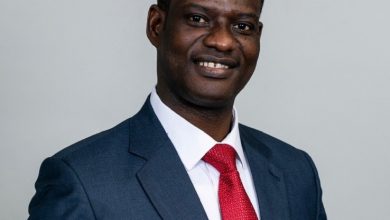

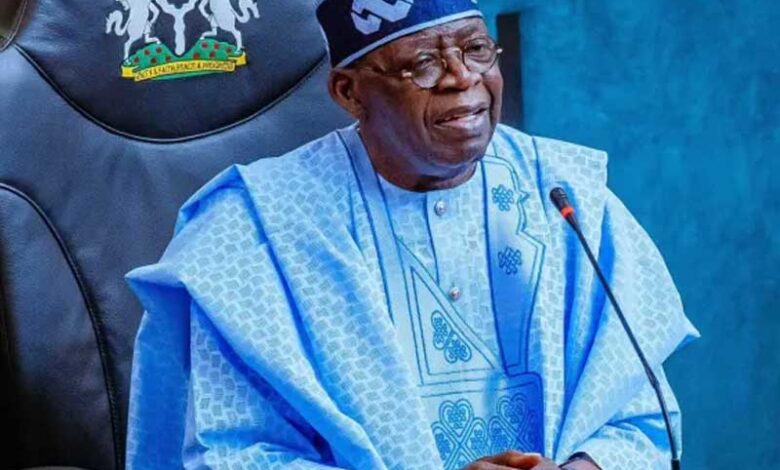
Since September 2023, the economic command of the Tinubu administration has rested on three people with distinct mandates. Wale Edun, as Minister of Finance and Coordinating Minister of the Economy, moved first to end the distortions that had built up over a decade. He implemented the removal of fuel subsidy in June 2023, which had cost the federation over N4 trillion in 2022 alone, and pushed for a single FX window by working with the CBN to collapse the multiple rates that had created arbitrage. To rebuild fiscal space he launched a tax reform agenda aimed at moving Nigeria’s tax-to-GDP ratio from about 10% toward 18%, including the harmonization of over 60 federal taxes, digitization of collection, and a focus on VAT compliance and large taxpayers. He also cleared the $7 billion FX backlog that was strangling manufacturers and airlines, and reopened Nigeria to international capital markets with a $2.2 billion Eurobond in December 2024 after a two-year absence.
Working with the Budget Office under Sen. Atiku Bagudu, Edun shifted spending toward capital and social investment while insisting that new borrowing be tied to projects with revenue potential, not consumption. Dr. Zacch Adedeji, as Chairman of the Federal Inland Revenue Service, and Taiwo Oyedele, as Chairman of the Presidential Fiscal Policy and Tax Reforms Committee, have been central to the current phase.
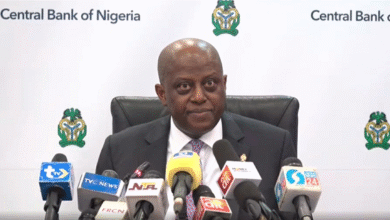
Oyedele’s committee has driven the four tax reform bills currently before the National Assembly, which propose to reduce company income tax from 30% to 25% over time, exempt small businesses earning under N50 million, and introduce a new VAT sharing formula that favors producing states. He has also led the push for a taxpayer database, a national single window for trade, and the removal of nuisance taxes to lower the cost of doing business. On the monetary side, CBN Governor Olayemi Cardoso has pursued disinflation and FX stability. He unified the exchange rate in June 2023, allowed the naira to float, and raised the Monetary Policy Rate from 18.75% to 27.25% by mid-2025 to anchor inflation expectations. He also conducted a forensic audit and settlement of the FX backlog, tightened banking supervision, and stopped quasi-fiscal interventions like Anchor Borrowers. The goal has been to restore credibility so that price, not administrative control, allocates dollars and credit.
To judge this model, it helps to look at four finance ministers who won global “Finance Minister of the Year” awards for bailing out their countries in crisis.
Andris Vilks of Latvia took office after GDP fell almost 25% and unemployment jumped from 6% to 21% following the 2008 crisis. Under an IMF program he implemented fiscal adjustment of about 15% of GDP through wage cuts and spending reductions. The pain was immediate, but by the first nine months of 2012 Latvia was growing 5.6%, the fastest in the EU, and the budget deficit was below 2% of GDP. In December 2012 Latvia repaid IMF loans early, ahead of a 2015 deadline, and returned to bond markets. Vilks said the success came from a united government that accepted short-term pain for credibility.
Tharman Shanmugaratnam of Singapore faced a different shock. After -1% growth in 2009, he did not chase stimulus. Instead he restructured supply. Singapore cut dependence on cheap foreign labor, invested in productivity and skills, and used fiscal credits to get older workers and homemakers back into jobs. Growth in 2012 was only about 1.5%, but unemployment for locals stayed below 3%. Tharman argued that the payoff would take “much of the decade” because the aim was to move industries up the value chain.
Luis Castilla of Peru managed a commodity boom. Peru grew 6.9% in 2011 and about 6% in 2012, with foreign direct investment at a record 7% of GDP. His model was macro stability with inflation near the 2% target, plus tax reform to broaden the base and a new mining tax. He also directed about 50% of the 2013 budget to social and productive inclusion under performance-based spending, with a fiscal target of 1% surplus.
Charles Koffi Diby of Côte d’Ivoire inherited a post-election crisis where the economy contracted 5% in 2011. His job was credibility. He secured HIPC debt relief in June 2012, cutting external debt from about $8 billion to $4.7 billion and dropping the debt-to-GDP ratio from 67% to 36%. That freed nearly one-third of the budget previously used for debt service. He also restructured a $2.3 billion defaulted Eurobond, and by December 2012 its price had risen from 50 cents to 93 cents on the dollar. Growth rebounded to 8.5% in 2012.
When you place Tinubu’s team beside these four, the differences in context explain both the good, the bad and the ugly. The good is that Nigeria finally has alignment between fiscal and monetary policy, something Latvia had under Vilks when all ministries pursued one goal. By removing subsidy and floating the naira at the same time, Edun and Cardoso ended the contradiction of spending billions to defend rates while also spending trillions on subsidies. Like Tharman, they accepted weak short-term growth to fix supply, betting that a market-determined exchange rate and higher rates will attract real investment instead of hot money. Like Castilla, they are pushing tax reform to broaden revenue, though Oyedele is doing it without a commodity boom to fund it. Like Diby, the first task was to restore market confidence, and clearing the FX backlog and returning to Eurobonds in 2024 mirrors the way Diby’s bond price recovery signaled that investors believed in the new government.
The bad is that the buffers the four had are missing here. Vilks had IMF money and EU backing to fund 15% of GDP in adjustment. Tharman had over $300 billion in reserves to finance productivity programs. Castilla had 6% growth and rising commodity prices. Diby had debt relief that immediately freed fiscal space. Tinubu’s team had to do adjustment without any of that. They removed subsidy and floated the naira into an environment of 22% inflation and global interest rates above 20%, so households felt the cost before the benefits. Debt service still takes over 90% of revenue, which means even with Oyedele’s tax reforms, new money is largely absorbed by the past. This is why growth and jobs were de-prioritized in years one to three, just as Vilks sacrificed employment for deficit reduction and Tharman sacrificed GDP for productivity.
The ugly is the time and structure problem. Latvia’s crisis was deep but short, with external support. Singapore’s was external demand, with strong institutions to execute a 10-year plan. Peru’s was how to spend a boom well. Côte d’Ivoire’s was war, with debt relief as the reset. Nigeria’s crisis is structural: low revenue, oil theft, insecurity, and a population of over 220 million that absorbed two big shocks at once. There is no IMF program to blame, no debt relief to celebrate, and no $20 billion CBN intervention to fall back on. If by early 2027 inflation is trending to single digits, FX is stable without CBN dollars, and Oyedele’s tax reforms have raised enough revenue to fund visible social programs and infrastructure, then Tinubunomics will look like Vilks and Diby, painful adjustment that restored credibility. If growth is still weak and voters only feel higher prices, then it will look like austerity without payoff. In the end, the four award winners prove that adjustment works when it is united and followed by benefits people can feel.
Tinubu’s team has the unity and the policy clarity. What they do not have is time, money, or an external cushion. The good is rules over controls. The bad is that the cost came first. The ugly is that the economy must now respond on its own, because there is no bailout coming