
Long before any product hits the market or any profit shows up on a balance sheet, companies win or lose in the quiet space of capability. A core competence is not a branch, a logo, or a quarterly campaign. It is the bundle of skills and judgment a firm learns, repeats, and improves until it becomes hard for anyone else to copy. It is what allows one organization to do ordinary things in an extraordinary way, and then extend that way into new products, new countries, and new customer needs. When a competence is real, it compounds. It lowers cost, raises trust, and opens doors that competitors cannot even see yet. That is the power of core competence: it turns strategy from reacting to today’s market into shaping tomorrow’s.
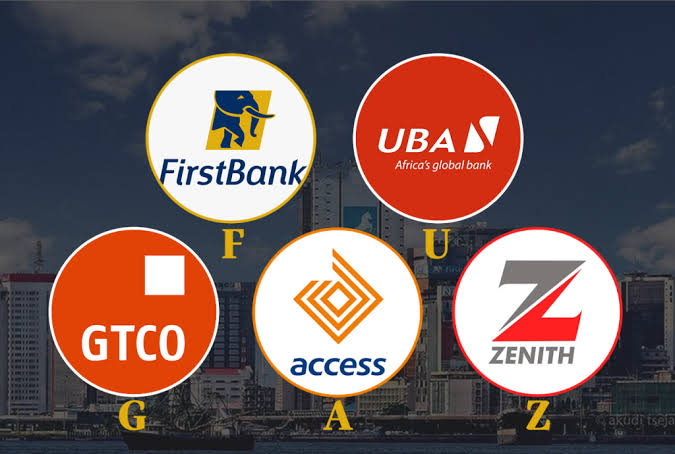
Nigerian banking is no longer fighting over branches on the same street. The battle for industry leadership among the Tier-1 five — Zenith Bank, GTCO, Access Holdings, First HoldCo, and UBA — is now a contest of core competencies. The winners will not be decided by who opens the most branches in 2026. They will be decided by who built the skills 5 to 10 years ago that are now gateways to deposits, payments, data, and cross-border earnings. This is corporation versus corporation, competence versus competence. And the scoreboard is already showing up in profitability, share price, and how the market values each franchise.
In a high-inflation, volatile FX environment, the bank that can price risk and manage credit losses wins. GTCO has made this its calling card. For years it ran with the lowest cost-to-income and the cleanest asset quality among Tier-1s. In 2023-2024, even as peers took big impairment hits from FX revaluation and sovereign exposures, GTCO’s ROE stayed above 35% and its NPL ratio remained in single digits. That is not luck. It is a competence in underwriting, early-warning systems, and discipline. Zenith mirrors this with treasury and risk competence. It consistently posts the highest net interest margins in the group because it knows how to play the yield curve, manage liquidity, and rotate into government securities without taking duration risk. In FY2024, Zenith reported PAT above ₦1.1 trillion, the first Nigerian bank to cross that mark, driven by trading income and disciplined credit cost. These two banks are proving that risk and data competence directly converts to efficiency and earnings power.
Access Holdings is fighting a different war. Its competence is integration at speed. From 2019 to 2025 it absorbed Diamond Bank, then bought banks in 10 African countries, and pushed into insurance, pensions and payments. The bet is that a multi-country, multi-product platform creates a deposit and fee franchise no single-market bank can match. The cost has been heavy: integration expenses, goodwill, and a drag on ROE in the short term. But gross earnings crossed ₦3.7 trillion in FY2024 and customer base is now over 60 million. The competence being tested is whether Access can turn scale into efficiency. If it does, it will own the gateway to intra-Africa trade finance and remittances. UBA built its competence 20 years ago and is now harvesting it. UBA’s edge is its network across 20 African countries plus presence in London, New York, Paris and Dubai. That gives it correspondent banking flows, diaspora remittances, and dollar-denominated income that insulates it when the naira is volatile. In FY2024 UBA’s foreign-source income was over 50% of gross earnings. Its ROE hit 38% and it paid one of the highest dividends in the sector. The competence here is not just presence abroad, but the ability to move capital, manage compliance across jurisdictions, and price African risk better than competitors who only dip in. First HoldCo is fighting to modernize its oldest competence: trust and mass retail distribution. With over 750 branches and the largest agent network, FirstBank still gathers low-cost deposits better than anyone. Its CASA ratio has stayed above 90%. The challenge is converting that liability franchise into digital competence. Under the HoldCo structure, it is spinning out FirstCredit, FirstInsurance, and FirstPayment, trying to match GTCO and Access on tech. FY2024 results showed a strong rebound: PAT above ₦300 billion and NPLs falling below 5%. The question is whether First can build new skills fast enough before its deposit advantage is eroded by fintechs.
The market is already differentiating through the numbers. GTCO and Zenith lead on efficiency. GTCO’s cost-to-income has been consistently below 40%, Zenith’s below 45%. Both convert revenue to profit faster than peers. Access and UBA trade efficiency for growth — higher cost bases but faster top-line expansion. First is in transition, with improving margins but still carrying legacy cost. On valuation, Zenith and GTCO trade at the highest absolute prices and have led the NGX Banking Index. Zenith’s market cap crossed ₦2.5 trillion after its 2024 results. GTCO follows closely, supported by its holding company structure and fintech subsidiary. Access has the largest market cap by shares outstanding but trades at a lower price per share because investors are waiting to see integration benefits. UBA has rerated sharply on the back of dollar earnings and dividend yield. First has recovered but still trades at a discount to book, reflecting execution risk. This is where competence shows most clearly. GTCO and Zenith command P/B ratios above 1.5x and P/E above 4x because investors are pricing in sustainable ROE and optionality. UBA trades at a premium for its geographic diversification. Access trades at a discount to book, a sign the market wants proof that scale converts to returns. First trades closest to 1x book, the market’s way of saying “show us the new competence.”
Three tensions will decide who leads by 2030. The first is efficiency versus growth. GTCO and Zenith are proving you can have both, but their growth is slower. Access and UBA are growing faster but must prove they can bring costs down. The bank that marries GTCO’s discipline with Access’s scale will dominate. The second is Nigeria versus Africa. UBA and Access are betting that African diversification is the new core competence. Zenith and GTCO are betting that deep dominance in Nigeria, plus selective digital plays, is enough. First is trying to do both. FX volatility means African earnings are valuable, but regulatory complexity is high. The winner will be the one that turns network into real profit, not just presence. The third is digital versus distribution. Fintechs are attacking payments and lending. Tier-1s are responding by building their own rails. GTCO’s HabariPay, Access’s Hydrogen, Zenith’s Ziva, UBA’s Leo, and First’s FirstMobile are all attempts to build technology integration competence. But competence here is not an app. It is data, credit scoring, and ecosystem lock-in. The bank that turns 60 million customers into data that can price risk in real time will own the next decade.
Industry leadership in Nigerian banking is being redefined. It is no longer about asset size alone. It is about which competence you own. Zenith owns treasury and risk. GTCO owns efficiency and brand premium. Access owns scale and integration ambition. UBA owns pan-African corridors and dollar income. First owns deposits and trust, and is racing to build digital. The gains are clear: higher ROE, better multiples, stronger share prices, and the ability to set terms in payments and lending. The penalty for falling behind is also clear: becoming a distributor of products built on someone else’s rails, paying for technology, and watching valuation lag. By 2030, two or three of these five will have pulled away not because they were biggest in 2024, but because they made the right competence bets in 2018. That is the power of core competence. And that is how industry leadership is won.