The $2 Billion Rebound: How Otedola’s First Bank Bet Mirrors Dangote’s Refinery IPO Moment

Nigerian billionaire capital is having a resurgence, and it is being priced on the floor of the Nigerian Exchange.
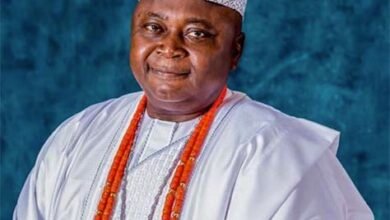
Femi Otedola hitting $2 billion for the first time is not just a personal milestone. According to Forbes Real-Time data as of September 19, 2026, his fortune is up $200 million from August and up $700 million since March. That is a 54% jump in six months. In a country where the broad money supply itself is up 16.4% year-on-year, wealth is being repriced fast, but Otedola’s case is specific and instructive.
The engine is First HoldCo. The parent company of First Bank of Nigeria closed at a record N162.80 on Friday, September 18. With Otedola holding 12.34 billion shares, or about 27.6% through direct holdings and his Calvados Global Services vehicle, the value of that single stake has crossed N2 trillion. Forbes’ tracker, which moves with listed assets, has simply caught up with what the market has been pricing for months. Otedola started building this position in 2021, became Chairman in January 2024, and has aggressively added in 2026. This is a classic control premium play. He is not a passive investor; he is the Chairman with a blocking, market-moving stake in Nigeria’s oldest bank at a time when banks are in a forced recapitalization cycle.
That context matters. Nigerian banks are racing to meet new capital thresholds, and First HoldCo’s share price rally reflects investor expectation that Otedola will backstop its capital raise and that the bank’s huge deposit base, branch network and pan-African footprint will be leveraged for a fintech and inclusion push. Otedola himself framed it as financial inclusion in his August interview with Nairametrics, but the market reads it as something more pragmatic: consolidation, control, and future dividends from a cleaned-up, better-capitalized First Bank. The retention of a 5% stake in Geregu Power after selling his majority for about $750 million in 2025, plus stakes in Zenith Bank and prime real estate in Lagos, Dubai, London and Monaco, gives him a diversified asset base, but First HoldCo is now the core.
The parallel with Aliko Dangote is unavoidable. The related reports that Dangote’s net worth has hit $51.3 billion as the refinery IPO opens, with a potential $23 billion upside, show the same market logic. Nigerian billionaire wealth is no longer being built privately in oil fields or power plants alone. It is being crystallized publicly. Dangote Refinery listing will be the largest industrial listing in Nigeria’s history. It will force a mark-to-market of an asset that has until now been valued on estimates and debt. If the market assigns even a conservative multiple to a 650,000 bpd refinery at a time when Nigeria is still import-dependent for refined products, Dangote’s wealth jumps mechanically, just as Otedola’s did with First HoldCo.
What does this tell us? First, the Nigerian Exchange is becoming the official validator of billionaire wealth. Second, the rally is highly concentrated in two themes: financial services recapitalization and energy security. Both are policy-driven. The CBN’s bank recapitalization is inflating bank stocks, and the government’s push for domestic refining is inflating Dangote’s industrial empire.
The risk is equally clear. Forbes real-time valuations swing with the market. Otedola at No. 2,104 globally is now worth exactly as much as the market thinks First HoldCo is worth today. If bank stocks correct after recapitalization, or if the refinery IPO is priced too aggressively and struggles to sustain margins, those fortunes can retract just as fast. But for now, the message from Lagos is that the path to $2 billion, and to $50 billion, runs through the public market.