
Nigeria’s N139 Trillion Paradox: Tight Money on Paper, Loose Money in Practice, and the Private Sector Pays the Price

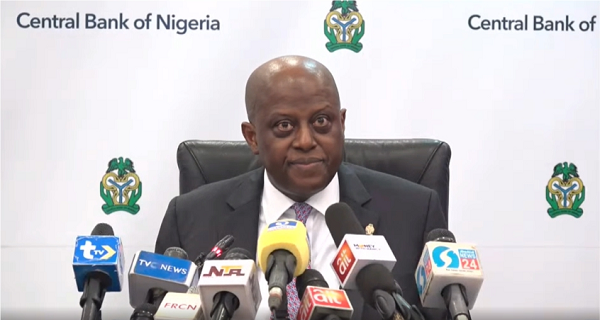
Nigeria’s broad money supply rising to N139.38 trillion in August 2026 is more than a headline figure. It is a contradiction that exposes the limits of the Central Bank of Nigeria’s current tightening strategy. Year-on-year growth of 16.4 percent and a steady eight-month climb from N123.95 trillion in January to N139.38 trillion in August show that liquidity in the economy is expanding at a pace that sits uncomfortably with a Monetary Policy Rate held at a punishing 26.50 percent. On the surface, the CBN appears hawkish, maintaining one of the highest policy rates globally in a bid to contain inflation and preserve stability. In reality, the system is awash with more naira.
The composition of that growth reveals where the pressure is coming from. Net Foreign Assets actually declined by about N323.9 billion between July and August, falling to N37.39 trillion, while Net Domestic Assets surged by N925.5 billion to N101.99 trillion. This means the expansion is homegrown. It is not being driven by export dollars being converted into the economy or by foreign inflows boosting deposits. It is being driven by domestic credit creation. The most plausible driver is government borrowing. When the fiscal authority borrows heavily from the domestic market and the banking system absorbs those instruments, broad money expands. The reference in the same reporting cycle to government borrowing testing the private-sector credit market is therefore not incidental, it is central. It suggests a crowding-out dynamic where the state is absorbing liquidity that should go to productive private enterprise.
This creates a fundamental contradiction for inflation control and policy credibility. Under normal transmission, a 26.50 percent MPR should make credit expensive, slow deposit growth, and shrink money supply. That it is not happening implies that fiscal dominance is overwhelming monetary tightening. The CBN is mopping up liquidity with high rates on one hand, while fiscal operations are injecting it on the other. The result is the worst of both worlds. The private sector bears the full cost of tight money, facing lending rates well above 30 percent, with banks preferring to park funds in high-yielding government securities rather than lend to manufacturers, SMEs and households. Meanwhile, the economy as a whole still faces the inflationary risk of too much money chasing too few goods. If that N601.6 billion monthly addition migrates from savings and time deposits into currency outside banks and demand deposits for consumption or into demand for dollars, it will rekindle pressure on both prices and the exchange rate.
The external position complicates the picture further. Gross foreign exchange reserves rising to $54.61 billion as of mid-September, up $12.76 billion year-on-year and already above the CBN’s full-year projection of $51.04 billion, together with a 68 percent jump in the current account surplus to $7.54 billion in the second quarter, would ordinarily signal comfort. Yet the fact that net foreign assets within money supply fell even as gross reserves rose suggests the reserves build-up is not fully translating into system liquidity. It may be driven by external borrowing, restructured inflows, or CBN sterilization operations that keep dollars on the balance sheet without releasing naira counterpart funds into the wider economy. That makes the reserves buffer fragile, especially in the context of a US Federal Reserve that has raised rates by 25 basis points. When dollar yields rise, emerging markets like Nigeria face capital flow reversals. A strong reserves headline alone will not defend the naira if domestic money supply continues to grow faster than dollar supply and if private credit remains starved.
It is in this light that the newly signed Memorandum of Understanding between the Federal Government and the CBN to formalize fiscal-monetary coordination must be judged. The MoU is not administrative housekeeping. It is the single most important policy development in the report. For years, Nigeria has struggled with a blurred line between fiscal needs and monetary financing, most notably through Ways and Means advances. If the MoU enforces real discipline — hard limits on domestic borrowing, transparent financing plans, and a commitment to let the private sector access credit — then the rise in money supply could be contained and the MPR can begin to work. If it remains a statement of intent without enforcement, then the CBN will be forced at its meeting next week into a difficult corner: either raise rates further to chase a money supply that is being driven by fiscal factors, thereby further punishing the real economy, or hold rates and risk losing its grip on inflation expectations.
Ultimately, the N139.38 trillion figure is a warning that Nigeria’s macroeconomic stabilization is incomplete. The headline suggests growth, but the underlying story is one of imbalanced growth — domestic-led, government-driven, and private-sector-constraining. Until the source of domestic asset creation is addressed, monetary policy will continue to look tight on paper while feeling loose in the economy, and the cost will be borne by inflation persistence and weak real sector growth.