
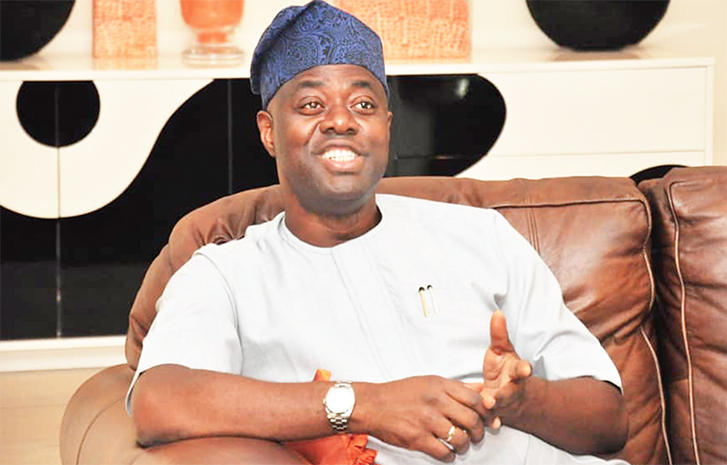
Governor Seyi Makinde of Oyo State has in the last year moved decisively from quiet engagement with the center to open confrontation with President Bola Ahmed Tinubu’s administration. The tone has been sharp. In press briefings, PDP governors’ meetings, and state broadcasts, he has faulted the timing and impact of subsidy removal, exchange rate unification, and other federal economic reforms, describing them as policies that have brought hardship to the people.
The problem for his critics is the timing of this criticism. These are the same reforms that triggered the tripling of FAAC allocations to states, and Oyo has been one of the biggest beneficiaries. Monthly inflows that used to average ₦5 to ₦7 billion before 2023 have now risen to well over ₦15 to ₦20 billion. That money is paying salaries, funding road projects in Ibadan, Ogbomoso and Ibarapa, and financing wage awards and health interventions across the 33 local governments. To many in APC circles and even within the civil service, this looks like political rascality: cashing the cheques from Abuja while using the microphone to attack the hand that signed them. To Makinde’s supporters, it is principled opposition. They argue that a governor can accept statutory allocations without endorsing policies he believes are hurting citizens, and that silence in the face of hardship would be a betrayal of his mandate.
Yet even as he wages that national argument, the fight has drawn attention back to Ibadan, and that is where his troubles are multiplying. Once the federal spotlight is on him, opponents in Oyo have been quick to compile their own list of grievances. The most persistent is the allegation around a ₦50 billion federal intervention fund that came to the state after subsidy removal. Critics say the palliatives never reached the people in a way that matched the amount, and they point to markets where prices kept climbing while government warehouses stayed quiet.
At the same time, the Ibadan Circular Road has become a sore point. Communities along the route complain of poor compensation, lack of clarity on the concession, and a process that seems to favor a few connected contractors. To make matters worse, a wave of demolitions in the last two years targeted buildings linked to opposition figures and APC-aligned businesses. The government called it urban renewal and enforcement of planning laws, but to those affected it felt like politics by bulldozer. For many ordinary residents, these issues sit side by side with the governor’s media war against Tinubu and raise a basic question: if there is so much energy to fight Abuja, why do these local complaints keep piling up?
That question is exactly what is making his base uneasy. In Bodija, Oja’ba and Alesinloye, traders will tell you allocation has gone up but their cost of living has gone up faster. To them, the confrontation looks less like policy and more like early campaigning for 2027. Inside the Oyo PDP, the mood is also strained. Party elders accuse him of running a one-man show, of imposing candidates, and of sidelining the people who built the structure that first brought him to power. The result is a party that is winning elections but losing cohesion.
Outside Ibadan, the gap feels wider. While the capital has new roads, Omituntun buses, and the rebuilt Agbowo Mall, many towns say they are still waiting for their share. Traditional rulers, who value restraint in Yoruba politics, have also warned privately that speaking to the President with such force can be read as arrogance, and that a broken relationship with the center can cost the state in areas like security support, ecological funds, and special federal projects that cannot move without Abuja’s sign-off.
So why is he on this path at all? The answer seems to lie in both ambition and calculation. Makinde cannot run for governor again, so he is building a national identity as the most outspoken PDP governor in the South-West. You cannot lead an opposition by praising the government, and attacking Tinubu gives him a platform with PDP loyalists who feel shut out nationally. He is also betting that voters are smart enough to separate the money that comes to Oyo from the policies he disagrees with, and that they will reward a leader who speaks up even while managing the pain.
The risk of that bet is already visible. Nationally, he has visibility and relevance beyond Oyo. Locally, however, he is walking a thin line. A prolonged rift with federal MDAs can slow down the very projects he needs to campaign on. And more importantly, if by 2027 the average person in Oyo cannot point to better schools, better health centers, and some relief in their daily expenses, then “we stood up to Abuja” will sound like an excuse. People will ask what the fight delivered to their pockets and their streets.
In the end, his opponents will keep calling it arrogance and rascality. His allies will call it courage and determination. The verdict will not come from press statements. It will come from whether Makinde can criticize the center without burning the bridges Oyo will need, and whether he can put his own house in order with the same energy he is using to challenge Abuja. In Nigerian politics, you can take on the President. But you cannot afford to lose your people while doing it.