
Profit-Taking Meets T+1: What the N478bn NGX Pullback Really Says About Nigeria’s Market MoodJune 02, 2026

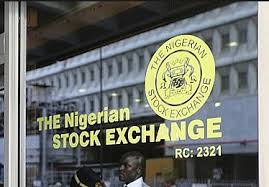
The Nigerian equities market bled N478.68bn on Tuesday, but the number alone misses the point. The real story from June 2 is not the size of the loss. It is the psychology behind it. After months of a 58.53% year-to-date rally, investors used the new T+1 settlement cycle as a trigger to lock in gains, and the NGX All-Share Index gave up 0.35% to close at 246,686.66 points. This was not panic. It was precision profit-taking.
T+1 matters because it compresses risk. Money moves faster, so traders have less time to be wrong. The shift pulled forward selling that might have spread across a week. Look at the casualty list: PZ and CWG both hit the -10.00% limit, WEMABANK shed 9.09%, FIRSTHOLDCO lost 6.72%, and even tier-one names like ZENITHBANK and FCMB closed red. When both speculative mid-caps and bellwether banks fall together, the market is repricing momentum, not fundamentals. Breadth confirmed it. Forty-two decliners overwhelmed 21 gainers, and the Proshare Memorandum Indexes slid with the market cap-weighted index down 0.38% and the total return float-adjusted index off 1.29%.
Yet volume tells you this was an orderly retreat. Total trades dropped 36.27% to 718.71m units valued at N29.29bn. ACCESSCORP led on volume with 113.10m units, while ZENITHBANK topped value at N4.81bn. In other words, the big names were liquid enough to absorb the selling without a crash. That is what a mature T+1 regime is supposed to do: let air out of the balloon without popping it. The outlier was INTENEGINS, which still managed a 52-week high at N5.46. But one green shoot does not change the season.
Contrast that with NASD, the unlisted market, which closed up 1.89% to 4,406.30 points. Thin volume, five gainers, one loser. The OTC space often runs on its own calendar. When NGX traders are taking profit, NASD can catch rotational flows or simply reflect deals that were already in motion. The divergence is a reminder that “the market” is not one thing. Risk appetite moves in layers.
The fixed income side was silent on the day, with debt market size and overnight rates unavailable. That absence is itself a signal. Equity traders were reacting to settlement mechanics and price levels, not to a rates shock. Globally, indices closed positive and Brazil’s Bovespa led gains. African markets were broadly favorable. So Nigeria’s pullback was home-grown, not imported.
Commodities added context. At AFEX, Maize cratered 15.0% to N282.22, Cashew lost 4.97%, and Soyabeans slipped 0.33%. Sorghum was the lone gainer at 3.24%. LCFE prices for Eko Gold and rice held flat. In global markets, gold and silver edged up while Brent and WTI crude dipped slightly as a ceasefire held. No commodity shock forced equity hands. This was discretionary selling.
FX was equally calm. The BDC rate held at N1,390/$1 while the official NFEM rate firmed 0.42% to N1,361.05/$1. Stability in FX removes one excuse for equity volatility. If the naira was sliding, you could blame foreign exits. It was not. This was local money deciding that 58% YTD is enough for now.
So what does the day tell us about the next phase? Three things. First, T+1 is working. It accelerates price discovery and forces faster decisions. That will raise volatility around rallies but also reduce settlement risk. Second, the rally was real, but crowded. When PZ, CWG, and WEMABANK all hit deep cuts in one session, it means traders were sitting on similar positions and rushed for the same door. Third, the fundamentals have not broken. No new earnings shock, no FX blowup, no rate spike. This is a market digesting its own success.
The interpretative call is simple: Nigeria’s equities just passed a behavioral test. After a historic run, the system handled coordinated profit-taking without dislocation. The question for June is whether buyers step back in once T+1 stops amplifying the exits, or whether this is the start of a deeper re-rating. With inflation still sticky, pre-election spending ahead, and banks facing the capital productivity test, the answer will not come from charts. It will come from earnings and policy. For now, N478bn left the table. The table itself is still standing.