

The global oil market is increasingly being shaped by geopolitics rather than pure supply-demand fundamentals. While OPEC+ continues its measured production increases and the United States pushes record crude volumes into export markets, escalating geopolitical tensions are creating significant uncertainty across the energy landscape.
Ukraine’s sustained drone campaign against Russian refining infrastructure is producing an unintended consequence: more Russian crude is finding its way onto international markets as domestic refining capacity comes under pressure. This has enabled Moscow to maintain robust export flows despite sanctions and wartime disruptions, highlighting the resilience of Russian energy revenues.
At the same time, attention remains firmly fixed on the evolving US-Iran negotiations. Any breakthrough that reduces tensions in the Strait of Hormuz could ease concerns over supply disruptions and temper oil prices. Conversely, prolonged uncertainty keeps a substantial geopolitical risk premium embedded in the market, particularly as the IEA warns of potentially tight inventory levels ahead of peak summer demand.
Adding to the complexity are renewed wildfire threats in Canada’s oil sands, labour disputes at key Australian LNG facilities, and ongoing concerns over maritime security in the Persian Gulf. These developments underscore how vulnerable global energy supply chains remain to localized disruptions.
For Nigeria and other hydrocarbon-dependent economies, the current environment presents both opportunities and risks. Elevated oil prices continue to support fiscal revenues and foreign exchange earnings, while projects such as the planned expansion of the Dangote Refinery signal growing regional refining capacity. However, volatility driven by geopolitical events rather than underlying fundamentals makes long-term planning increasingly challenging.
The energy markets are entering a period where geopolitical developments may exert greater influence on price direction than traditional market indicators. Investors, policymakers, and industry participants should therefore monitor diplomatic developments as closely as inventory data and production figures.
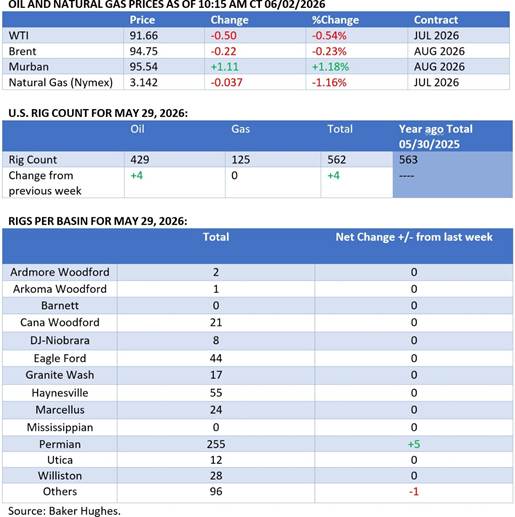
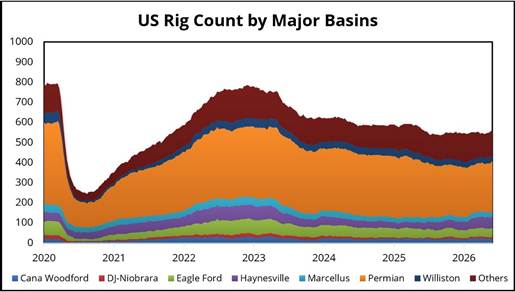
This week’s OilPrice newsletter takes a quick look at some of the critical figures and data in the energy markets. The table and charts below show some market movers early this week, followed by the latest analysis of the top news events in the global energy complex over the past few days.
Ukraine’s Refinery War Gives Russian Crude an Export Passport
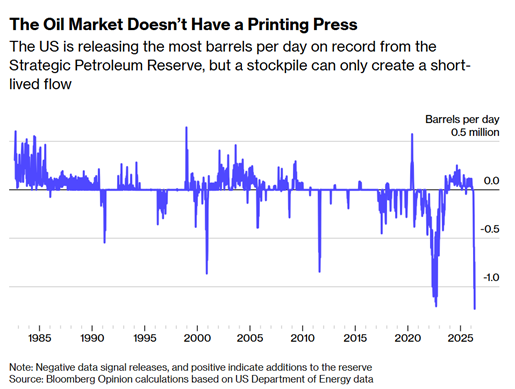
- Record US SPR volumes are pushing out record volumes of US crude to the export markets, with May US oil exports potentially surpassing the 5.5 million b/d threshold for the first time in history.
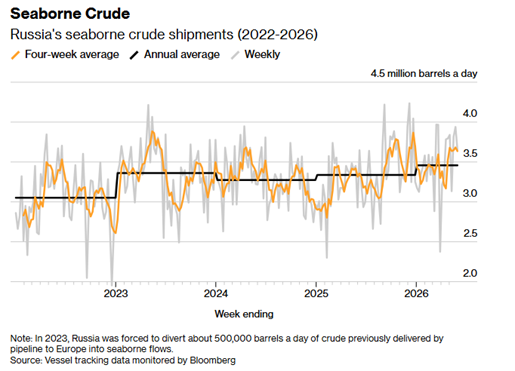
- Ukraine is inadvertently pushing increasing amounts of Russian crude into the export markets as Kyiv’s intensified drone strikes on Russia’s downstream assets free up more oil.
- Russia’s seaborne exports in 2026 to date have averaged 3.46 million b/d, the highest pace of loadings since the Russia-Ukraine war started in 2022 and some 120,000 b/d higher than a year ago.
- Whilst refined product exports would yield better profits for Russia’s exporters, the overall rise in oil prices is lifting the overall value of Moscow’s exports regardless, with the 4-week average of outflows jumping to $2.2-2.3 billion per week lately.
- Meanwhile, according to Ukraine’s President Volodymyr Zelenskyy, Ukrainian forces struck 15 Russian refineries between January and May, aiming to choke Moscow’s oil revenues.
- This week, the 138,000 b/d Ilsky refinery in Russia’s southern Krasnodar region became the most recent victim of Ukraine’s drone strikes.
Market Movers
- French energy giant TotalEnergies (NYSE: TTE) has applied for authorisation for France’s largest renewables project, the 1.5 GW Centre Manche 2 offshore wind plant at an estimated cost of $5.2 billion.
- Portugal state oil company Galp (ELI: GALP) has acquired three offshore exploration blocks in Equatorial Guinea, the third major to take a sizable upstream position in the African country after Chevron and ENI.
- Thailand’s national oil firm PTT has signed a second long-term LNG purchase agreement with Brunei, boosting its Southeast Asian portfolio as its 2 mtpa Qatari LNG supply deal remains out of bounds.
- Barrick Mining (TSO: ABX), one of the world’s top gold miners, is weighing a possible London listing for its African business, potentially also looking at a merger with UK-listed Endeavour Mining (LON: EDV) to create a $30 billion giant.
Tuesday, June 02, 2026
Would there be a US-Iran ceasefire extension or not? This very banal question seems to be resonating ever more strongly across oil markets, as Iran’s rejection of any communication with the Trump administration on Monday gave way to another spark of hope on Tuesday. Tehran’s very own Mehr agency announced that the Iranian authorities are reviewing the most recent US proposal, which caps the upside for Brent futures at $95 per barrel, at least for the time being.
OPEC+ Sticks to Production Hikes. With OPEC+ members set to meet for their usual monthly meeting this Sunday, media reports suggest that the oil group would continue to increase its collective production target by 188,000 b/d, as part of the gradual unwinding of 1.65 million b/d.
US Gas Falls as LNG Feedgas Slips. Henry Hub futures fell to $3.15 per MMBtu on Tuesday after feedgas flows to US LNG plants dropped to a 4-month low amidst spring maintenance, averaging 16.0 Bcf/d so far in June from 17.1 Bcf/d in May after an all-time high of 18.8 Bcf/d in April.
Venezuelan Exports Spring Back to Life. According to Reuters, Venezuela’s oil exports jumped to 1.25 million b/d last month, the third consecutive monthly increase after the seizure of President Maduro, with the US taking 558,000 b/d of the total outflows, followed by India’s 427,000 b/d.
Wildfires Start to Haunt Canada Again. Wildfires have returned to Canada’s oil sands region, with seven active blazes burning in the Fort McMurray and Lac la Biche regions of northern Alberta, potentially impacting Cenovus’ Christina Lake and Canadian Natural Resources’ Jackfish projects.
Stone Ridge Chases Devon’s Marcellus Gas. US hedge fund Stone Ridge Asset Management has reportedly offered around $8 billion for Devon Energy’s (NYSE: DVN) Marcellus shale assets, testing whether the newly enlarged producer is willing to shed a major gas position after its Coterra merger.
Moscow Bans Exports of Jet Fuel. Russia’s government has banned jet fuel exports until November 30, prioritising domestic supply on the heels of Ukrainian drone strikes on the country’s refineries, restricting some 30,000 b/d of export flows that routinely went to supply Turkey’s airports.
Dangote Aims for 2029 Capacity Expansion. Nigeria’s Dangote refinery aims to boost its nameplate capacity by another 750,000 b/d within the next 30 months, beating all industry standards to have the ‘mechanical completion’ of its second crude distillation unit (CDU) ready by December 2028.
IEA Paints Picture of Summer Demand Collapse. Toril Bosoni, the IEA’s oil analysis chief, stated that global crude inventories could plunge to critical levels even before peak summer demand hits, claiming that it would take at least 6-8 months for flows via the Strait of Hormuz to resume fully.
10% of Australia’s LNG Could Be Gone Soon. Workers at Australia’s Inpex-operated (TYO:1605) Ichthys liquefaction plant threatened to bring the entire LNG terminal to a halt from June 11 due to a prolonged wage dispute, a sharp escalation compared to last week’s suspension of industrial action.
Iran’s Strait Authority Draws 300 Ships. According to Tehran, more than 300 non-Iranian vessels have contacted Iran’s newly created Persian Gulf Strait Authority since late April to secure safe passage through the Strait of Hormuz, with China-bound tankers accounting for 28% of the total.
Beijing Allows Teapots to Refine Less. China’s state planner, NDRC, has allowed independent refiners in Shandong to reduce output from June to no less than 80% of last year’s monthly average, easing an earlier supply-security order that forced plants to maintain runs despite the closure of Hormuz.
CFTC Opens Door to Crypto Futures. The US Commodity Futures Trading Commission has approved KalshiEX’s listing of a bitcoin-linked perpetual contract, marking the first such regulated US product, with its policy statement vague enough to accommodate energy products in the future potentially.
Canada Demands Pipeline Guarantees. Canada’s midstream giant South Bow (TSO: SOBO) has flagged that it wouldn’t restart work on the 550,000 b/d Prairie Connector pipeline, the successor of Keystone XL, which was cancelled in 2021 by President Biden, unless it had a ‘durable’ permit.
Europe Suspends Fertiliser Tariffs for a Year. The European Union has suspended standard import tariffs on most fertilisers for a year from May 30, seeking to cap the upside in fertiliser prices, with only Russia and Belarus subject to separate import tariffs.
Credit:
The article “Ceasefire Uncertainty Remains the Biggest Driver for Oil Markets” was initially published on Oilprice.com on June 2nd, 2026