
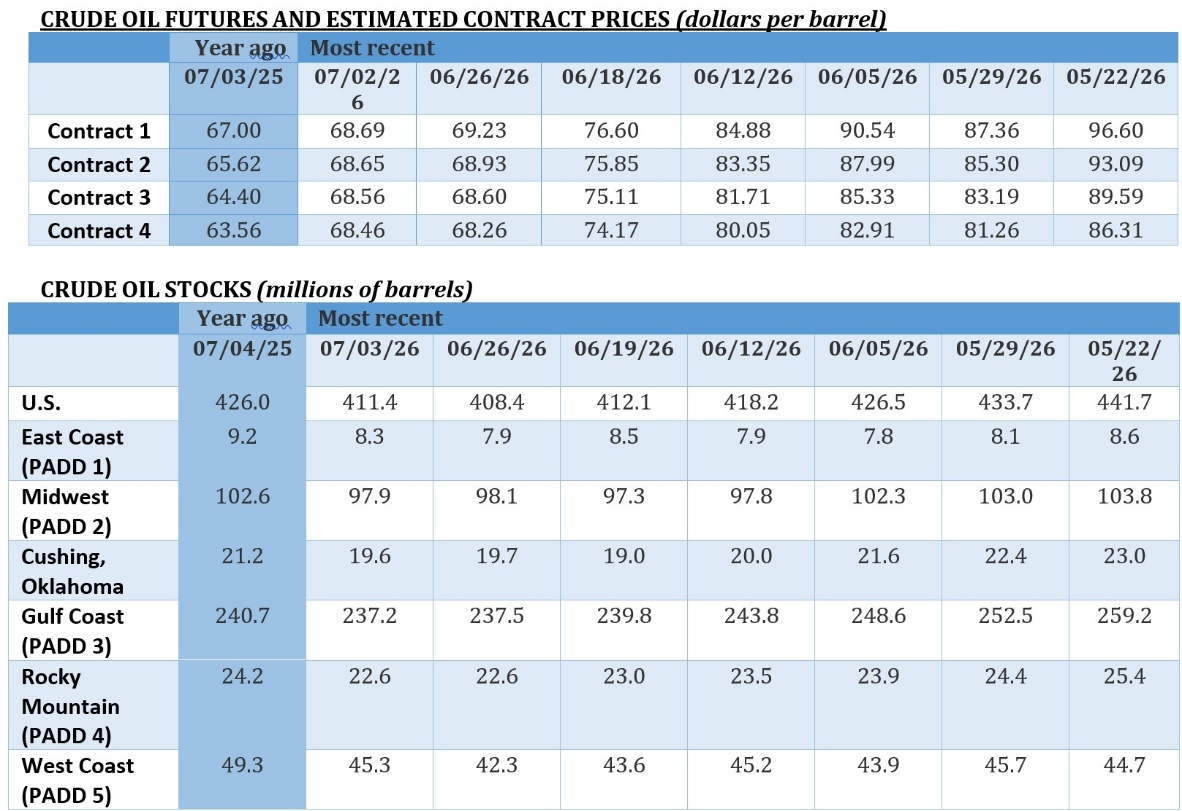
The re-emergence of Middle Eastern conflict risk has added US$4 per barrel to global crude this week, lifting ICE Brent above US$76 per barrel as Strait of Hormuz transit approaches a standstill. The International Energy Agency has extended its surplus outlook into 2027, adjusting 2026 demand contraction to 1 million b/d and predicting that global supply could decrease by 3.7 million b/d due to ongoing disruptions.
Iran’s accelerated loadings, QatarEnergy’s suspended LNG restart, Russia’s one-month diesel export ban, and Freeport LNG’s unplanned turnaround compound the tightening. Directionally, the market is repricing supply security rather than demand strength. That distinction matters, because premiums built on disruption tend to unwind faster than those built on consumption.
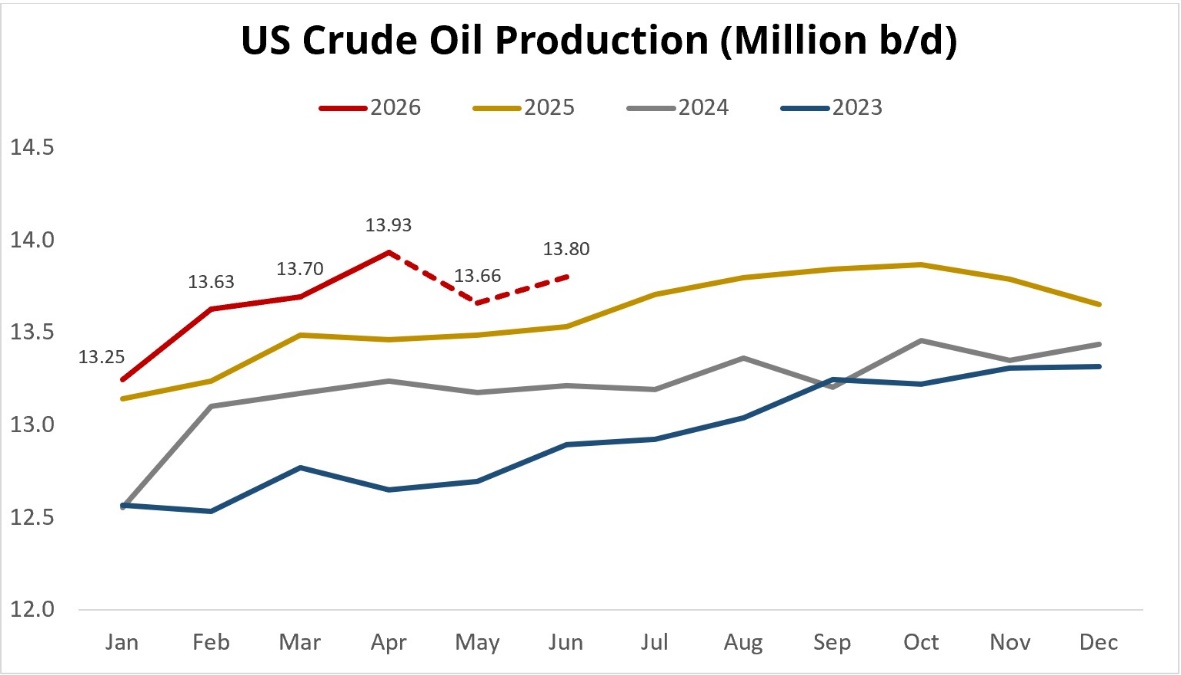
Nigeria is currently in a good financial position. Brent oil prices are above US$76 per barrel, which is well above the 2026 budget target. This helps boost revenue, increases foreign exchange inflows through NNPC remittances, and provides a small buffer for external reserves. However, the main challenge is production. Nigeria’s potential gains depend not only on oil prices but also on how much they can produce, and their actual production levels are the key limiting factor.
Elevated crude also raises the landed cost of imported refined product, transmitting into transport, logistics, and headline inflation, while reintroducing pressure on energy cost management. Investor sentiment toward oil-linked assets, including upstream equities and sovereign instruments, should improve on the revenue signal but remain sensitive to whether the price gain proves durable or episodic.
In the week ahead, investors should monitor Brent’s ability to hold above US$75 per barrel, any OPEC+ communication on compensating barrels, developments around Hormuz transit and the Iranian export corridor and Nigeria’s production data against budget assumptions for direction, not for certainty.

Renewed U.S.-Iran strikes have revived the Middle East risk premium, lifting Brent above $76 as traffic through the Strait of Hormuz slows and fears of supply disruption return.

Friday, July 10, 2026
The return of the Middle Eastern geopolitical risk premium has lifted global oil prices by $4 per barrel this week, with ICE Brent set to settle above $76 per barrel. Renewed US-Iran strikes pushed traffic through the Strait of Hormuz back toward a near-standstill as market concerns about continued supply disruptions outweighed President Trump’s (yet another) Friday attempt to pitch further talks with Tehran.
IEA Pushes Oil Surplus Call into 2027. The International Energy Agency published its monthly oil report, adjusting its 2026 demand-drop expectations to 1 million b/d and maintaining a bullish view for this year, as world oil supply is expected to fall by 3.7 million b/d amid ongoing disruptions in the Middle East.
India Ploughs Ahead with SPR Expansion Plans. India’s state-controlled oil firm ONGC will build a 13-million-barrel crude reserve in Mangalore as New Delhi accelerates its buildout of stockpiling capacity after the Hormuz blockade exposed the vulnerability of its limited crude emergency inventories.
Iran Rushes to Export Remaining Oil. Iran is squeezing out as many oil tankers as possible, loading 11 million barrels of crude on Thursday, as US President Trump threatened to reimpose a blockade on Iranian outflows via the Gulf of Oman after the short-lived ceasefire deal started to disintegrate.
Gulf Tankers Make Hormuz U-Turn. Renewed attacks on ships transiting the Strait of Hormuz have prompted shippers to halt departures from the Gulf, with QatarEnergy’s Al Ghariya, Duhail and al Ruwais LNG carriers turning back from the critical waterway, sending insurance costs higher again.
Russia Bans Diesel Exports for a Month. Russia’s government announced a one-month ban on diesel exports, seeking to lower runaway domestic prices amid Ukrainian drone strikes, wiping out about 0.5 million b/d of exports and sending European diesel cracks to a 15-year high of $60/barrel.
Chevron’s CPC Tanker Gets Droned. Ukraine’s army attacked the Yasa Polaris oil tanker chartered by US oil major Chevron (NYSE: CVX) with a drone en route to the Russian Black Sea port of Novorossiysk, prompting the ship to abandon its loading of Kazakh-origin CPC Blend and sail towards the Turkish coast.
China Opens Its Product Floodgates. Beijing has lifted refined fuel export restrictions for the rest of July for state refiners whilst also allowing private refiner ZPC to resume shipments after a four-month halt, with refiners now targeting roughly 3 million tonnes of gasoline, diesel and jet fuel exports this month.
Venezuela Commits to Oil Policy Revamp. Venezuela’s acting president Delcy Rodríguez has approved the country’s revamped Hydrocarbons Law, advancing efforts to modernise energy sector regulations and attract foreign investment after two decades of nationalisation and asset expropriations.
US to Remove Syria from Terrorist List. President Donald Trump has notified Congress that he plans to remove Syria from the US list of state sponsors of terrorism, initiating a 45-day review that could ease restrictions on energy investments, as Chevron and ConocoPhillips have signed preliminary exploration deals.
Qatar Slams the Brakes on LNG Resumption. Qatar’s state energy firm QatarEnergy has paused efforts to swiftly restart production at its Ras Laffan liquefaction facilities after this week’s attack on the Al Rekayyat LNG carrier, despite having amassed 11 empty vessels outside the port facilities.
Turkey and Iraq Bury the Hatchet, for Now. Turkey and Iraq have agreed to a 12-month extension that would allow continued crude flows via the Kirkuk-Ceyhan pipeline, providing a stopgap solution before the initial contract runs out on July 27 and paving the way for signing the final deal in the coming days.
India Locks in Australian Uranium Supply. India and Australia have finalised arrangements that enable long-term Australian uranium exports to Delhi’s rapidly expanding nuclear fleet, giving Indian utilities access to the world’s largest uranium resource base as it targets 100 GW of nuclear capacity by 2047.
European Major Sues Mozambique Government. As reported by the World Bank’s Centre for Settlement Disputes, Portugal’s state oil firm Galp (ELI: GALP) has filed an arbitration case against Mozambique, having quit the African country in 2025 after a $335 million capital gains tax claim.
Freeport LNG Goes for Unplanned Turnaround. Freeport LNG will begin a major turnaround at its 16.5 mtpa Texas liquefaction terminal on July 10, lasting until late August, with feedgas supply to the plant already falling from 2.5 Bcf/d to 1.5 Bcf/d as the outage threatens to tighten Atlantic Basin LNG supply.
Credit:
The article “Oil’s Calm Is Over as Middle East Risks Return” was initially published on Oilprice.com on July 10, 2026

DISCLAIMER
This briefing draws on third-party reporting from OilPrice.com by Tom Kool, dated 10 July 2026, reproduced with attribution, and includes the editorial framing and Nigerian read-across produced by the Proshare EMIU. It is published by Proshare for general information and educational purposes only and does not constitute investment, legal, or tax advice, nor a solicitation to buy, sell, or hold any security, derivative, or commodity contract. Market prices, geopolitical commentary, and operational data cited herein reflect publicly available information at the time of preparation and remain subject to rapid change as events evolve. Forward-leaning observations are intended as calibration tools rather than directional forecasts. Copyright in the underlying article vests with OilPrice.com and the named author. Readers should consult their licensed financial, legal, or tax advisers before acting on any matter referenced in this publication. Proshare and its affiliates accept no liability for any loss or damage arising from reliance on the contents of this report.