
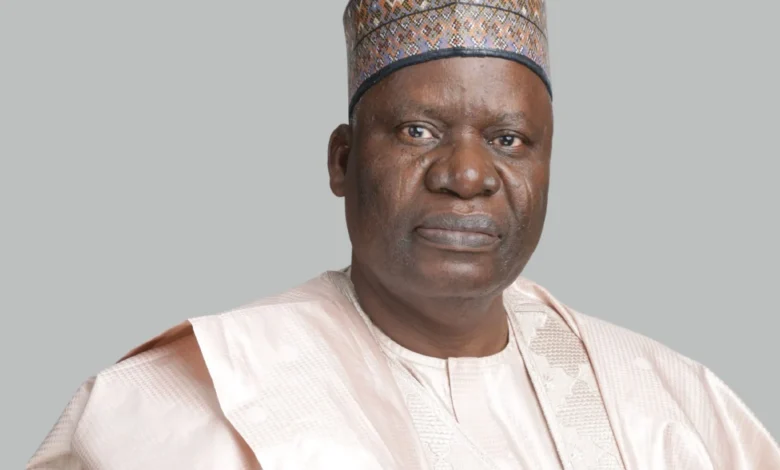
As Nigeria’s 2027 political season gathers momentum with consultations, revived friendships, downgraded disagreements and politicians changing platforms with luggage so light that principles were not included, Suleyman A. Ndanusa, PhD, OON, in his intervention “Whoever Wins the Election: Reforming Nigeria’s System of Government” forces the country to confront an uncomfortable truth that every election is declared the most important in history, yet history itself must be tired of the pressure, because Nigerians have spent too much time discussing the driver and too little examining the vehicle.
Nigeria has the unusual distinction of democratic failure under both systems it now romanticises. At independence, it operated a parliamentary system with a Prime Minister leading government, ceremonial Head of State, ministers drawn from Parliament and powerful competing regions in agriculture, education and industry. That period is remembered with understandable admiration, but as Ndanusa warns, memory can improve the quality of the past. The First Republic collapsed under regional rivalry, disputed elections, minority anxieties and political violence, leading to the January 1966 coup. In 1979, Nigeria chose an American-style presidential system for national unity, stable fixed tenure and separation of powers. It collapsed by 1983. Since 1999, presidential democracy has survived for over a quarter-century with successive elections and party alternation, a significant achievement, but survival is not satisfactory performance.
The core need for reform, Ndanusa argues, is the concentration of federal authority that has produced an extraordinarily powerful centre. The President is Head of State, Head of Government and Commander-in-Chief, appointing ministers and heads of institutions, controlling security, economy and party direction. Around it has developed a vast political economy of access and patronage. This explains why every presidential election feels like a struggle for national ownership, where winner takes an enormous prize and loser spends four years issuing statements. The structure itself makes politics desperate, expensive and divisive.
The clamour for parliamentary return is therefore understandable, with its attraction of a Prime Minister accountable to Parliament, ministers who are elected legislators defending policies under regular questioning, and replacement without four-year wait or impeachment drama. It could soften winner-takes-all, allow coalitions and give smaller parties participation. But Nigeria must not romanticise it. The First Republic already had ceremonial President, executive Prime Minister, ministers from Parliament and bicameral legislature. What would prevent a second experiment from reproducing old weaknesses? Ndanusa warns of Prime Ministers preserving coalitions instead of implementing programmes, votes of no confidence becoming trading floors, and several powerful party proprietors replacing one powerful President, negotiating government behind closed doors.
Hence supporters of presidentialism have a point, if parliamentary success requires credible elections, disciplined parties, independent courts and genuine federalism, why not apply same reforms to the presidential system already operating? A substantially reformed presidentialism could retain stability while reducing presidential powers, transferring responsibilities to states, cutting appointments and strengthening oversight. If the centre controls less, capturing it becomes less profitable.
Ndanusa therefore outlines three clear paths for an inclusive constitutional and political audit, not to pre-judge destination. First, substantially reformed presidentialism. Second, safeguarded parliamentarianism with ceremonial President, transparent coalition agreements, disciplined parties and constructive vote of no confidence where government is removed only when successor is simultaneously chosen. Third, a carefully designed Nigerian hybrid, but with caution against creating two competing executive authorities fighting over who receives a visiting head of state at the airport. Location of executive authority must be clear.
Every option, he insists, must be tested against practical questions that matter to the farmer, teacher, trader and pensioner who may not know “constructive vote of no confidence” but knows expensive government and vanishing promises, would it reduce cost of government, make leaders accountable between elections, preserve stability, accommodate diversity, strengthen states, reduce desperation around presidential elections, bring government closer to citizens?
The implication of this strategic change is profound and goes beyond nomenclature. Changing President to Prime Minister without redistributing power would be cosmetic reform, changing title on office door while contents remain untouched. The real conversation is federalism, a governor dependent on monthly federal allocation cannot claim economic autonomy, a state awaiting Abuja permission is not a federation, a local government with uncertain finances cannot deliver accountability. Neither system works without electoral integrity and disciplined parties that are institutions not temporary vehicles hired per election.
Finally, Ndanusa warns Nigeria is accomplished at diagnosing and less enthusiastic at administering treatment, with colourful reports proceeding quietly into archives. The next government must establish a defined route from national consultation involving all stakeholders to constitutional amendment and referendum, with realistic timetable and safeguards against manipulation for tenure extension or creation of comfortable office for unemployed politicians.
Whoever wins in 2027 will inherit not just power but a vehicle. As Ndanusa concludes, a good President may exercise enormous power responsibly, a less restrained successor may not. Constitutions must restrain the bad, guide the average and remind even the well-intentioned that no individual is indispensable. The election will answer who has mandate to govern, the reform must answer how power should be distributed, exercised and held accountable.