Nigeria Bets on ‘Deal Room’ to Turn Investor Talk Into Cash as States Drive Growth Push

The Federal Government is moving to close the execution gap between investment pitches and actual capital deployment with a new Nigeria Deal Room, a platform meant to turn interest into bankable transactions.
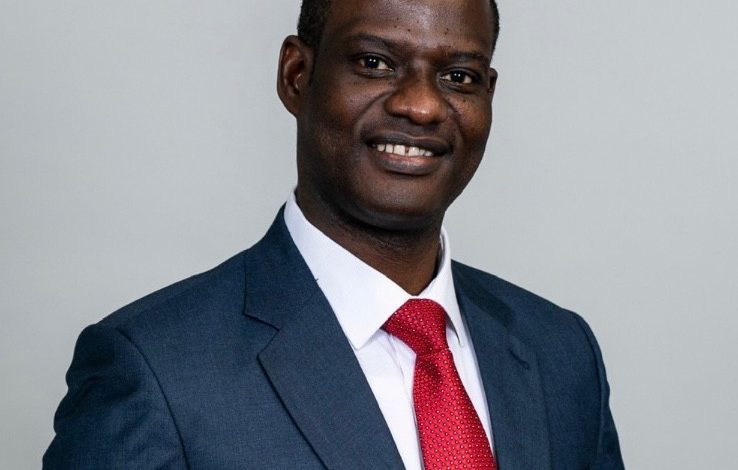
Minister of Finance and Coordinating Minister of the Economy, Mr. Taiwo Oyedele, announced the initiative on Monday at the opening of the Invest Lagos 3.0 Summit, framing it as a direct response to a familiar problem: projects exist, investors are circling, but deals do not close.
Oyedele said the Deal Room will identify strategic projects, remove regulatory bottlenecks, and connect investors directly with investment-ready opportunities across the country. Too often, he noted, brilliant opportunities are known but insufficiently prepared, while investors are highly interested but cannot navigate the entry points.
The platform is being set up by the Federal Ministry of Finance to transition from conversation to actual transaction, improving project preparation, facilitating regulatory approvals, and enhancing investment coordination between sponsors and financiers.
The move lands against a backdrop of macro reforms the government argues are reshaping Nigeria’s risk profile. Oyedele cited the unification of exchange rates, the shift to a market-determined foreign exchange system, and efforts to rebuild buffers, with net external reserves rising from less than $4 billion in 2023 to over $30 billion, and gross reserves approaching $50 billion.
Growth data is being used to reinforce the pitch. Nigeria recorded real GDP growth of 3.89% in the first quarter of 2026 and achieved 11.2% growth in U.S. dollar terms in 2025. The minister said the country remains on track to deliver another year of double-digit GDP growth in dollar terms, positioning Nigeria among the top contributors to global economic growth in 2026.
Yet Oyedele’s speech shifted emphasis away from Abuja. The future of Nigeria’s growth story, he said, is being written in Lagos, Kano, Enugu, Uyo, Abeokuta, Ilorin, Kaduna, Lafia, Owerri and Umuahia. While national reforms create the enabling environment, it is subnational governments that convert potential into projects, investments, jobs and tangible economic outcomes.
Lagos was held up as the proof point. The recent commissioning of the Kasi Hyperscale Data Centre, supported by the Nigeria Sovereign Investment Authority, was cited as an example of state-level execution. The minister also pointed to Lagos’ hold on Nigeria’s tech ecosystem, noting that Africa is home to nine tech unicorns and five of them are from Nigeria, all headquartered in Lagos.
The Invest Lagos 3.0 Summit, held on June 8 and 9, underscores the state’s push to brand itself as Africa’s leading investment gateway, with a focus on fintech, technology, infrastructure, and innovation-driven sectors. Lagos remains Nigeria’s leading technology hub and hosts several of the country’s largest startups, reinforcing its status as one of Africa’s most significant innovation ecosystems.
On fiscal policy, Oyedele stressed that the goal is not to tax more but to tax smarter. The administration has streamlined overlapping taxes, improved value-added tax administration to allow full input credits on investments, introduced targeted sector incentives, and set up an Office of the Tax Ombud to address taxpayer concerns.
The plan is to lift Nigeria’s tax-to-GDP ratio from around 10% to at least 18% over the next three years by expanding economic activity and encouraging formalisation rather than imposing excessive burdens.
Addressing sovereign wealth funds, development finance institutions, pension funds, private equity firms and multinationals, Oyedele described Nigeria as one of the world’s most compelling long-term investment destinations. He cited a young, hyper-digital, and deeply enterprising population, a growing digital economy, and a dominant market position inside the African Continental Free Trade Area.
The Federal Government, he added, is fundamentally committed to crowding in private capital, not crowding it out, with a promise that long-term capital will be protected, enterprise rewarded, and growth made sustainable.
The Deal Room is therefore both a technical fix and a signal. Technically, it tackles project bankability and regulatory friction, the two issues investors consistently flag. Politically, it acknowledges that Abuja’s reforms mean little if states do not deliver shovel-ready assets and if investors cannot find a clear front door.
If the platform works, Lagos gets a pipeline and other states get a template. If it becomes another directory of MOUs, the gap between “highly interested” and “money wired” will remain. For now, the government is betting that a coordinated, transaction-focused hub can do what summits cannot: move capital from the conference room to the ground.