
The discourse on Nigeria’s electricity crisis has rarely lacked for diagnosis. What has been consistently harder to find is a reckoning that names the underlying pattern precisely and refuses to treat six decades of compounding failure as a sequence of misfortunes rather than a deliberate structure.
Two events from May 2026 anchor Tosin Adeoti’s analysis. A Nigerian court sentenced former Minister of Power Saleh Mamman to 75 years in prison for laundering N33.8 billion drawn from government-funded electricity projects. Weeks later, the World Bank announced the cancellation of $717.7 million in undisbursed funds from a $1.52 billion Power Sector Recovery programme, closed more than a year ahead of schedule, with just nine per cent of its additional financing package actually disbursed. Adeoti’s argument is that these are not separate headlines. They are the same story: a sector that has absorbed over $30 billion in successive reform programmes, privatised its distribution assets in a $2.5 billion transaction in 2013, received nine rounds of international restructuring support, and today struggles to deliver 5,000 megawatts to a population approaching 250 million, leaving 87 million Nigerians, the largest electricity access deficit of any country on earth, in the dark.
In this Op-Ed, Tosin Adeoti, writer, socio-political commentator, and author of several works on Nigerian economic and political affairs, makes the case that what Nigeria’s electricity sector has perfected is not simple incompetence but a more specific and more consequential variant: the failure that proceeds through the full choreography of reform, that enacts legislation, completes privatisations, holds press conferences, and signs World Bank agreements, while producing nothing that fundamentally alters the condition of the 87 million without supply. The comparative frame he deploys is deliberately uncomfortable. Ghana, Rwanda, and Kenya have each achieved measurable, sustained progress toward universal electricity access without Nigeria’s oil revenues, without Nigeria’s reform legislation, and without Nigeria’s volume of international financial support.
There is a particular kind of institutional failure that is worse than simple incompetence. It is the failure that comes dressed in the language of reform, that holds press conferences and signs agreements and celebrates milestones, and then… produces nothing. Nigeria’s electricity sector has perfected this genre over six decades, and two stories from this month — a World Bank cancellation and a minister’s prison sentence — have once again pulled back the curtain on what is, without exaggeration, one of the most costly and consequential failures in the history of African governance.
Let us begin with the numbers, because Nigerians have a tendency to process these stories as abstractions rather than as the human catastrophe they represent. According to the World Bank’s SDG7 Energy Progress Report published in 2025, Nigeria has the largest electricity access deficit of any country on earth, with approximately 87 million people living without access to electricity. This is not a statistic from a poor, landlocked, resource-scarce nation. This used to be Africa’s largest economy, the continent’s largest oil and gas producer, a country that has earned trillions of naira in petroleum revenues since independence, sitting at the very bottom of the global electricity access table for three consecutive years. For context, out of the 20 countries with the largest electricity access deficits, 18 are in Sub-Saharan Africa. And Nigeria leads all of them.
Now consider what countries that Nigerians reflexively regard as less significant have achieved. Ghana, Rwanda, and Kenya are on track to achieving full energy access by 2030. Rwanda, a country that emerged from a genocide in 1994 with its infrastructure in ruins and its institutions shattered, has been steadily expanding electricity access and building toward universal coverage. Kenya’s electrification jumped from approximately 25 per cent in 2010 to around 75 per cent by 2020, aided by regulatory oversight of grid densification and support for off-grid solutions. Ghana, which lacks Nigeria’s oil wealth, has pushed its electrification rate above Nigeria’s. These countries did not discover new resources. They made different choices about governance, regulatory seriousness, and accountability. Nigeria, meanwhile, has had the resources, the international support, and the reform blueprints, and has squandered them with remarkable consistency.
The history of this squandering is long and painful to recount, but it must be recounted if we are to understand that what we are witnessing is not bad luck. It is a pattern. Nigeria has been trying to fix its electricity sector, in various configurations and with various levels of international support, for as long as most Nigerians have been alive. The National Electric Power Authority, better known as NEPA — rechristened in popular memory as “Never Expect Power Always” — was for decades the symbol of institutional dysfunction. Successive governments promised to fix it. Billions were poured in. By the early 2000s, estimates suggested that over $30 billion had been spent on the sector over the preceding decade alone, with barely any improvement in supply. PHCN, NEPA’s successor, was never able to generate more than 5,000 megawatts of electricity, even though experts said Nigeria needed more than ten times that figure to meet basic needs.
The 2005 Electric Power Sector Reform Act was supposed to change the calculus entirely. It provided the legal foundation for breaking up the old monopoly and creating a competitive, privately driven market. In November 2013, the Power Holding Company of Nigeria was unbundled into six generation companies and eleven distribution companies, and sold to new private owners in a landmark $2.5 billion transaction described as one of the world’s largest privatisations. There was considerable optimism at the time. Private capital would do what state management had failed to do for half a century. Efficiency would follow ownership. The lights would come on.
They did not come on. Twelve years after privatisation, the sector structure has remained largely unchanged, with the distribution companies still operating on inherited infrastructure without significant expansion of generation assets, and billions in investments and tariff adjustments producing no fundamental improvement. The problems that critics raised at the outset proved accurate: most investors acquired these assets through heavily leveraged financing, borrowing as much as 80 per cent of the acquisition cost at exorbitant interest rates, leaving them unable to fund the capital expenditure the sector desperately needed. Transmission, meanwhile, remained under federal government control. And the government failed to expand it at anything close to the required scale. What manner of privatization is this!
Into this landscape came the World Bank, which approved a Power Sector Recovery Performance-Based Operation in June 2020 with financing of approximately $752.5 million, followed by additional financing of $763.5 million in June 2023, bringing total committed support to roughly $1.52 billion. The programme recorded genuine early progress. Between 2019 and 2022, tariff shortfalls fell by 71 per cent, and regulatory cost recovery improved from 56 per cent to 94 per cent. These were real numbers, and they are not to be sniffed at. But then came June 2023 and the liberalisation of Nigeria’s foreign exchange market, which triggered a sharp depreciation of the naira and a dramatic increase in the cost of natural gas, the fuel source for more than 70 per cent of electricity injected into the national grid. Electricity tariffs, frozen for most consumers since early 2023, could not keep pace. Annual tariff shortfalls, which had fallen to a low of N140 billion in 2022, exploded to approximately N1.9 trillion in both 2024 and 2025. The World Bank’s reform milestones became unreachable. By May 2026, the government and the bank jointly decided to cancel the remaining $717.7 million in undisbursed funds and close the programme more than a year ahead of schedule, with an overall disbursement rate on the additional financing package of just nine per cent.
It is worth pausing on that figure. Nine per cent of $763.5 million disbursed, after years of engagement, after the World Bank extended, restructured, and gave every possible opportunity for Nigeria to meet the conditions. The bank’s own assessment rated overall implementation progress as “Moderately Unsatisfactory.” That is diplomatic language for failure.
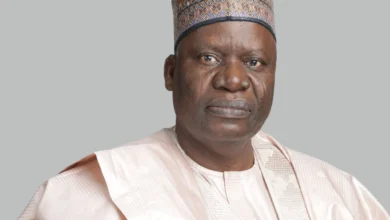
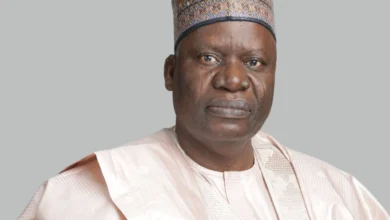
And then, two weeks before this cancellation became public knowledge, a court in Abuja sentenced Saleh Mamman, Nigeria’s former Minister of Power from 2015 to 2021, to 75 years in prison for laundering N33.8 billion in funds linked to government-funded power projects. Mamman, who served under President Muhammadu Buhari’s administration, used private firms to funnel money that was meant to fix the electricity sector. He was convicted on 12 counts. He was not present to receive his sentence. According to the EFCC, he has been “out of circulation” and “without trace” since his conviction. In a detail that tells you nearly everything you need to know about the moral universe of Nigerian public life, just weeks before the verdict, Mamman had publicly announced his intention to run for governor of Taraba State.
These two stories — the cancelled World Bank programme and the convicted minister — are not separate incidents. They are chapters in the same book. The World Bank’s restructuring paper noted that Nigeria’s electricity sector suffers from “recurrent financing gaps, most notably in the form of tariff shortfalls, which generate liquidity pressures across the value chain.” Those liquidity pressures do not exist in a vacuum. They exist in a sector that has been systematically looted by the very officials charged with fixing it, over a period of decades, under every administration, with sufficient consistency that it can only be described as structural, not incidental.
Nigeria’s grid today struggles to deliver around 5,000 megawatts to a population approaching 250 million people. For comparison, South Africa, with a quarter of Nigeria’s population, generates roughly ten times that amount, even in its own troubled period. The contrast with Rwanda and Kenya, countries that started from much lower bases and have made genuine measurable progress, is not to be mentioned again because it is genuinely embarrassing. These countries built regulatory institutions that could enforce accountability. They made tariff reform politically possible by pairing it with visible improvements in supply. They did not allow their power sectors to become personal enrichment vehicles for ministers and their associates.
Nigeria has the gas. It has had the World Bank money, the bilateral support, the reform legislation, and the policy documents. What it has consistently lacked is the political will to hold the people responsible for the sector to any standard of account that actually means something. A 75-year prison sentence for Saleh Mamman, if it is ever actually served, would be a start. But one conviction, however satisfying, does not fix 87 million people living in the dark.
The cancelled $717.7 million is not the story. The story is what that money was meant to do, and why, after everything, it could not be spent.
About the AUTHOR
Tosin ADEOTI is an avid writer and socio-political commentator. He is the author of ‘Kingdoms of Africa: Exploring the Continent’s Pre-Colonial Pasts’, ‘Beyond Profit: How a Nigerian Company Built a Culture of Credibility’, and ‘’The Art of Argument: How to Know Language Deceives You’. He is also the author of mini-guides like ‘’Productive Days: Time Mastering Tools and Tips for Everyone’’ and ‘Career Development: Steps to Attaining the Career of Your Dreams’. He has written publicly on Nigerian economic and political affairs for about a decade. He has also led digital innovations such as developing a community of book lovers at Naija Book Club and a fast-rising online current affairs and knowledge-based newsletter at Freshly Pressed. His opinion pieces have appeared in several national newspapers in areas such as economic empowerment and development, digital innovations, and political restructuring. He is also a highly experienced project manager and entrepreneur with over a decade of experience in various sectors