The Missing Paragraph in IMF’s New Tax Advice to Nigeria – OpEd

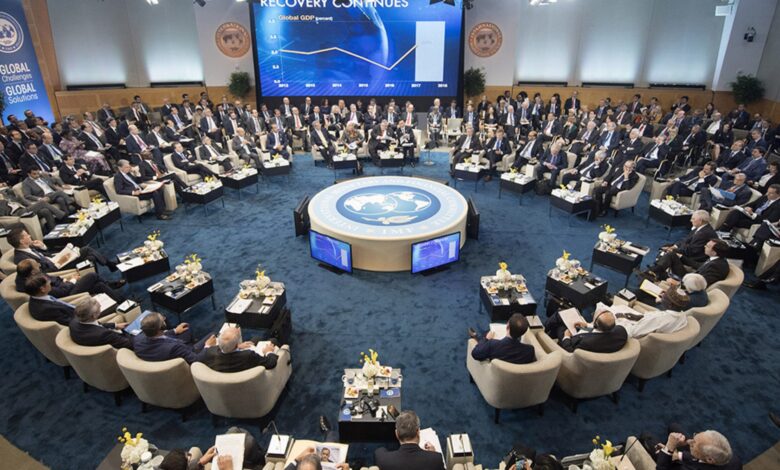
In this timely commentary, Tosin Adeoti argues that the public debate surrounding the IMF’s latest tax recommendations has missed a critical detail: the Fund also stressed that any new taxes should be preceded by effective social protection measures to shield vulnerable citizens from additional economic hardship.
The article examines the growing trust deficit between government and citizens, the political economy of economic reforms, and the tendency to blame external institutions for policy choices ultimately made by domestic leaders. Drawing lessons from Nigeria’s Structural Adjustment Programme era and Côte d’Ivoire’s experience with IMF-backed reforms, it challenges both policymakers and the public to rethink where accountability truly lies.
As Nigeria seeks to strengthen fiscal sustainability amid persistent economic pressures, the central question is not simply whether taxes should rise, but whether reforms can be implemented in a manner that protects livelihoods, preserves trust, and strengthens the social contract.

When the headline flashed across digital screens yesterday, the collective groan from millions of Nigerians was almost audible. “Revenue: IMF asks FG to impose fuel, telecom taxes” For a populace currently suffocating under the weight of severe inflation and weakened purchasing power, this news read like a deliberate provocation. It immediately sparked a digital firestorm, reinforcing a deeply entrenched narrative: Washington-based technocrats are dictating harsh economic realities from air-conditioned offices, completely detached from the existential strain felt by the average Nigerian household.
However, public policy is rarely captured accurately by sensational headlines. A closer inspection of the International Monetary Fund’s actual statement reveals a far more complex reality. It shifts the spotlight of accountability away from foreign institutions and places it firmly on our own domestic leadership, while simultaneously exposing a glaring strategic flaw in the IMF’s own global communication playbook.
The claim that the IMF asked Nigeria to impose fuel and telecom taxes is substantially true but fatally incomplete. In its 2026 Article IV Staff Report, the IMF did state that Nigeria may need further tax policy changes over the medium term to complement administrative gains. The report explicitly mentioned extending Value Added Tax (VAT) to fuel products and introducing telecom excises.
But tucked right beside this recommendation was a monumental caveat. The Executive Board stated unambiguously that the timing of such reforms must strictly consider the nation’s poverty levels. The report insisted that any new taxation must only be introduced after ensuring a robust, fully funded cash transfer system is operational. The goal was to guarantee that the economic burden does not fall disproportionately on vulnerable citizens.
The omission of this caveat in the public discourse perfectly illustrates the profound trust deficit between the Nigerian state and its citizens. Whenever economic discussions arise, the default public reaction is anxiety. We cannot entirely blame the citizenry for this reflex. A number of things can be true at the same time: households are indeed under severe strain, the news reports often lack vital nuance, and tax reforms remain necessary for national solvency. But the deeper truth is that Nigerians have grown accustomed to a political class that cherry-picks economic advice based on what serves the state’s immediate revenue appetites.
By issuing these recommendations publicly at this specific moment, the IMF is unwittingly playing into the hands of a government that frequently uses the institution as a convenient political shield. The government adopts the painful, revenue-generating elements of the IMF’s advice—such as aggressive tax hikes—while conveniently ignoring the sequencing prerequisites the IMF explicitly advised. When the public inevitably protests the resulting hardship, political leaders throw their hands up and point to global economic bodies to claim their hands were tied.
The IMF must realize that its communication strategy in developing nations is fundamentally flawed. It desperately needs to learn that economic advice cannot be divorced from political economy. To suggest the imposition of telecom and fuel taxes now—even with a caveat regarding timing—is spectacularly tone-deaf to the reality on the ground.
Consider the raw data. On May 29, 2023, the current administration announced the abrupt end of the petrol subsidy. By June 2023, the Central Bank of Nigeria floated the Naira, unifying the foreign exchange windows. The immediate macroeconomic result was a violent shock to the system. Headline inflation surged, peaking at a staggering 34.19% by mid-2024, with food inflation crossing the devastating 40% mark.
Today, in 2026, the macroeconomic indices look phenomenal on a spreadsheet. In the first quarter of this year alone, Nigeria attracted $10.37 billion in capital importation. Our gross external reserves have climbed to a 17-year high of over $50 billion. Yet, this macro-level victory has not translated into micro-level relief. The reforms of 2023 severely impoverished the working class. Over 100 million Nigerians remain trapped in multidimensional poverty. Real wages have collapsed against the dollar. Releasing a report suggesting new consumption taxes in this environment provides domestic politicians with the exact soundbite they need to extract more revenue while dodging the blame. The IMF is providing the cover for the crime.
Nonetheless, while the IMF’s timing is politically naive, it is time to dismantle the illusion of sovereign victimhood. The buck stops squarely at the desk of the Nigerian government.
The IMF is not a colonial overlord. It is a lender of last resort and an advisory body. Sovereign nations possess the absolute authority to enact IMF policies wholesale, adapt them to fit local socio-economic contexts, or reject them outright. Examples of countries exercising this sovereignty is replete.
Consider the tragedy of our West African neighbor, Ivory Coast. In his insightful book Beyond Prejudice, Tidjane Thiam chronicles how wholesale adoption of IMF policies decimated the Ivorian economy during the era of Félix Houphouët-Boigny. Following a massive drop in global commodity prices in the 1980s, the country was forced to turn to Bretton Woods institutions. The IMF’s prescription involved draconian cuts to capital expenditure alongside severe defunding of critical social sectors like education. The Ivorian government swallowed this bitter pill entirely, crashing the domestic economy.
As Thiam rightly infers, the foundational mistake was not the IMF’s harsh medicine. The true failure was the Ivorian government’s refusal to diversify its economy during the years of its agricultural boom. The political leadership, headed by his great uncle, squandered its window of opportunity, leaving them at the mercy of foreign creditors when the cycle turned.
Nigeria has its own haunting historical precedent regarding this dynamic. In late 1985, the military administration of General Ibrahim Babangida faced a severe balance of payments crisis. The government initiated a highly publicized national debate, asking Nigerians whether the country should accept a $2.5 billion loan from the IMF. Recognizing the harsh conditionalities attached, the Nigerian public overwhelmingly voted to reject the loan. In December 1985, Babangida acceded to the public’s wish, officially turning down the IMF facility to great domestic fanfare.
What followed was a masterclass in political sleight of hand. Shortly after rejecting the IMF loan, the Babangida administration quietly accepted a much smaller $450 million trade-policy loan from the World Bank in 1986. The tragic irony was that this smaller facility carried the exact same structural conditionalities as the rejected package. The government subsequently launched the Structural Adjustment Programme (SAP).
The Nigerian public ended up bearing the full, unmitigated brunt of the harsh economic conditionalities. Citizens endured skyrocketing inflation, an aggressively devalued Naira, and the dismantling of vital subsidies. We absorbed the immense economic pain designed for a massive $2.5 billion intervention, but the country only received a fraction of the financial cushion to manage the fallout.
To this day, many Nigerians look back at the SAP era and direct their lingering fury at the IMF. Strictly speaking, this is a misdirection of anger. The hardship of the 1980s was a spectacular failure of domestic political leadership. It was a sovereign choice to endure maximum pain for minimal support. The state took the structural advice of foreign economists but failed to protect its own people during the implementation phase.
We are dangerously close to repeating this exact historical cycle today.
When the IMF looks at Nigeria’s fiscal metrics, their models dictate that raising revenue through fuel and telecom taxes makes mathematical sense. They are economists looking at a spreadsheet deficit. It is the sole responsibility of the Nigerian president and his economic team to look beyond the spreadsheet and see the socio-economic reality of the streets. It is the government’s job to tell foreign advisors that applying immediate consumption taxes on a population battling severe inflation will break the social contract.
Productivity must remain the central focus of our economic policy. You cannot tax a struggling population into prosperity. If the government determines that new taxes are absolutely unavoidable, then the implementation must be rigidly sequenced. Not a single new tax burden should be placed on the citizenry until a transparent, verified, and fully funded social safety net is actively disbursing relief to the most vulnerable households. This was the exact sequence the IMF recommended. It is the part of the narrative the government seems least eager to highlight.
The path forward requires maturity from both entities. The IMF must rethink how its pronouncements are weaponized by domestic politicians to enact pain without protection. Conversely, we as citizens must stop treating the IMF as an omnipotent bogeyman. The painful consequences of poorly implemented policies are not the fault of an advisory body in another hemisphere. They are the direct result of a domestic leadership that consistently chooses revenue expediency over citizen empathy.
About the AUTHOR
Tosin ADEOTI is an avid writer and socio-political commentator. He is the author of ‘Kingdoms of Africa: Exploring the Continent’s Pre-Colonial Pasts’, ‘Beyond Profit: How a Nigerian Company Built a Culture of Credibility’, and ‘’The Art of Argument: How to Know Language Deceives You’. He is also the author of mini-guides like ‘’Productive Days: Time Mastering Tools and Tips for Everyone’’ and ‘Career Development: Steps to Attaining the Career of Your Dreams’. He has written publicly on Nigerian economic and political affairs for about a decade. He has also led digital innovations such as developing a community of book lovers at Naija Book Club and a fast-rising online current affairs and knowledge-based newsletter at Freshly Pressed. His opinion pieces have appeared in several national newspapers in areas such as economic empowerment and development, digital innovations, and political restructuring. He is also a highly experienced project manager and entrepreneur with over a decade of experience in various sectors.