
Dangote Cement Is Too Profitable To Fail, And Too Powerful To Be Fair

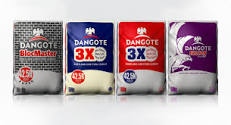
In an economy where manufacturers blame foreign exchange, fuel, power, tax and insecurity for every bad result, Dangote Cement has just delivered a result that makes those excuses look thin. In nine months to 30 September 2026, the Group sold N3,774,208 million worth of cement and clinker, up 19.6% from N3,154,757 million a year earlier, and kept N974,794 million of it as profit after tax, up 31.2% from N743,263 million. That is a profit margin of 25.8%, an EBITDA margin of 46.8%, an operating margin of 41.5%, and an annualised return on equity of 48.5%. The question is not whether Dangote Cement is profitable, because every cement company in a housing-deficit country should be profitable, but why this one is this profitable, why it got more profitable in a harder year, and whether that profitability actually served the people who matter. On the Group numbers for 9M 2026, the answer is uncomfortable for its critics and reassuring for its owners, because Dangote Cement did not just survive Nigeria’s operating environment, it used its strengths to exploit it, neutralise its own weaknesses, blunt its threats, and pay for it in cash.
The first strength behind the profit is the simplest and the hardest to copy, which is that Dangote Cement can raise prices faster than its costs rise. Revenue grew 19.6%, but production cost of sales grew only 7.9%, from N1,286,094 million to N1,387,762 million, and that gap is the whole story, because it lifted gross profit by 27.7% to N2,386,446 million and gross margin by 400 basis points, from 59.2% to 63.2%. Look inside that cost line and the discipline becomes clearer, because fuel and power consumed, the biggest nightmare for any manufacturer, grew only 2.0%, from N568,966 million to N580,488 million, despite higher output, salaries in production grew 15.3% to N124,763 million, and depreciation in production actually fell, from N145,287 million to N123,812 million, after management extended the useful lives of plant and buildings from 25 years to 40 years, saving N47.3 billion in nine-month depreciation for the Group. That is not luck, but scale, vertical integration, captive power, and a deliberate decision to keep plants running at high utilisation, and Nigeria alone delivered EBITDA of N1,597,013 million on revenue of N2,670,885 million, a segment EBITDA margin of 59.8%, which no competitor in Nigeria can match with Obajana, Ibese and Gboko plus a distribution network that makes haulage both a cost and a moat. The second strength is what happened below gross profit, because operating profit grew 27.8% to N1,567,745 million and EBITDA grew 23.7% to N1,766,330 million, and even though selling and distribution expenses grew 23.6% to N618,872 million, driven by haulage of N489,291 million, and administrative expenses grew 11.7% to N226,108 million, operating margin still improved from 38.9% to 41.5%, which means Dangote Cement absorbed a haulage shock and still expanded margin, and that is the definition of operating leverage.
The most critical strategic move in 9M 2026 was not selling more cement, but using profit to kill debt, and that is how strength was turned into opportunity. At 31 December 2025, total financial liabilities were N786,613 million, and by 30 September 2026 they were N539,609 million, down 31.4%, because the Group repaid N992,645 million in loans and took only N467,690 million in new loans, repaid its commercial paper in full, and cut bank loans and bonds to the point where financial liabilities to equity fell from 30.0% to 20.1%. The reward was immediate and massive, because finance costs collapsed 57.8%, from N286,044 million to N120,798 million, and interest expense alone fell from N281,758 million to N71,955 million after N30,963 million was capitalised, and that saving of N165,246 million is equal to 17.0% of profit after tax, which means without that deleveraging, profit before tax would not have grown 41.5% to N1,472,503 million, but would have grown at roughly the pace of operating profit. Deleveraging also turned the balance sheet from net debt to net cash, because cash and cash equivalents rose 49.1% to N592,668 million, net debt of N389,044 million at the start of the year became net cash of N53,059 million, and for a company with capital commitments of N2,314,332 million, up from N1,118,230 million at December 2025, that matters, because it means Dangote Cement can now fund its next expansion, with additions to property, plant and equipment already at N566,722 million in nine months, from internal cash rather than from begging banks at SOFR plus 6%. That is how a strength, cash generation, was used to exploit an opportunity, expansion, because operating cash flow was N1,826,577 million, up 41.5% and 1.87 times profit after tax, and that cash did three things at once, it funded capex, it repaid debt, and it paid dividends, which very few Nigerian companies can do in the same nine months.
Dangote Cement also has a real weakness, and the numbers do not hide it, because current liabilities of N2,748,567 million exceed current assets of about N1,971,738 million, the current ratio is 0.72x, down from 0.76x, and the working capital deficit is N776,829 million, yet in a weaker company that would be a crisis, with suppliers stopping supply, banks calling loans, and the company forced into emergency borrowing, while Dangote Cement neutralised it with two strengths, supplier power and cash flow. Trade and other payables rose 18.0% to N1,498,681 million, including payable to contractors of N551,940 million, which means in effect suppliers and contractors are funding the working capital gap, and they are willing to do so because Dangote Cement pays eventually and because it is too big to fail as a customer, and more importantly the Group does not need to liquidate current assets to pay current liabilities, because it generates N1,826,577 million in operating cash in nine months, which is the difference between accounting illiquidity and real illiquidity, because on paper the current ratio is weak, but in cash terms the Group is liquid. The second weakness it neutralised was Pan Africa, because Pan Africa revenue grew to N1,189,836 million and EBITDA to N226,679 million, but it still made a loss of N7,863 million in 9M 2026, against a profit of N182,729 million a year earlier, which is a serious reversal driven by translation losses and weak operations outside Nigeria, yet the Group absorbed that loss without blinking, because Nigeria made N849,395 million in profit, and Nigeria’s strength bought time for Pan Africa to be fixed and bought time for the translation hit to be absorbed, with other comprehensive loss of N160,439 million from translating foreign operations cutting total comprehensive income to N814,355 million, but not touching cash and not stopping the Group from paying dividends. The third weakness, a collapsing other income line, was also neutralised, because other income fell 59.2%, from N63,151 million to N25,749 million, as government grant fell from N41,424 million to N11,926 million, yet in a weaker company that would have dented profit, while here operating profit growth of N340,902 million dwarfed the N37,402 million fall in other income, so the profit is now cleaner, more operational, and less dependent on grants.
The threats in 9M 2026 were real, and they hit hard, starting with tax, because income tax expense rose 67.2% to N497,709 million, while profit before tax rose only 41.5%, the effective tax rate rose from 28.6% to 33.8%, and current tax liabilities jumped to N702,203 million from N297,021 million at December 2025, which is a N204,996 million extra tax bill, yet Dangote Cement absorbed it and still grew profit after tax by 31.2% and earnings per share by 33.2%, from N43.82 to N58.37, because operating profit and finance cost savings together added N506,148 million to profit before tax, more than enough to cover the extra tax, which is how strength in operations neutralised a threat from fiscal policy. The second threat was foreign exchange, because net foreign exchange loss in finance costs was N40,768 million in 9M 2026, against a gain of N1,131 million a year earlier, and in the third quarter alone there was a reversal of N17,649 million on net monetary positions, against a gain of N23,081 million in 9M 2025, while exchange differences on translating foreign operations cost N160,439 million in other comprehensive income, yet again the Group absorbed it, because its debt is now mostly naira-denominated and lower, so foreign exchange losses on borrowings are smaller, and its Nigerian operations earn in naira and spend in naira for a large part of costs, so the foreign exchange threat hit equity, not cash, and it hit translation reserve, which fell from N1,002,966 million to N845,243 million, but it did not hit the ability to pay suppliers or dividends. The third threat was regulatory and contingent risk, because contingent liabilities of N349.2 billion for litigations and tax audits equal 13.0% of total equity of N2,680,644 million, and royalty rose from N7,474 million to N12,074 million, yet the Group’s equity ratio of 43.6%, up from 43.4%, and its retained earnings of N1,729,371 million, provide a buffer that most manufacturers do not have.
For shareholders, the verdict is emphatically yes, because profit attributable to owners rose 33.2% to N977,853 million, earnings per share rose 33.2% to N58.37, dividends paid were N753,847 million, a payout of 77.1% of owners’ profit, up from 68.5%, and total equity still rose to N2,680,644 million from N2,620,136 million despite that payout, so shareholders got both income and growth, even if the only criticism is that a 77.1% payout is high when capital commitments are N2.31 trillion, but in a year of N1.83 trillion operating cash flow, it was affordable. For lenders and creditors, the verdict is also yes, because lenders were repaid N992,645 million, commercial paper was cleared, financial liabilities fell, and interest cover, measured as EBITDA to finance costs, rose from 5.0 times to 14.6 times, which is a fortress position for a lender. For government, the verdict is yes, and then some, because tax expense of N497,709 million, royalty of N12,074 million, and value added tax and withholding tax payable of N125,012 million combined show Dangote Cement as one of Nigeria’s largest taxpayers, and the state took more while the company still grew. For customers, the verdict is only partly yes, because customers got supply, they got the product, and they got a company that did not collapse under cost pressure, but they paid for it, because the 63.2% gross margin means customers are paying prices well above production cost, and in a country where cement is a basic need for housing, that is the social cost of Dangote’s strength, so the company lived up to availability, not to affordability. For employees, the verdict is mixed, because salaries in production, administration and selling together were N237,247 million in 9M 2026, up from N200,477 million, but that is only 6.3% of revenue, so employees shared in growth, but shareholders shared far more, and the company is productive, but not generous by the numbers. For host communities and society, the verdict is modest, because corporate social responsibility in administrative expenses was N11,369 million, down from N18,388 million a year earlier, despite profit rising 31.2%, which is a 38.2% cut, and a company that makes N974,794 million in nine months and cuts CSR by that much is not living up to its social licence in full.
The critical judgment, therefore, is that Dangote Cement’s 9M 2026 result is not a story of a company that got lucky with prices, but a story of a company that used its core strength, a 63.2% gross margin built on scale and cost control, to generate N1.83 trillion in operating cash, used that cash to kill N247 billion in financial liabilities, cut finance costs by N165 billion, absorb a N205 billion extra tax bill and a N160 billion translation loss, and still pay N754 billion in dividends. It exploited the opportunity of expansion without leverage, it neutralised the weakness of a 0.72 times current ratio with cash flow and supplier power, and it neutralised the threats of tax, foreign exchange and regulation with operating leverage. The critical caveat is sustainability, because a 77.1% dividend payout, a 0.72 times current ratio, a 33.8% effective tax rate, and a Pan Africa loss are not strengths, they are warnings, and if revenue growth slows, if haulage costs continue to grow at 23.6% against revenue at 19.6%, or if tax rises again, the margin that protects everything will compress. For now, though, the verdict stands, because Dangote Cement did not just make profit, it made profit work for its owners, its lenders and the state, and it did so by turning strength into strategy, which is why, in a difficult economy, it remains the benchmark against which every other Nigerian manufacturer is judged, and found wanting.