
The Shameless Effort To Turn A 1993 Forfeiture Into A Campaign Weapon
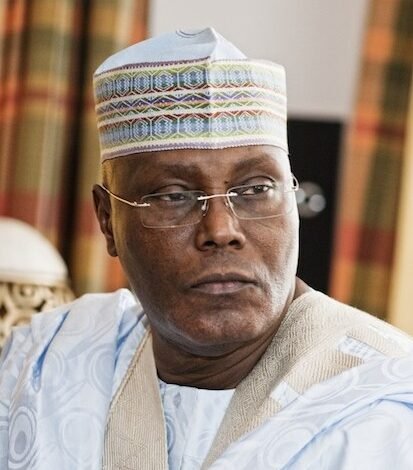
Nigerian politics rewards noise over record. And right now, the loudest voice in the room is Abubakar Atiku, running again for President, and leading a full campaign to turn a 30-year-old U.S. civil asset forfeiture involving President Bola Ahmed Tinubu into a national scandal. The problem is not that Atiku is asking questions. The problem is the ground he is standing on while asking them. It is questionable, uneven, and soaked in the very controversies he now pretends to be above.
Let us get the facts straight first. Between 2023 and 2024, U.S. agencies released about 2,500 pages under FOIA relating to a 1993 case in Chicago. What came out were bank records showing a $460,000 civil asset forfeiture settlement. What did not come out was an indictment, a conviction, or evidence of an active investigation. The U.S. Department of Justice said as much. The Nigerian Supreme Court said as much in October 2023 when it ruled the forfeiture was not grounds to disqualify Tinubu. The redactions were done under standard FOIA exemptions to protect sources and law enforcement methods. Judge Beryl Howell agreed. Case closed legally, and diplomatically.
Yet Atiku’s camp treated it like a fresh crime scene. Press conferences were held. Petitions were filed. The tribunal was flooded. A settled civil matter from three decades ago was repackaged as “drug money” and sold to Nigerians as proof of unfitness. That is not transparency. That is desperation. It is the move of a politician who lost at the ballot and decided to litigate character instead of policy. When you have no new ideas, you dig up old files and pray that volume will do what votes could not.
But Nigerians are not suffering from amnesia. While Atiku was shouting about 1993, his own record from 1999 to 2007 was sitting in public view, waiting to be examined with the same microscope. During that period as Vice President, Atiku chaired the National Council on Privatization. That council oversaw one of the largest disposals of federal assets in our history. Refineries, telecoms, and other state companies were sold. Critics at the time and since have alleged that many of those deals were undervalued, opaque, and structured to favor cronies and political allies. Some were later reversed or probed. To date, no comprehensive audit has satisfied the public on who got what, at what price, and on whose instruction. If the current argument is about protecting public resources and integrity, then that chapter cannot be skipped. You cannot preside over the sale of national patrimony and then claim moral authority to audit someone else’s 30-year-old bank record.
And then there is the $16 billion electricity question that Atiku has gone completely silent on. In 2007, the Obasanjo-Atiku administration earmarked and spent over $16 BILLION DOLLARS on the National Integrated Power Project and other power sector interventions. Today, 200 million Nigerians still live with less than 5,000MW of usable power. In 2008, the House of Representatives investigated the spending and described it as a fraud, citing inflated contracts, shady procurements, and the controversial sale of power assets to fronts and cronies. Nearly two decades later, there are no results to show for the money, only darkness and estimated bills. Where were Atiku’s press conferences then? Where was the demand for forensic audits, for FBI files on the contractors, for explanations on where that $16bn went? That silence speaks louder than his current outrage. You cannot preside over the biggest p
The questions do not stop there. Throughout every election cycle, APC and allied groups have alleged that Atiku blurred the line between public office and private business. The flashpoint has been the use of Special Purpose Vehicles. A former aide, Michael Achimugu, claimed in legal filings that Atiku admitted to using SPVs to channel funds, including an alleged N100 million payment from a state governor. Atiku’s team dismissed it as political and baseless. Maybe it is. But it has never been tested in an open, independent panel. When you are demanding full disclosure on someone else, your own files cannot be kept in a vault.
Then there is the matter of conflict of interest. Atiku co-founded Intels Nigeria while serving as a senior customs officer. Critics call it a textbook conflict. He says the shareholding was legal and he did not run operations. Again, the issue is not a conviction. It is judgment. It is the standard you set for yourself before you set it for others. The Presidency has repeatedly cited this history whenever Atiku accuses others of mixing business with governance. That is why his lectures now sound hollow.
The international record is also there. A 2010 U.S. Senate Permanent Subcommittee report alleged that over $40 million in suspect funds linked to Atiku and his then-wife were moved into U.S. accounts through offshore shell companies, with references to Siemens commissions. Atiku denied wrongdoing and there were no criminal indictments in the U.S. or Nigeria. But the report is public. Africanews referenced it again in 2023. So the question is simple: if Atiku wants every page of a 1993 forfeiture file declassified, why has he not asked for the same aggressive scrutiny on a U.S. Senate report that carries his name?
Even Obasanjo, the man he served with for 8 years, weighed in. In “On My Watch,” the former President described Atiku as engaging in “Corruption…and able to sacrifice national interests for personal gains.” That is not APC propaganda. That is from his boss. Add to that the public fallout, the PTDF probes, and the decades of party hopping from PDP to AC to APC and back to PDP, and you get a pattern that critics call political opportunism, not principle.
So what are we left with? A 1993 civil settlement that was litigated, settled, and closed. No conviction. No sanctions. No visa ban. U.S.-Nigeria relations continued. Meanwhile, a man with allegations of SPVs, a Senate report, a privatization record, and a conflict of interest history wants Nigerians to believe that his outrage is about accountability.
It is not. It is a shameless effort to weaponize noise. It is an attempt to bury a questionable past by amplifying someone else’s settled case. That is not journalism. That is not activism. That is a campaign strategy.
Nigeria does not need politicians who mine dusty court records to stay relevant. It needs leaders who can stand on clean ground when they point fingers. Until Atiku answers for SPVs, for Intels, for the Senate report, and for the controversial sale of national assets under his watch, his moral high ground will remain exactly what it is now: questionable.
The people should reject the distraction. The real test of integrity is not how loudly you shout about another man’s 1993 file. It is whether your own record from 1999 to 2007 can survive the same light.