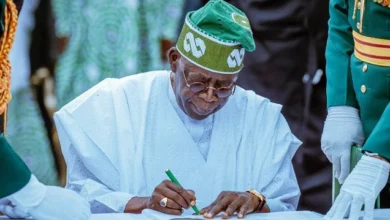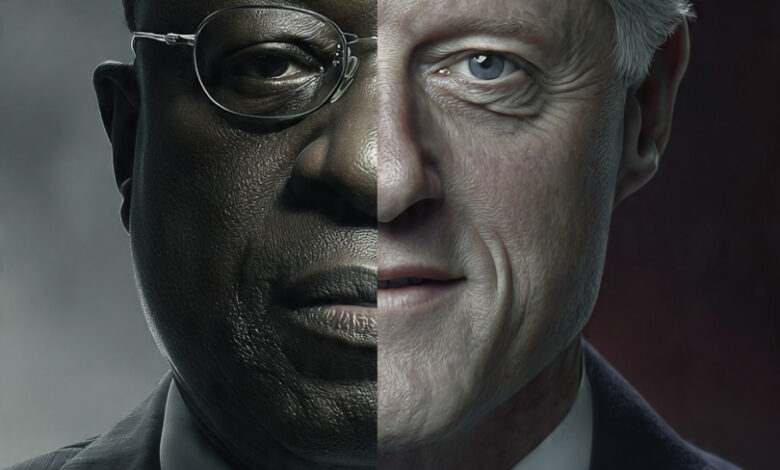
When Bola Tinubu took office in May 2023, he reached for the “market-led growth” playbook George H.W. Bush championed in 1992, not the “government-aided reform” Bill Clinton rode to victory. Two years in, the parallels are striking, the divergences are costly, and the 2027 election will test whether Nigerians reward shock therapy or punish it.
Bush’s 1992 argument, made by John Taylor, was simple: government is the problem. Cut taxes, cap spending, free trade, school vouchers, and let entrepreneurs run. Inflation was low, so the prescription was to get government out of the way and let a private-sector expansion begin. Tinubu’s first 30 days read like Bush on steroids. He removed the fuel subsidy that cost N400bn monthly, unified the exchange rate to end arbitrage, and declared “subsidy is gone.” That is Bush’s war on price controls and overspending rolled into one. The Student Loan Act mirrors Bush’s voucher logic: don’t fund schools directly, fund students to choose. His “Nigeria is open for business” pitch, tax incentives for SMEs, and embrace of Dangote Refinery echo Bush’s capital-gains cuts and enterprise zones. Like Bush, Tinubu bet that freeing prices would unleash investment. Like Bush, he told citizens the short-term pain sets up long-term gain. And like Bush, he faced an immediate backlash when prices jumped.
Clinton’s counter, via Rudiger Dornbusch, was that markets alone don’t fix decay. After 12 years of Reagan/Bush, wages were flat, inequality was sharp, and inner cities were crumbling. Clinton promised public investment in highways, internet, schools, and health, plus welfare-to-work and managed competition in healthcare. Tinubu didn’t start there, but he arrived there after the shock. The Lagos-Calabar Coastal Highway, Sokoto-Badagry road, and rail projects are Clinton-style infrastructure bets. The 3MTT digital skills program and CNG bus rollout are “human capital” and “industrial policy” moves. Conditional cash transfers to 15 million households are a limited version of Clinton’s welfare reform — cushion the losers from market reforms. So Tinubu’s sequencing is Bush first, Clinton second. Bush would have called the cash transfers a necessary evil. Clinton would have called the subsidy removal reckless without the cushion already in place.
Two differences matter. First, inflation. Bush ran on “lowest inflation in decades.” Clinton complained real wages were falling despite low inflation. Tinubu’s reforms sent inflation to 28-34%, food inflation above 40% at points. Neither Bush nor Clinton governed with that level of price trauma. Second, deficits. Bush wanted caps on spending. Clinton wanted taxes on the rich to fund investment. Tinubu is doing both and neither: he cut subsidy spending, but debt service still gulped over 90% of revenue at times. He’s raising revenue through FX unification gains and new taxes, but hasn’t picked a clear Bush or Clinton path on the budget.
Clinton won in 1992 because voters answered “no” to Reagan’s old question: “Are you better off than you were 4 years ago?” Bush’s team argued the economy was adjusting and would boom soon. Voters didn’t wait. Tinubu faces the same test in 2027, but with higher stakes. If inflation falls to single digits by late 2026, the naira stabilizes, refineries work, and food prices ease, Tinubu claims the Bush model worked. Private capital returns, jobs follow, and he runs as the man who took hard decisions others dodged. Like Bush argued, the “transition” was painful but necessary. The 1990s U.S. boom becomes his campaign analogy. If inflation stays sticky, wages lag prices, and growth is “jobless,” the opposition runs a Clinton 1992 campaign: “Markets alone failed. After 4 years, the poor got poorer. We need active government, not more shock.” Tinubu’s Clinton-style projects — roads, CNG, cash transfers — will be dismissed as too little, too late. The attack line writes itself: “He did Bush in 2023 and tried Clinton in 2025. Too late.” In 1992, Ross Perot split the vote by saying both parties missed the deficit. Nigeria’s version is a third-force candidate who says, “Subsidy removal was right, but the savings were wasted. Infrastructure is good, but it’s overpriced. Both APC and PDP are the problem.” If hardship persists, that lane opens wide.
Bush lost because voters felt the “adjustment” but didn’t see the “expansion” before Election Day. Clinton won because he convinced people government could speed up the gain. Tinubu’s 2027 hinges on the same calendar. His reforms are front-loaded. The gains — real wages, cheaper transport from CNG, functional refineries, stable FX — are back-loaded. If the gains show up by Q3 2026, he survives. If the pain still dominates, the Clinton critique becomes electoral common sense. In the Bush vs. Clinton picture, Tinubu is 70% Bush on doctrine, 30% Clinton on damage control, and 100% Nigerian on consequences. He chose the harder path first. 2027 will judge whether Nigerians think it was courage or a miscalculation.