The N8.8 Trillion Blind Spot: How Off-Budget Spending Is Quietly Unraveling Nigeria’s Monetary Discipline

On June 10, 2026, Governor Olayemi Cardoso stood before London’s financial elite to accept a hard-earned prize: Central Bank of the Year. The award crowned a textbook return to orthodoxy. The CBN had cleared a $7 billion FX backlog, compressed the parallel market premium to 2%, pushed reserves past $50 billion, and finally bent inflation downward. To global investors, Nigeria looked like it had rediscovered discipline.
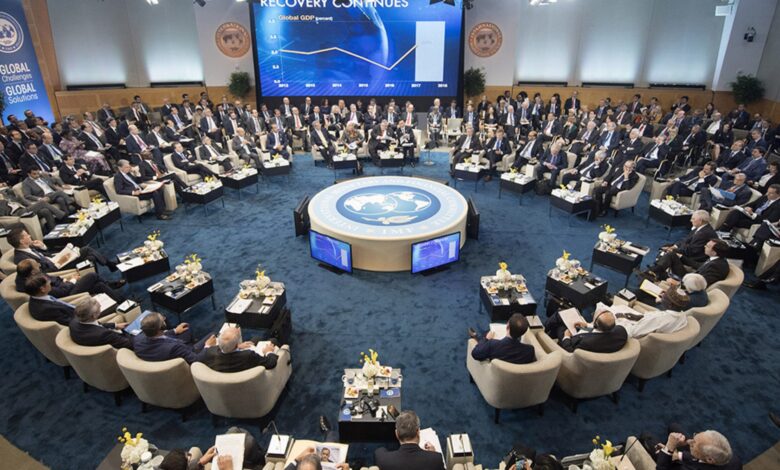
Barely three weeks later, the IMF’s Article IV disclosure punctured that narrative. Resident Representative Christian Ebeke told business executives in Lagos that Nigeria failed to record public spending equal to about 2% of GDP in recent official budgets. With 2025 nominal GDP at N441.5 trillion, that gap is roughly N8.83 trillion — money that moved entirely off-budget. The IMF did not allege fraud. It called it a “statistical discrepancy.” But the implications are anything but technical.
The size alone makes this systemic, not a rounding error. Two percent of GDP is N8.8 trillion in unrecorded public spending. That is larger than the entire 2025 capital budget of most federal ministries combined. Because some capital spending was excluded from budget documents and implementation reports, the reported fiscal deficit appears smaller than actual borrowing needs. Nigeria looks less indebted on paper than it is in reality. The unreported outlays are tied to large government projects executed off-budget, outside the formal framework. This is not a one-off event; it signals a parallel fiscal track that operates without National Assembly appropriation.
That parallel track breaks the basic mechanics of economic management. Monetary policy works by controlling the total volume of money in the system through interest rates and reserve requirements. It only works if the central bank knows how much money is actually flowing. When N8.8 trillion moves through channels the CBN cannot see, the apex bank ends up mopping liquidity on the official books while the executive arm effectively runs a hidden printing press. Ebeke warned that incomplete fiscal reporting complicates coordination between fiscal and monetary policy because policymakers lack a clear picture of the true deficit and financing requirements. In blunter terms reported by Punch, it “fundamentally cripples the Central Bank’s ability to stabilise the wider economy by blinding policymakers to the true fiscal trajectory”.
The consequence is that the pain of reform is distributed unfairly. Households and small businesses pay 25% or more to borrow because of aggressive MPR hikes. Manufacturers shelve expansion plans because credit is costly. Yet inflation stays stubborn because off-budget capital injections keep pumping liquidity into the economy. The medicine is administered and the side effects are felt, but the cure is sabotaged from the start. As Ebeke put it, the expenditure should be recorded “so that this statistical discrepancy will disappear”. Until it does, Cardoso is fighting a phantom.
The IMF’s concern also runs deeper than macro numbers. Ebeke stressed that off-budget spending raises red flags on procurement, accountability, and oversight. When projects sit outside the Appropriation Act, they escape National Assembly scrutiny, Bureau of Public Procurement rules, and Auditor-General review. The risk is not just inflation. It is that capital projects become political allocations with no competitive tendering or value-for-money audits. That kind of opacity erodes institutional trust faster than any FX volatility.
Authorities have started repealing and revising recent budget laws to capture the unrecorded spending. But retroactive legal fixes do not solve a real-time information problem. As Ebeke noted, updated budget implementation reports are still required. You cannot steer monetary policy with last year’s map, and you cannot restore market confidence with backdated paperwork. The transparency gap means investors are pricing Nigeria with an extra risk premium. Yields stay high and capital stays skittish because no one can be sure what the true fiscal position is.
The Article IV review did praise Nigeria’s reforms for boosting stability and investor confidence. Yet it warned the gains have not reached millions of citizens and remain vulnerable to external shocks like Middle East conflict. The N8.8 trillion blind spot explains why. Investor confidence depends on predictable institutions. If the fiscal authorities can move 2% of GDP off-books, then FX stability, reserve levels, and inflation targets are all contingent. That contingency is expensive.
Cardoso’s CBN has proven it can act orthodox. But orthodoxy cannot work in isolation. Monetary discipline without fiscal transparency is a performance, not a policy. The IMF disclosure shows Nigeria is running two economies: one that reports to the CBN and markets, and one that does not. The first wins awards in London. The second prints liquidity in Abuja.
The fix is not complicated, but it is political. Nigeria needs live-ledger transparency across ministries, departments, and agencies, with real-time publication of budget implementation reports and legal penalties for off-budget execution. Otherwise, the central bank will keep tightening into a void, citizens will keep paying for a disinflation that never fully arrives, and the “statistical discrepancy” will remain a polite term for a structural sabotage of reform. The international community applauded the pilot. The IMF just pointed out the plane has no fuel gauge. Until the fiscal side matches the CBN’s discipline, Nigeria’s recovery will stay grounded, however elegant it looks on the tarmac.