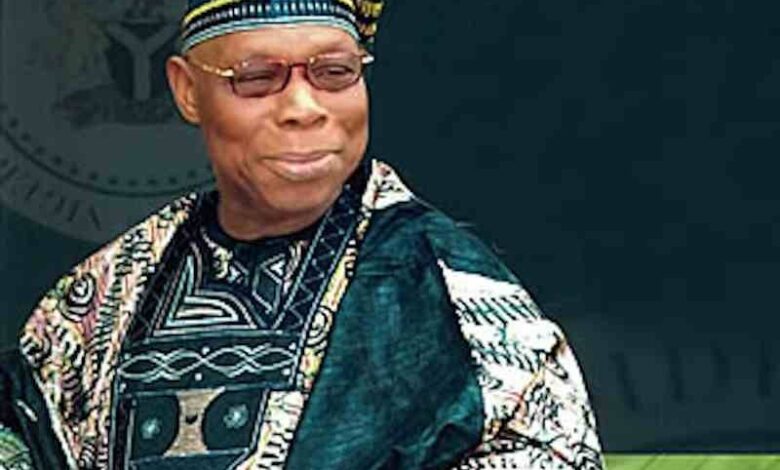
When former President Olusegun Obasanjo sat down on July 23, 2026 to reply to Chief Olusegun Osoba, he did not just deny an accusation. He reopened a 23-year-old wound and tried to stitch it on his own terms. Osoba had written in The Legal Observer that “Obasanjo deceived us in 2003.” Obasanjo fired back with both fury and nostalgia, calling the claim “farfetched” and taking “strong and serious objection” to being labeled a deceit. In his view, the problem was not deception but perspective. Many things, he told Osoba, were simply “above your head.”
The letter reads like a political memoir disguised as a rebuttal. Obasanjo traced his path from prison to the presidency not through AD or Afenifere, but through a wide net of consultations. Groups led by Lawan Katsina, S.M. Afolabi and Martins Kuye came to his Ota farm urging him to run. He said he consulted elders across the country — Akinloye, Bola Ige, Akinjide and Oyeleye in the West; Awoniyi and Ciroma in the North; Okoro and Mbanefo in the East. That, he argued, gave him a “sounding board.” From it he concluded that AD was “essentially a tribal party… in a cul de sac,” and so he joined the PDP instead. The implication is clear: he never owed the Southwest governors allegiance because he was never their candidate.
The most vivid scene he recalled was with the late Bola Ige at Sheraton Hotel in Ikeja, during Jimmy Carter’s visit to ensure peaceful elections. “Bola, how now? I met you in Ibadan and you said that there would be fence-mending to do. Have you done the fence-mending for me?” he asked. Ige’s answer, “We will meet in the field,” never came to pass. The field, Obasanjo noted, delivered 21 PDP governorships and nearly 63% of the presidential vote for him nationally, but almost nothing in Yorubaland. That rejection, he said, shaped his first term. Instead of nursing grievances, he placed defeated PDP candidates in federal appointments, invited AD stalwart Mrs. Mobolaji Osomo into government, and visited states regardless of party. “The Yoruba had been in the periphery for so long, let them come to the mainstream, at least they would know what is going on.”
But the core of the controversy is 2003. Obasanjo accused Osoba and the five other AD governors of falling for what he called an “idaro” — a deceptive deal allegedly brokered by his Vice-President after a failed impeachment plot. According to Obasanjo, the VP had first tried to use Speaker Na’Abba, even giving him ₦5 million on a Friday, to remove him. When that failed, the second track was to convince the six AD governors to face no competition in 2003 so they would “yield the field” to the VP in 2007. “Aremo, such was sold to you… And none of you thought it fit to check with me,” he wrote. He insisted the AD governors’ defeat that year was “genuine in all the six States except” Lagos, where he claimed figures were “successfully and murderously changed.” He even recalled Osoba’s late campaign apology on TV about “starch in your agbada,” as evidence of poor preparation.
Underlying all of this is a fundamental disagreement about what Yoruba politics should be. Osoba’s piece frames AD and Afenifere as custodians who were tricked. Obasanjo frames them as narrow and tribal, and himself as the one who broke that mold. “A Nigerian President must not be trivialised by tribalising it,” he told Osoba, recalling how he rejected a proposal at Papa Onasanya’s house about “what do we do with Yoruba President?” He argued that six governors could not dictate to a president backed by 21 PDP governors, 9 APP governors, a National Assembly and a party structure. “Six to dictate to thirty is ridiculous.”
Yet the tone shifts by the end. Obasanjo thanked Osoba for allocating land for the Olusegun Obasanjo Presidential Library, calling it Abeokuta’s “most significant landmark.” He remembered urging governors to build in Abuja, and their discussion at Osoba Hilltop. He expressed sympathy for dead Afenifere leaders like Gani Fawehinmi, Abraham Adesanya and Ayo Adebanjo, saying “what they cherished… were not what their proteges accepted.” His closing philosophy was simple and personal: politics is about welfare, not bitterness. “Turn adversaries to neutrals, and turn neutrals to friendly. That is part of my own philosophy in politics and in life.”
What Obasanjo has done with this letter is to reframe 2003 not as a betrayal of the Southwest, but as the moment the Southwest paid the price for choosing exclusion over engagement. He presents himself as the leader who absorbed that loss and then pulled Yoruba interests into national government by appointments and access, not by ethnic contract. Whether Osoba agrees is another matter. For now, the “field” that Bola Ige spoke of in 1999 is still being contested — not with votes, but with memory. And Obasanjo, at 88, is determined to be the one holding the pen.