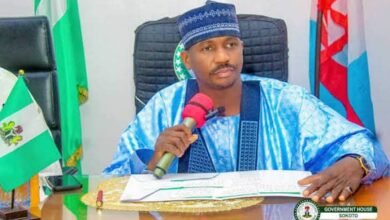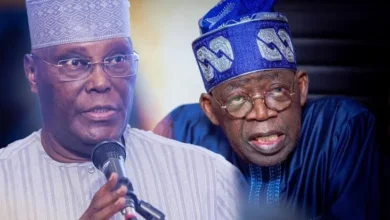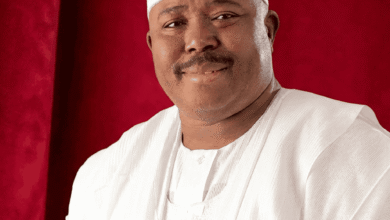


In a political landscape that rewards caution and punishes memory, Iyiola Omisore has built a career on doing the opposite. He is audacious where others hedge, sagacious where others improvise, and the combination has made him less a conventional politician than a strategist who treats the rules of the game as variables to be rewritten. He is not on the ballot for 2026, yet his imprint on Osun’s politics is more pronounced than many active candidates, because his influence now operates in the realm where power is actually negotiated: structure, networks, and precedent.
His audacity was announced early. At 42 he took the deputy governorship in a region that venerates age and pedigree, serving under Chief Bisi Akande during the fragile post-military transition when the Alliance for Democracy was still defining what governance looked like. Most deputies are footnotes; Omisore turned the office into a platform. He was visible, accessible, and willing to spend political and personal capital to keep a base intact even when it meant clashing with party elders. When that relationship collapsed, he did not retreat. He switched platforms and accomplished what remains rare in Nigerian politics: he won a Senate seat in 2003 while in detention. The episode was read by opponents as notoriety and by supporters as proof of grassroots loyalty, but either interpretation confirms the same point. Omisore does not wait for favorable conditions. He creates them, and he survives the consequences.
That audacity is tempered by a sagacity drawn from institutions and detail. In the Senate he chaired the Appropriations Committee, the chamber’s engine room for fiscal bargaining, and used it to push what he later called an “inclusive national budgeting initiative.” He chaired committees on Industries, Intergovernmental Affairs, Culture and Tourism, and the Joint Finance Committee, positions that exposed him to the mechanics of revenue, industry, and federal-state negotiation. With a doctorate in infrastructure finance and a public advocacy for “Project Management” as a distinct engineering discipline, he frames politics as a technical problem as much as a popular one. His diagnosis of Osun’s challenges has been consistent for over a decade: financial recklessness, a distorted education sector, procurement without transparency, empowerment programs that produce dependency rather than jobs, and capital flight that bleeds the state’s economy. He speaks of these issues not as talking points but as systems failures, and he insists the fix requires a leader who understands both the spreadsheet and the street.
What distinguishes him now is that he is applying those traits outside an electoral contest. His brand of leadership is rooted in leverage, not just office. He is a PDP stalwart in an era of defections, a distinction that gives him convening power when party structures fracture. He maintains business and international connections that allow him to move capital and ideas across borders, and a network of allies built over three decades that cuts across class, religion, and senatorial districts. In a state where the last seven years under Rauf Aregbesola were defined by religious tension over school policy, salary crises, and contested rebranding, Omisore’s message has been unapologetically corrective. He calls for healing a divided polity, restoring infrastructure as an economic driver, and returning Osun to “where it rightly belongs” by harnessing human and natural resources with discipline rather than rhetoric.
His critics say the same qualities are liabilities. They argue that his deep pocket approach blurs patronage and policy, that his confrontations leave lasting institutional scars, and that the allegations he has outlived in court continue to shape perception. He counters that no court has found him guilty of any crime, and that consistency, not convenience, has kept him in one party while others drift. The fact that both narratives persist is itself evidence of his impact. You do not spend twenty years being accused of being both too powerful and too embattled unless you have actually altered the balance of power.
That is why, in 2026, his relevance is not tied to a campaign poster. The rules he is rewriting are structural. He is demonstrating that visibility can be manufactured, that detention is not political death, that appropriation is policy, and that a leader without a ticket can still set the terms of debate. He empowers supporters directly, keeps his political machine oiled, and intervenes in narratives before they harden. Philanthropy, accessibility, and a refusal to be “used and dumped” are not campaign lines for him; they are operating principles that keep a coalition loyal between cycles.
Osun’s politics has always valued credentials, but Omisore added a new one: the capacity to take hits and still dictate the pace. He is audacious because he contests power where it is most entrenched, and sagacious because he studies the machinery before he challenges it. Whether or not he governs again, he has already achieved what most politicians spend careers chasing. He changed the expectations of what a leader from Osun can survive, what a senator can influence, and what a non-candidate can control. In that sense, he is not waiting for 2026 to lead. He is already writing the rules the next set of contestants will have to play by.