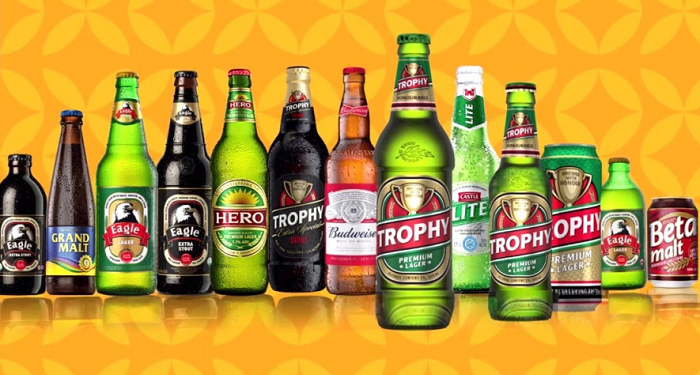
International Breweries Plc’s H1 2026 results read like a company running hard just to stay in place. The numbers are not bad on the surface — operating profit up 24.7% to ₦69.88bn, cash from operations up 1,089% to ₦69.52bn, and retained losses trimmed by 20% to ₦152.72bn. But the core engine of the business is sputtering.
The first problem is revenue. For a consumer business in an inflationary market, flat is the new down. Revenue crawled just 0.3% to ₦342.07bn, and Q2 alone fell 2.4% to ₦163.36bn. That happened despite ₦42.56bn poured into advertising, promotion and distribution — up 20.7% year-on-year. When you spend more to sell the same, or less, it points to weak consumer demand, intense competition, and pricing that cannot be pushed further without losing volume.
The second problem is cost pressure shifting downstream. Cost of sales did fall 8.5%, which flattered gross profit. But admin, marketing and distribution jumped 19% to ₦70.52bn. Worse, the taxman took a much bigger bite. Tax expense rose 80% to ₦36.47bn, pushing the effective rate to 48.8% from 32.9% a year ago. The result: profit after tax actually declined 7.2% to ₦38.31bn despite the big jump in operating profit.
FX remains a wild card too. The company booked a ₦7.77bn realised FX loss in H1, only saved by a ₦7.01bn unrealised gain. In a business that imports raw materials and pays technical fees to AB InBev, naira volatility can wipe out a quarter’s work overnight. Lease liabilities also spiked, with current leases now at ₦18.24bn from ₦3.71bn in December. And the balance sheet, while improved, is still fragile: ₦152.72bn in accumulated losses remain, propped up by ₦673.19bn in share premium rather than earned equity.
These are not new issues for IBPLC, but the H1 results show that its stated strengths have not been enough to fix them, or to turn them into value for stakeholders.
The company’s biggest strength today is cash. ₦171.28bn on hand and ₦69.5bn generated from operations should be the perfect tool to attack the revenue problem — fund distribution expansion, push innovation, cut debt, or support pricing to win back volume. Instead, cash is being used largely to fund ₦56.18bn in capex and service leases, while revenue stays flat. Liquidity has improved, but it has not translated into growth.
AB InBev backing is the other clear strength. With 96.01% ownership, IBPLC has access to global brands, procurement scale, and technical support — reflected in ₦8.03bn of technical management fees paid in H1. That relationship should help neutralize competition and FX risk. In practice, it has not. Market share pressure is visible in the promo spend vs revenue trend, and FX losses are still material. The parent’s muscle has stabilized operations, but it has not created a breakout in the Nigerian market.
There were also clear opportunities left on the table. Gross margin expanded because input costs eased. That margin buffer could have been used to drive volume through targeted pricing or to accelerate premium and non-alcoholic segments where AB InBev is strong globally. Receivables also jumped to ₦102.08bn from ₦61.15bn in December — a sign of looser credit to push sales — but without a corresponding revenue lift. Cash is available, but it is not being deployed aggressively enough to change the top-line trajectory.
For stakeholders, the outcome is mixed at best. Equity value is being protected by cost control and cash, not by growth. Shareholders saw PAT fall despite better operations. The free float of just 2.58% means minority investors have little influence and limited liquidity. And with tax rates rising and consumer spending weak, the risk is that 2026 becomes another year of “better margins, same business.”
International Breweries has stopped the bleeding. It is generating cash, controlling COGS, and reducing losses. But it has not used those strengths to neutralize its fundamental weaknesses: no revenue growth, high cost of selling, and exposure to tax and FX shocks. Until the cash on the balance sheet is converted into volume, new categories, and market share gains, IBPLC will remain a turnaround story that hasn’t yet turned.
Source: International Breweries Plc Unaudited Condensed Financial Statements for the 3 months ended 30th June 2026. Authorised by MD Nicholas Kade and Finance Director Chinyere Ezeugwu, 24 July 2026.