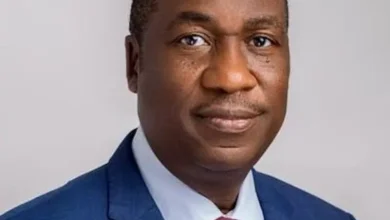

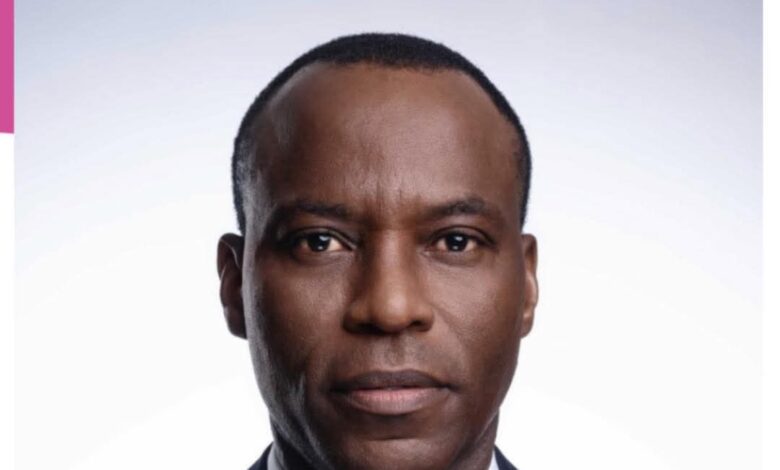
Seplat Energy PLC’s appointment of Effiong Okon as CEO is less a corporate reshuffle than a statement of intent. After joining Seplat in 2018 as Executive/Operations Director, Okon spent the last seven years embedding himself in the company’s most critical functions: operational performance, cost discipline, and, more recently, the pivot to new energy. His elevation now puts a 32-year petroleum engineer with deep Shell pedigree at the helm of Nigeria’s leading indigenous independent, at a moment when the brief has shifted from “produce more barrels” to “deliver energy, profitably, in a transitioning world.”
From Reservoir Models to Boardroom Mandates
Okon’s career arc explains the board’s choice. He began as a Petroleum Reservoir Engineer with Shell in 1992 and spent the next three decades inside the integrated oil and gas machine. His CV reads like a tour of the upstream value chain: Chief Reservoir Engineer, Deputy Vice President Technical, GM Offshore Assets, GM Deepwater Production, and VP Cost Leadership and Continuous Improvement. That last title is telling. Shell does not hand “Cost Leadership” to geologists. It gives it to operators who can squeeze margin from complex assets without compromising safety.
Those roles spanned Africa, Europe, USA, and the Middle East, but the Nigeria posting matters most. Okon managed onshore and offshore assets, full life cycle, across diverse geographies and cultures. In practice, that means he has argued with communities in the Niger Delta, negotiated with regulators in Abuja, and defended budgets in The Hague. For Seplat, an indigenous firm navigating IOC divestments, that blend of technical depth and political fluency is non-negotiable.
The Seplat Chapter: Operations First, Then Transition
When Okon joined Seplat in 2018, his mandate was blunt: operational excellence. He was accountable for performance and “championed several business improvement initiatives.” In upstream Nigeria, that translates to uptime, HSE, and opex per barrel. Seplat grew production, integrated assets like OML 53 and 55, and kept a lid on costs during a volatile oil price cycle. That operational credibility bought him the next role.
In July 2022 he was appointed Director New Energy. The title itself signaled Seplat’s strategic turn. The job was to grow midstream gas, develop power using gas and renewables, and displace diesel/petrol for electricity. In other words, monetize gas, decarbonize the grid, and future-proof the portfolio. It was a transition role handed to an operations man, not a PR executive. The board was betting that the energy transition would be won in the field, not in the brochure.
Why An Engineer-Operator CEO Makes Sense Now
Three forces define Seplat’s next phase. First, IOC asset divestments. With Shell, ExxonMobil, and others exiting onshore/shallow water, Seplat is a natural consolidator. Integrating those assets demands someone who has run offshore production and understands reservoir risk. Second, gas commercialization. Nigeria’s Decade of Gas policy and Seplat’s ANOH Gas Processing Plant put midstream execution at the center of revenue. Okon ran that portfolio. Third, capital discipline. Shareholders want dividends and growth, not science projects. Okon’s Shell background in cost leadership and continuous improvement suggests a CEO who will test every capex dollar against returns.
His academic base reinforces that profile. University of Benin for engineering fundamentals. IMD Business School and Harvard Business School for strategy and leadership. Add SPE membership and Fellowship of the Nigeria Society of Engineers, and you get a leader fluent in both subsurface models and capital markets.
The Interpretation: A Bridge Between Two Eras
Naming Okon CEO tells you how Seplat sees itself. It is not rebranding as a renewables startup. It is positioning as an energy company that will fund transition with oil cash, produce gas for domestic power, and incrementally layer in renewables. Okon’s career is the bridge. He understands decline curves and drilling economics, yet spent the last two years building a business to displace diesel generators.
The risk is obvious. Transitions are graveyards for operators who can’t shift mental models. But Okon’s trajectory argues against that. He moved from Chief Reservoir Engineer to VP Cost Leadership to Director New Energy inside four years. That is not a linear petroleum career. It is an adaptive one.
What to Watch
- Execution on Gas: ANOH delivery, gas-to-power offtake, and margins will be the first scorecard. Okon built the plan. Now he owns the results.
- M&A Discipline: With more IOC assets for sale, Seplat can bulk up. Okon’s Shell M&A exposure and cost lens will determine whether Seplat buys production or inherits liabilities.
- Energy Mix Messaging: The market will watch how much capex goes to renewables vs. upstream. Okon’s credibility is that he won’t deploy shareholder cash into press releases.
Seplat did not hire a visionary outsider to “reimagine energy.” It promoted an insider who has spent 32 years making hydrocarbons profitable and the last two making gas bankable. Effiong Okon’s task is to prove that the same engineering rigor that optimizes a reservoir can decarbonize a country’s power mix. If he succeeds, Seplat becomes the template for African independents in the energy transition. If he doesn’t, it becomes a cautionary tale about how hard it is to serve two masters.
For now, the board has chosen character built in the field over charisma built on stage. In a sector where execution risk kills faster than commodity price, that looks like character as strategy.