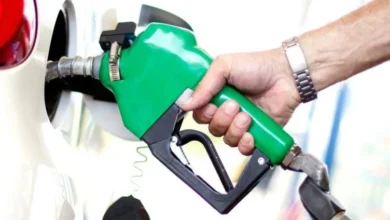
Every Nigerian driver knows the drill. Crude oil jumps overnight and your petrol price jumps with it before you finish your morning tea. Crude crashes, and somehow the price at your local filling station develops amnesia. It clings to the old level for weeks, as if gravity only works on the way up.
June 2026 made the hypocrisy impossible to ignore. Brent crude fell from over $100 per barrel to about $73 — a 30% collapse. Petrol prices? They slipped from ₦1,350–₦1,500 down to ₦1,125–₦1,275. A one-third drop in crude bought us a one-sixth drop at the pump, and even that came only after government threats. In a deregulated market, that kind of sticky pricing has a name: market power. And right now, one name sits at the center of that power. Dangote. The refinery that was supposed to free Nigeria from import slavery now faces a harder question: is it freeing us from high prices, or just replacing NNPC as the new landlord of our pain?
But the government appears to understand Dangote and its marketers greed now . The Minister of State for Petroleum Resources, Senator Heineken Lokpobiri, has directed petroleum marketers to immediately reduce the pump prices of Premium Motor Spirit and other petroleum products to reflect the recent decline in global oil prices.
According to the News Agency of Nigeria, Lokpobiri issued the directive on Monday in Abuja at the 2026 Nigerian Midstream and Downstream Petroleum Regulatory Authority General Counsel and Legal Advisers Forum, themed “Beyond Compliance: Certainty and Investment Confidence in Nigeria’s Petroleum Sector.”
He said that with the de-escalation of tensions between Iran and the United States, petroleum product prices were expected to adjust downward accordingly, but expressed concern that this expected reduction had yet to be reflected at the pumps
A detailed analysis of Dangote’s monopoly and the scenario before his refinery assumed that status exposed the tricks and the pain of ordinary Nigerians . When subsidy ended in May 2023, the promise was simple. Pump prices would track global oil, freight, and honest margins. No more politics, just math. Then Dangote Refinery fired up its 650,000-barrel-per-day plant and rewrote the rules. It buys Nigerian crude at full international prices, no discount, no special forex. It sets the ex-depot price that every marketer uses as a baseline. When Dangote says ₦1,125, marketers add transport, bridging, bank interest at 30%, and their cut, and you end up paying ₦1,200 or more. It also has a choice NNPC never had: if Nigerians won’t buy at that price, it can load a ship and sell abroad. That export option is real leverage. So when crude dropped to $73 in June 2026, Dangote did cut ex-depot to ₦1,125. The fight is about whether that was enough, and whether it came fast enough.
There’s a version of this story where Dangote is the patriot. Nigeria was burning over $10bn a year importing fuel. The refinery plugs that forex leak, creates jobs, and keeps trucks moving. For the first time we have a public ex-depot number instead of NNPC’s black box. With banks refusing to fund depot stocking at 30% interest, Dangote supplies on credit and keeps queues from returning. And when crude hit pre-war lows, it was Dangote that moved first. Marketers were still above ₦1,000 until that cut gave FCCPC a number to enforce. In that telling, the delay isn’t Dangote’s fault. It’s marketers buying at ₦1,125, adding ₦75 to ₦150, and blaming “old stock” or “bad roads.”
There’s another version where the refinery looks like a profiteer. If crude falls 30%, the cost to make petrol should fall by nearly the same, minus a fixed refining margin. Instead, pump prices fell 15% at best. The gap between crude and petrol got wider, and the dominant supplier sets that floor. With NNPC out of imports, Dangote runs a private monopoly. Monopolies don’t slash prices unless they’re forced. The FCCPC only threatened sanctions on June 28, after weeks of public anger. Then there’s export math. A rational refiner compares what it earns selling locally versus abroad. If export pays more, local prices rise to that “export parity” level, not to a simple cost-plus number. At $73 crude, strong global gasoline margins can still support ₦1,125 ex-depot. That means Nigerians could be helping the refinery stay competitive abroad. And there’s the oldest truth in commodities: prices rocket up and feather down. No one wants to sell at a loss, so increases are instant. Cuts kill inventory value, so everyone stalls. A market leader that wanted goodwill could take the hit once and cut anyway. It didn’t happen.
But “Dangote is greedy” doesn’t explain the whole picture. Four groups decide how fast your price moves. Dangote controls over 70% of new supply and sets ex-depot. It could cut faster, but it would squeeze margins and book losses on old stock. Marketers and depots add ₦75 to ₦150 per litre and cite old inventory, transport, and 30% loans. They could move faster if NMDPRA audited their books and capped spreads. Government agencies write the template and police profiteering. They ordered cuts in June 2026, but enforcement is slow and political. Then there’s the stuff nobody can fix quickly: forex for freight and insurance, spare parts, and bad roads that add ₦20 to ₦40 per litre. The lag is a system problem. Dangote is just the most visible piece. When NNPC ran imports we blamed government. Now a private firm runs supply and we blame Dangote. The face changed. The economics didn’t.
If Dangote wants to kill the “rogue” narrative, the playbook is clear. Publish a monthly pricing formula so everyone can see crude plus refining margin plus logistics equals ex-depot, and let NMDPRA verify it. Cut prices on new stock immediately and average down old stock instead of waiting to clear it at the high price. It’s a one-time hit for long-term trust. Agree with MOMAN on a maximum retail spread when ex-depot is below ₦1,150, and reward compliance with volume. Commit a fixed share of output to the local market at cost-plus before exporting — that’s what the domestic crude obligation was meant to do. None of that is charity. A refinery that triggers protests or windfall taxes won’t last 50 years.
So, patriot or rogue? Neither fits. Dangote built a $20bn plant when nobody else would, and he did cut to ₦1,125 while crude sat at $73. But market power without transparent rules always means slow drops and fast hikes. Nigeria deregulated pump prices without deregulating market structure. One refinery supplying 80% of a country won’t give you competition by default. Until we have three or four large plants, or a public pricing formula with real teeth, prices will keep rising like rockets and falling like feathers. The average Nigerian business isn’t hurting from one man’s greed. It’s hurting from a half-built market. Dangote is the biggest winner in that half-built market. What he does with that power will decide what history calls him.
For now, watch one thing. If Brent stays at $70 to $73 for the next 60 days, does ex-depot break ₦1,000? If it doesn’t, you’ll have your answer.