
Cocoa Dominance and Missing Processing Leave Nigeria’s Agric Exports Exposed as Q1 2026 Falls 31%

Nigeria’s agricultural export sector stumbled in the first quarter of 2026, with the National Bureau of Statistics recording N1.17 trillion in outbound agric shipments out of N2 trillion in total agricultural trade.
That figure represents a 31.20% contraction from the N1.7 trillion posted in Q1 2025 and an 11.39% drop from the N1.32 trillion in Q4 2025, underscoring how vulnerable the non-oil export basket remains to demand swings and commodity concentration.
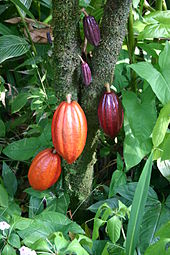
The structure of earnings shows little change from past years. Superior quality cocoa beans alone brought in N596.90 billion, or 50.91% of all agric export earnings, with the Netherlands taking N228.36 billion and Belgium N98.56 billion.
When cocoa butter at N41.69 billion and other cocoa derivatives are added, cocoa-related products accounted for more than N643 billion, meaning Europe’s confectionery industry still dictates over half of Nigeria’s agricultural trade balance.
Beyond cocoa, oilseeds carried the rest of the load. Sesamum seeds earned N153.78 billion, 13.12% of the total, with China buying N76.55 billion and Japan N21.11 billion as crushing facilities in East Asia kept demand firm.
Soya beans excluding seeds generated N129.27 billion, 11.03% of earnings, and India alone absorbed N113.86 billion, about 88% of that line, while Canada took N11.15 billion.
Cashew nuts in shell contributed N119.76 billion, 10.22%, still moving raw to India and Vietnam for processing before reaching global consumers.
Flours and meals of soya beans appeared at N53.20 billion, 4.54%, offering one of the few signs of value addition, though that remains a fraction of raw soya exports.
Natural cocoa butter at N41.69 billion, 3.56%, was the highest-ranked processed cocoa product, yet it is dwarfed by raw bean shipments.
The gap is starker in cashew: shelled cashew nuts earned just N16.69 billion, 1.42%, less than one-seventh of what raw cashew brought in, exposing how little domestic shelling capacity exists.
Marine exports held a modest line with other frozen shrimps and prawns at N14.30 billion, 1.22%, reflecting steady demand for high-protein products in premium markets.
Horticulture also registered, with other cut flowers and flower buds at N12.23 billion, 1.04%, showing niche interest in Nigeria’s decorative floriculture despite its small scale.
Crude shea oil closed the top ten at N9.14 billion, 0.78%, with global cosmetics and personal care manufacturers sustaining demand for raw shea inputs.
Together, the top five products—superior quality cocoa beans, sesame seeds, soya beans, cashew nuts in shell, and soybean meal—generated roughly N1.05 trillion, almost 90% of total agric export earnings, leaving the sector exposed to price or supply shocks in a handful of crops.
Geography reinforced that fragility. Asia was the top destination at N529.45 billion, narrowly ahead of Europe’s N500.34 billion, and the two continents combined took nearly 88% of all agric exports.
The flow is product-specific: cocoa to Europe, oilseeds to Asia, with India dominating soya, China and Japan dominating sesame, and the Netherlands and Belgium anchoring cocoa.
That concentration means a single policy or logistics disruption in any of those markets can erase a material share of Nigeria’s FX from agriculture.
The 31% year-on-year decline in Q1 also reframes the broader trade story. While Nigeria’s overall merchandise trade surplus jumped 340.88% to N7.55 trillion on stronger crude exports and collapsing imports, agriculture’s shrinking contribution makes that surplus more oil-dependent, not less.
Agric exports were just N1.17 trillion of N21.17 trillion total exports, or 5.5%, despite agriculture contributing 17.89% to GDP in the same quarter.
The data shows a sector that feeds the country but still struggles to earn for it at scale.
Processing remains the missing link. Raw cashew at N119.76 billion versus shelled at N16.69 billion, and raw cocoa beans at N596.9 billion versus cocoa butter at N41.69 billion, confirm that Nigeria still ships inputs and buys back finished goods.
Until cocoa butter earns hundreds of billions, not tens, and until shelled cashew overtakes raw, the export list will keep reading like a 1980s manifest: one bean, two seeds, and a nut, with shrimps, flowers, and shea oil rounding out the edges, all hostage to European chocolate cycles and Asian crushing plants.
The Q1 numbers are not a collapse, but they are a correction that shows how little structural change has occurred.