
Wema Bank Plc FY 2025 Result: Growing Profitability through Digital Banking and Accelerated Structural Funding Advantages


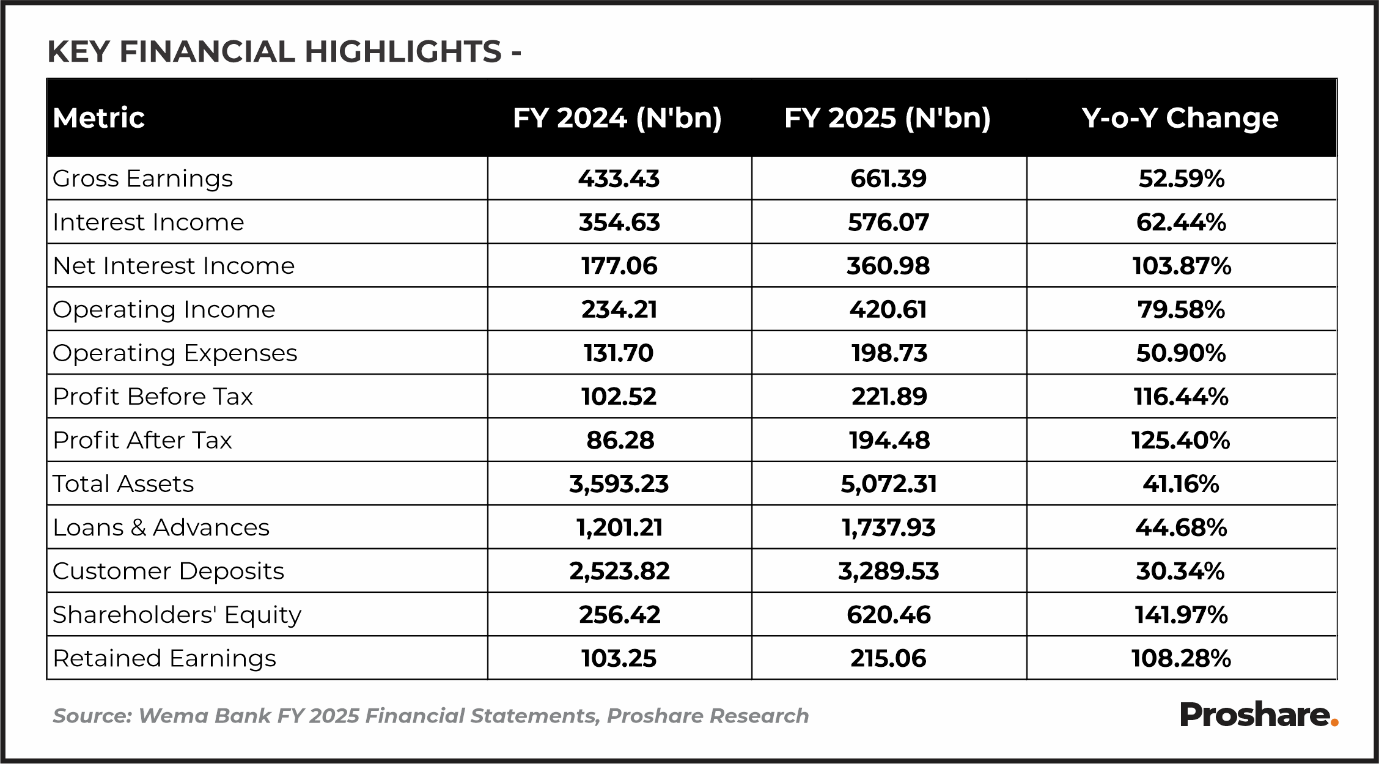
Wema Bank Plc reported a strong FY 2025, with N194.48bn in profit after tax, up 125.40% Y-o-Y, and N661.39bn in gross revenue, up 52.59%. Core interest income rose 62.44% to N576.07bn, while interest expense rose only 21.13%, courtesy of low-cost deposits. With an 82.31% CASA ratio and a 6.87% cost of funds amid a 27% Monetary Policy Rate, Wema showed structural funding advantages. Net interest income more than doubled to N360.98bn, and net interest margin increased from 6.79% to 11.34%. Operating income grew 79.58%, outpacing expenses by 50.90%, reducing the cost-to-income ratio from 56.23% to 47.25% and nearing Nigeria’s Tier-I efficiency levels.
The balance sheet supports earnings growth with caveats. Total assets rose 41.16% to N5.07 trillion, driven by a 44.68% increase in gross loans to N1.80trn, securities up 48.34% to N1.34trn, and nearly quadrupled cash and equivalents to N940.82bn. This has positioned Wema Bank as a net liquidity provider in the interbank market. The capital adequacy ratio improved to 28.05% from 19.67%, with about N370bn in excess capital above the CBN’s 10% requirement, supporting multi-year growth without new equity. Asset quality also improved: NPL ratio decreased from 5.25% to 4.90%, despite almost 50% growth in the loan book, and risk cost fell from 2.10% to 1.69%. However, other liabilities doubled from N431.87bn to N1.01trn, an increase of N575.90bn.
Looking ahead, the key question is how much of FY 2025’s earnings quality is structural or cyclical. The honest answer is both. The NIM of 9.94%, the net profit margin of 29.40%, and the ROAE of 44.36% are high due to the high-interest-rate environment and are expected to moderate as the CBN eases monetary policy. However, the franchise, growing digital customer base via ALAT, strengthening corporate banking, and funding that borrows below market, remains structurally sound and improving. The N940.82bn in undeployed cash is a potential FY 2026 earnings catalyst, as it is allocated to income-generating assets.
Analyst sentiment reflects a balanced yet constructive outlook: Meristem, Lead Capital, and PAC Research maintain Hold ratings, indicating that much of the strong FY 2025 performance is already reflected in the N26.20 share price. Apel adopts a more conservative stance (Sell), while Capital Bancorp remains optimistic (Buy). Overall, Wema Bank’s rerating underscores its improved fundamentals, with expectations of sustained performance even as margins gradually normalise.
Company Fundamentals and Operating Environment
Wema Bank Plc, a Tier-II Nigerian commercial bank, focuses on retail customers and markets, SMEs, and corporate banking transactions, leveraging its proprietary digital platform, ALAT, to drive customer growth and digital leadership. This has created a strong, low-cost funding base with a high current account-saving account (CASA) ratio, thereby strengthening corporate competitiveness. In FY 2025, the lending environment was influenced by tight monetary policy, high interest rates, exchange-rate volatility, and high but declining inflation rates, which supported higher interest income but posed risks to funding costs, asset quality, and earnings. Wema’s performance reflects structural improvements in funding and digital strategy, alongside cyclical benefits from higher chargeable rates.
Nigeria’s FY 2025 macroeconomic landscape was shaped by the 2023 FX unification and fuel subsidy removal, which were initially inflationary but created a high-yield environment for the bank. Despite persistent inflation of 25%-35%, driven by higher food, import, and energy prices, the naira stabilised during the year, supported by improved foreign reserves and remittances.
The Central Bank of Nigeria (CBN) maintained a hawkish policy stance. Net interest margins (NIMs) across Nigerian banks rose sharply in FY 2025 as the high-rate environment repriced bank loan books. Wema’s NIM of 11.34% likely places it in the upper tier among mid-sized Nigerian banks, reflecting the bank’s increasing allocation of funds to higher-yielding risk assets, compared with the prior year’s heavier reliance on government securities. System-wide asset quality remained under pressure from the residual FX shock and inflationary strain on retail and SME borrowers, though the sector broadly managed NPLs within regulatory tolerance.
Liquidity remained tight, shaped by continued cash reserve requirement (CRR) sterilisation and higher government borrowing, which competed with private-sector credit for available funds. Despite this, Wema Bank demonstrated stronger deposit mobilisation, growing customer deposits by 30.34% to N3.29trn and improving its CASA ratio to 82.31%, which cushioned the cost of funds in a rising-rate environment.
Stock Performance and Market Position
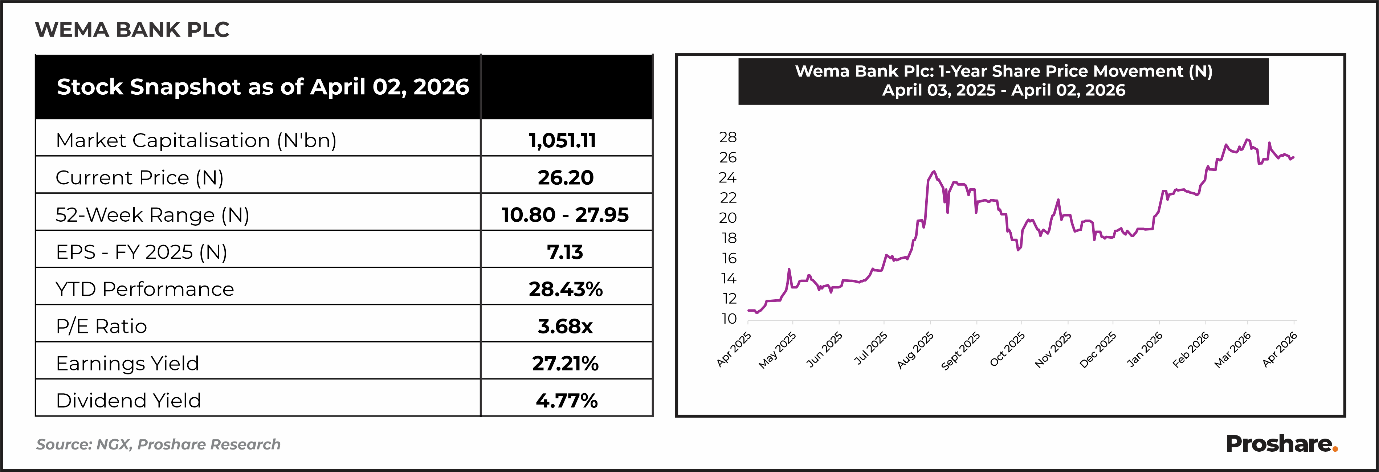
As of April 02, 2026, Wema Bank’s share price settled at N26.20, resulting in a market capitalisation of N1.05trn. The stock traded within a 52-week range of N10.80 to N27.95, reflecting a significant re-rating over the period, supported by strong earnings delivery and improved investor sentiment. Year-to-date performance stood at 28.43%, indicating sustained upward momentum.
The revaluation of the stock is largely attributable to robust profitability growth, a strengthened capital base following a capital raise, and increased confidence in the bank’s digital-led growth strategy. While liquidity in the stock has improved alongside its rising market capitalisation, it still trails Tier-I banks in terms of institutional ownership and depth of market participation (see illustration 1 below).
Illustration 1:
Key Financial Highlights: FY 2025
The following table presents a comprehensive summary of Wema Bank’s key financial metrics for FY 2025 compared with FY 2024 (see Table 1 below).
Table 1:
Financial Performance Review
- Gross Revenue Growth and Composition
Wema Bank’s revenue performance in FY 2025 was predominantly driven by interest income, which accounted for the majority of gross earnings. Gross earnings grew 52.59% to N661.39bn in FY 2025, from N433.43bn in FY 2024. The dominant revenue driver in FY 2025 was interest income, which grew 62.44% to N576.07bn, accounting for 87.10% of gross revenue (up from 81.82% in FY 2024). Non-interest income, while growing 8.27% to N85.32bn, reflects the dominance of the rate environment in income generation in FY 2025 (see Table 2 below).
Table 2:
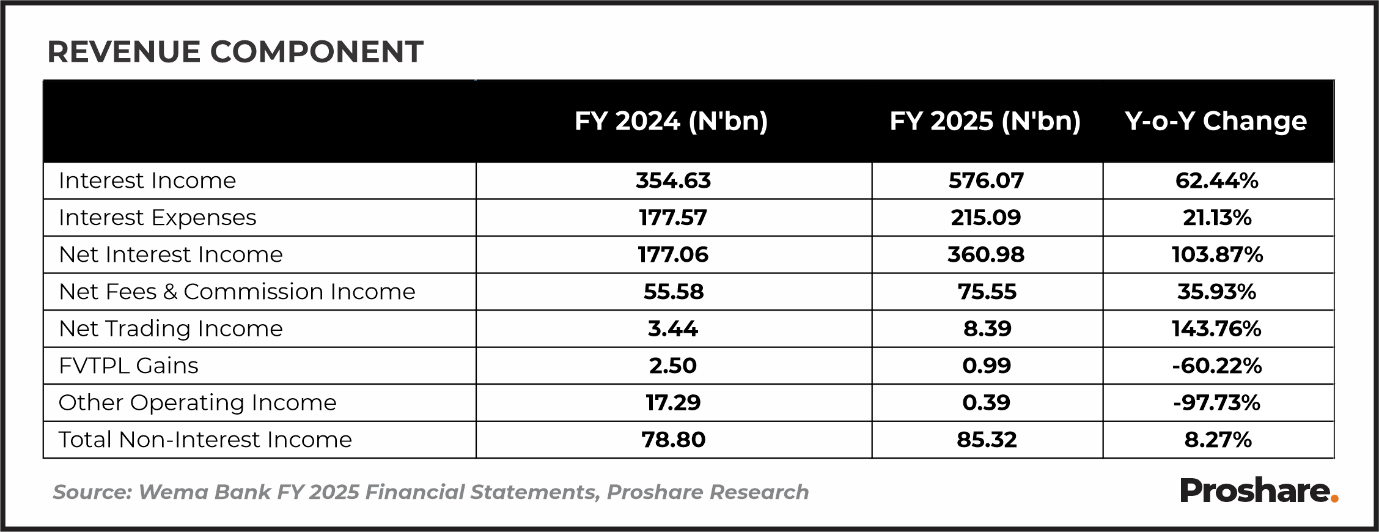
The 62.44% increase in interest income (from N354.63bn in FY 2024 to N576.07bn in FY 2025) reflects both loan book growth (+44.68%) and higher yields on existing assets as the portfolio repriced upward in the high-rate environment. Notably, interest expense grew more modestly, by 21.13% (from N177.57bn in FY 2024 to N215.09bn in FY 2025), highlighting the bank’s low-cost, CASA-heavy deposit structure. This asymmetric dynamic, where interest income expanded more than twice as fast as interest expense, was the main driver of NII, which more than doubled to N360.98bn.
Non-interest income rose to N85.32bn, up 8.27%, obscuring important operating changes. Net fees and commissions leaped 35.93% to N75.55bn, driven by digital transactions through the digital ALAT platform and higher corporate banking fees. Net trading income more than doubled to N8.39bn, aided by FX trading gains in a volatile market. Conversely, other operating income plummeted from N17.29bn in FY 2024 to N392.57m, a 97.73% decline, likely due to non-recurring gains, such as FX revaluation or recoveries, that did not recur in FY 2025. While core fee income remains strong, FY 2024’s non-interest income was partly inflated by non-recurring items.
- Net Interest Margin
NIM expanded to 11.34% in FY 2025, a sharp recovery from 6.79% in FY 2024. The FY 2024 NIM compression was likely driven by the rapid surge in deposits (which repriced upward faster than assets could be deployed) and elevated CRR sterilisations. The FY 2025 recovery reflects full-year deployment of the expanded loan book at prevailing market rates, improved asset mix between loans and lower-yielding government securities, and a cost-of-funds rate (6.87%) that remained well below blended asset yields.
This NIM level of 11.34% is elevated by historical standards and reflects a cyclical peak tied to the high MPR environment. As CBN eventually eases, as market participants expect in the medium term, asset yields will compress, while downward deposit repricing may lag, creating some NIM vulnerability.
- Cost Analysis and Leverage
Total operating expenses grew 50.90% to N198.73bn in FY 2025, comprising personnel costs (N70.19bn, +54.34%), depreciation and amortisation (N12.48bn, +42.79%), and other operating expenses (N116.06bn, +49.79%). The pace of OPEX growth, while substantial, was slower than the 79.6% growth in operating income, resulting in an improvement in the cost-to-income ratio from 56.23% to 47.25%.
The personnel cost of 54.34% reflects both the headcount investment to support ALAT’s digital growth and market-driven salary escalation in Nigeria’s competitive banking talent market. Critically, at 47.25%, Wema’s cost-to-income ratio is approaching the levels of more established Nigerian peers, though it still trails the top-tier banks (which often operate at a 35–45% range).
- Profitability: Profit After Tax Growth and Quality
Profit after tax of N194.48bn, a 125.40% year-on-year increase, represents the bank’s strongest absolute earnings year on record. The effective tax rate declined from 15.84% in FY 2024 to 12.35% in FY 2025, suggesting the bank benefited from tax-exempt income (likely gains on government securities). Impairment charges of N25.69bn represented a more moderate 18.64% year-on-year increase (significantly below loan growth of 44.68%), implying that either asset quality genuinely improved or provisioning was conservative. The net profit margin expanded to 29.40% in FY 2025 from 19.91% in FY 2024, reflecting the combined effect of NIM expansion, operating leverage, and a low effective tax rate.
Balance Sheet Analysis
- Asset Structure
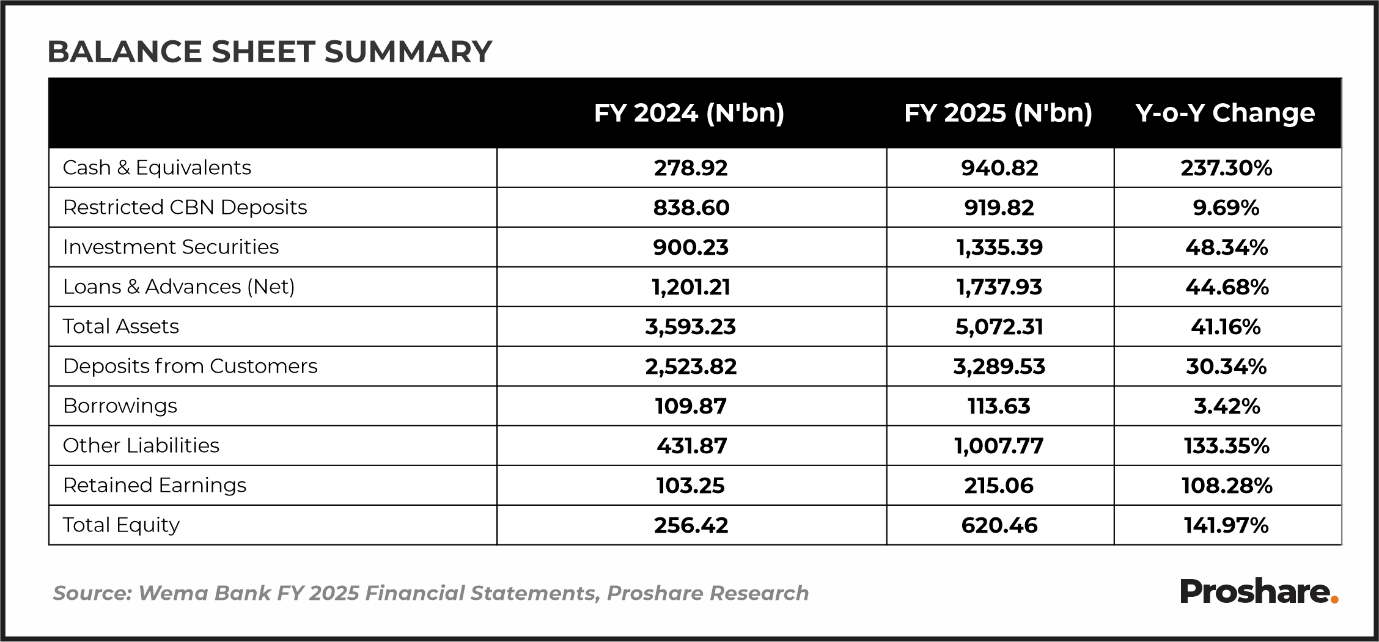
Total assets grew by 41.16% to N5.07trn, driven by the loan book, investment securities, and cash and equivalents. Cash and equivalents nearly quadrupled to N940.82bn, up from N278.92bn in FY 2024, reflecting inflows from the capital raise (rights issue and private placement) that had not yet been fully deployed at year-end. Importantly, this does not represent an artificial inflation of assets, as these funds are already held within earning assets through placements with banks and will remain within the asset base when redeployed into loans or infrastructure. As such, the elevated liquidity position represents readily deployable capital that is expected to translate into higher-yielding, income-generating assets in FY 2026, providing a clear earnings tailwind.
The investment securities portfolio grew 48.34% to N1.34trn, suggesting continued allocation to government bonds and other fixed-income instruments, a rational strategy in a high-yield environment. The loan-to-asset ratio was relatively stable at 34.26% (FY 2025) compared to 33.43% (FY 2024), indicating that the bank has not disproportionately increased its loan concentration relative to its total asset base.
The primary concern in the balance sheet is the near doubling of other liabilities, from N431.87bn in FY 2024 to N1.01trn in FY 2025. This N575.90bn increase represents the largest balance sheet movement in FY 2025, aside from operating cash generation. This constitutes 22.64% of total liabilities and poses a significant funding concentration risk if it involves volatile or short-term counterparty funding (see Table 3 below).
Table 3:
- Liability Structure and Deposit Mix
Customer deposits grew 30.34% to N3.29trn in FY 2025 (FY 2024: N2.52trn), maintaining impressive momentum. The deposit mix showed a CASA ratio of 82.31%, reflecting N2.71trn of deposits in current and savings accounts that carry minimal cost. This is a structural competitive advantage: while market interest rates remained above 25%, Wema’s deposit base was predominantly composed of non-interest-bearing or low-interest-bearing accounts, supporting a cost-of-funds rate of just 6.87% in FY 2025 (see Table 4 below).
Table 4:
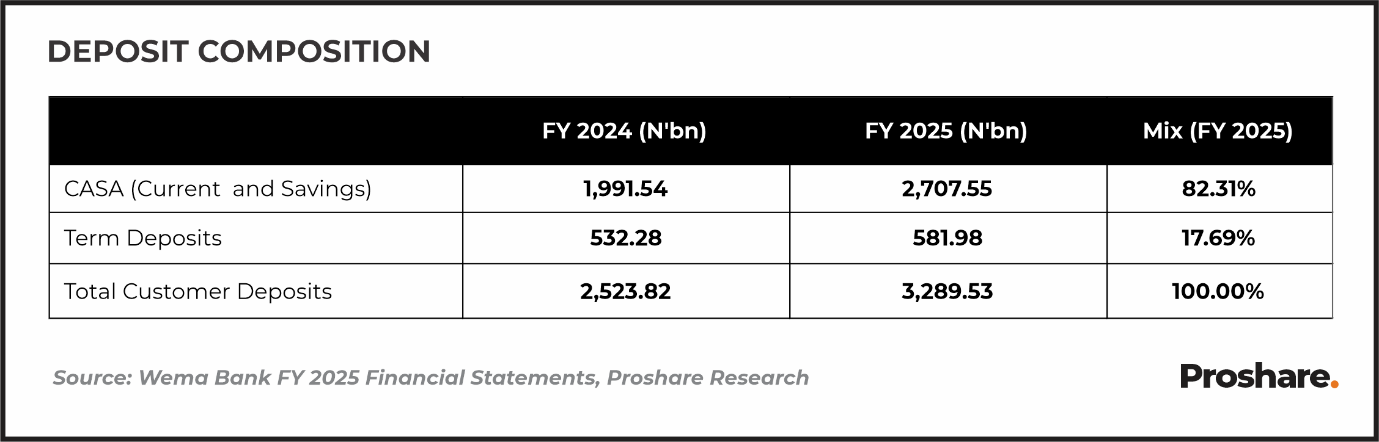
Corporate customers accounted for 72% of total deposits by value in the most recent deposit data, with corporate current accounts alone amounting to N1.03trn, emphasising the bank’s significant corporate banking network. This concentration, while offering a low-cost funding source, also presents some risk of large withdrawals by individual depositors. The retail savings and current account totals (N512.38bn and N55.39bn, respectively) show an increasing contribution of ALAT’s digital retail deposits.
- Capital Adequacy
Wema Bank’s capital adequacy ratio strengthened to 28.05% in FY 2025, from 19.67% in FY 2024. This improvement was driven by the twin capital events: a rights issue (proceeds: N144.5bn) and a private placement (proceeds: N49.0bn), together injecting approximately N193.5bn of fresh equity capital into the bank, as well as the 2025 profit capitalised. Total regulatory capital stood at N558.21bn against risk-weighted assets of N1.99trn, with Tier 1 capital alone at N542.21bn.
At 28.05%, Wema Bank’s CAR now substantially exceeds the CBN minimum of 10% and is among the highest in the Nigerian mid-tier banking space. This level of capitalisation provides approximately N370bn of theoretical excess capital above the 10% minimum, headroom that, if deployed at current risk-weighted asset intensities, could support an additional N3.7trn in risk-weighted assets. This creates a multi-year runway for balance sheet expansion without requiring further equity dilution.
Asset Quality and Risk Assessment
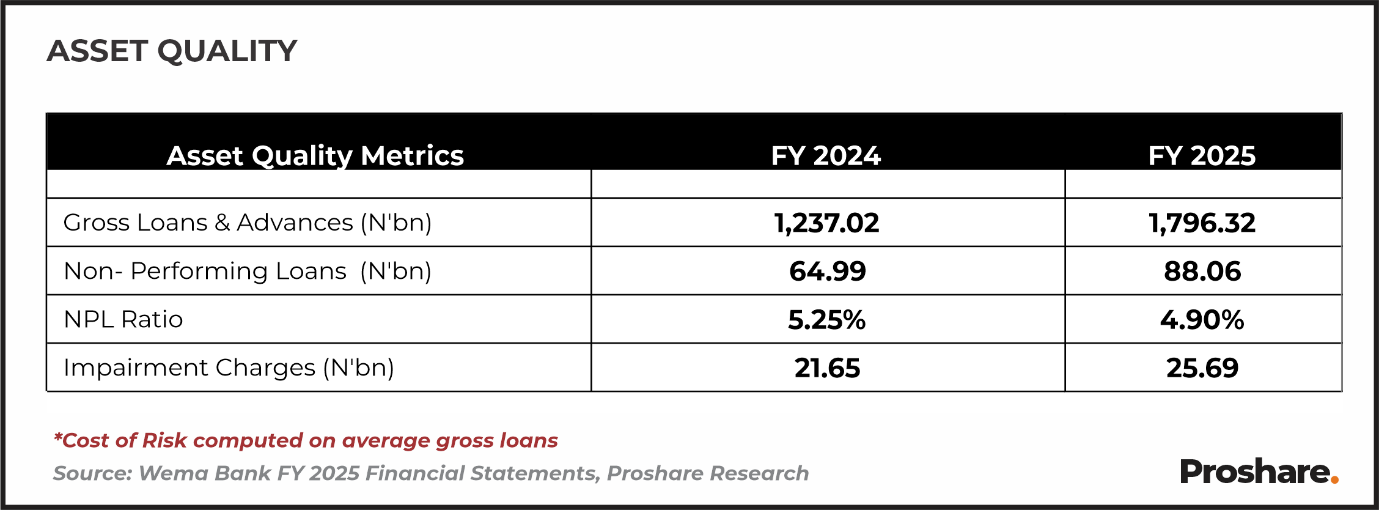
The NPL ratio declined modestly from 5.25% in FY 2024 to 4.90% in FY 2025, even as the gross loan book grew 45.21% to N1.80trn. In absolute terms, stage 3 loans grew from N64.99bn in FY 2024 to N88.06bn in FY 2025, an increase of 35.49%, which is materially below loan book growth. This implies that new lending in FY 2025 was of reasonable quality, or that there were meaningful write-offs/recoveries during the year.
However, a 4.90% NPL ratio remains elevated relative to well-managed international banking standards of 1–3% and reflects the structural challenges of lending in Nigeria’s inflationary, high-FX-risk environment. Corporate sector borrowers in import-dependent industries, particularly in manufacturing and trade finance, remain the most exposed to adverse macroeconomic outcomes. The bank’s heavy weighting toward corporate current account deposits suggests a large corporate lending counterpart.
The sensitivity analysis for Wema’s asset quality is primarily along two axes. First, an FX shock: a further 20%-naira depreciation would likely push already-stressed import-dependent corporate borrowers into stage 3, potentially adding N20bn to N30bn in nonperforming loans (NPLs) and increasing provisioning charges. Second, an interest rate reversal: if the CBN cuts rates significantly, this would paradoxically help borrower debt serviceability, reducing NPL formation pressure, an asymmetric positive for asset quality in a rate-cut cycle even as it compresses NIM (see Table 5 below).
Table 5:
Liquidity and Funding Profile
Wema Bank’s liquidity position strengthened materially in FY 2025, with cash and equivalents rising to N940.82bn (FY 2024: N278.92bn) and total liquid assets (cash + restricted CBN deposits) of N1.86trn, representing 36.69% of total assets. This substantial liquid buffer reflects the partially deployed capital from the rights issue and private placement and provides the bank with considerable short-term protection against any depositor run or interbank market stress.
The loan-to-deposit ratio increased to 54.61% in FY 2025 from 49.01% in FY 2024, reflecting stronger loan growth relative to deposits. At this level, Wema Bank remains fully compliant with the revised regulatory minimum LDR of 50%, providing sufficient headroom to support further loan expansion without placing undue pressure on funding. The interest-bearing assets-to-interest-bearing liabilities ratio (1.18x) affirms the bank’s asset-sensitive stance, which benefits in a high-rate environment but introduces duration risk during a rate-cut cycle.
Wema’s primary liquidity risk stems from funding concentration. The N1.01trn in other liabilities, which nearly doubled in FY 2025, indicates potentially volatile wholesale funding compared to retail deposits. Meanwhile, the CASA deposit base, constituting 82.31% of customer deposits, remains fundamentally stable. Additionally, the expanding retail footprint via ALAT offers further diversification of funding sources.
Cash Flow Dynamics
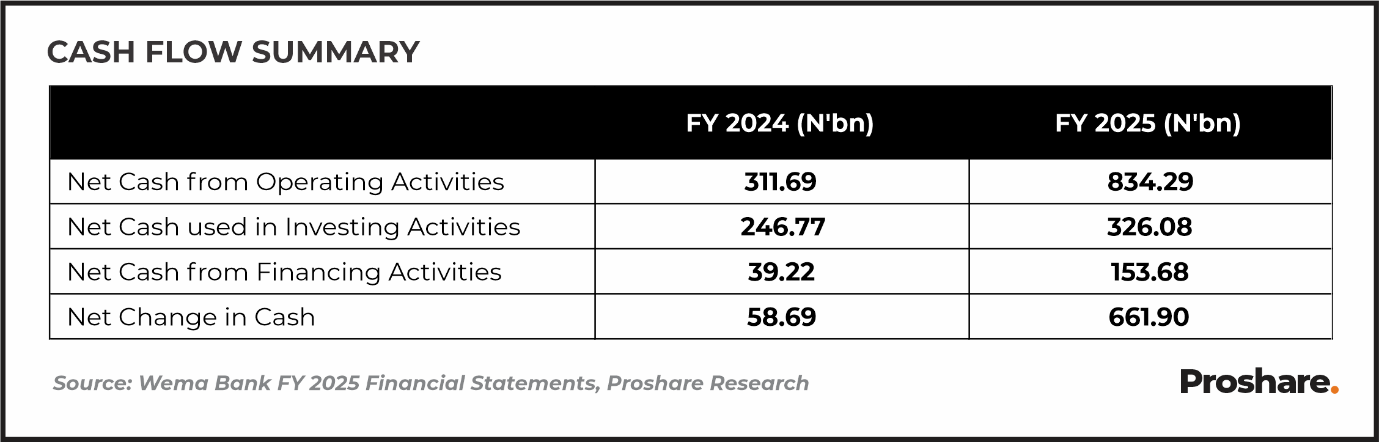
Operating cash flow nearly tripled to N834.29bn in FY 2025 from N311.69bn in FY 2024, driven by higher pre-tax profits (N221.89bn in FY 2025 vs N102.52bn in FY 2024), a substantial increase in customer deposits (N765.72bn), and other liabilities (N575.90bn), which more than offset the N562.41bn net lending outflow. Interest received of N576.07bn affirms the quality of the interest income, which is largely converted into cash.
Investing activities used N326.08bn, primarily for acquiring investment securities (N283.96bn) and property and equipment (N42.11bn), reflecting the bank’s investment in its branch network and technology infrastructure to support its digital goals. Financing activities generated N153.68bn, mainly from N144.50bn in rights issue proceeds and N49.02bn from private placements, partially offset by N39.79bn in borrowing repayments and N21.43bn paid in dividends.
The bank’s earnings quality is high: operating cash flow of N834.29bn far exceeds PAT of N194.48bn, indicating the deposit-driven nature of its cash generation. Movements in working capital, especially large customer deposit inflows, are the main drivers of banking cash flows, making operating cash flows less directly comparable to PAT than in non-financial firms (see Table 6 below).
Table 6:
Ratio Analysis
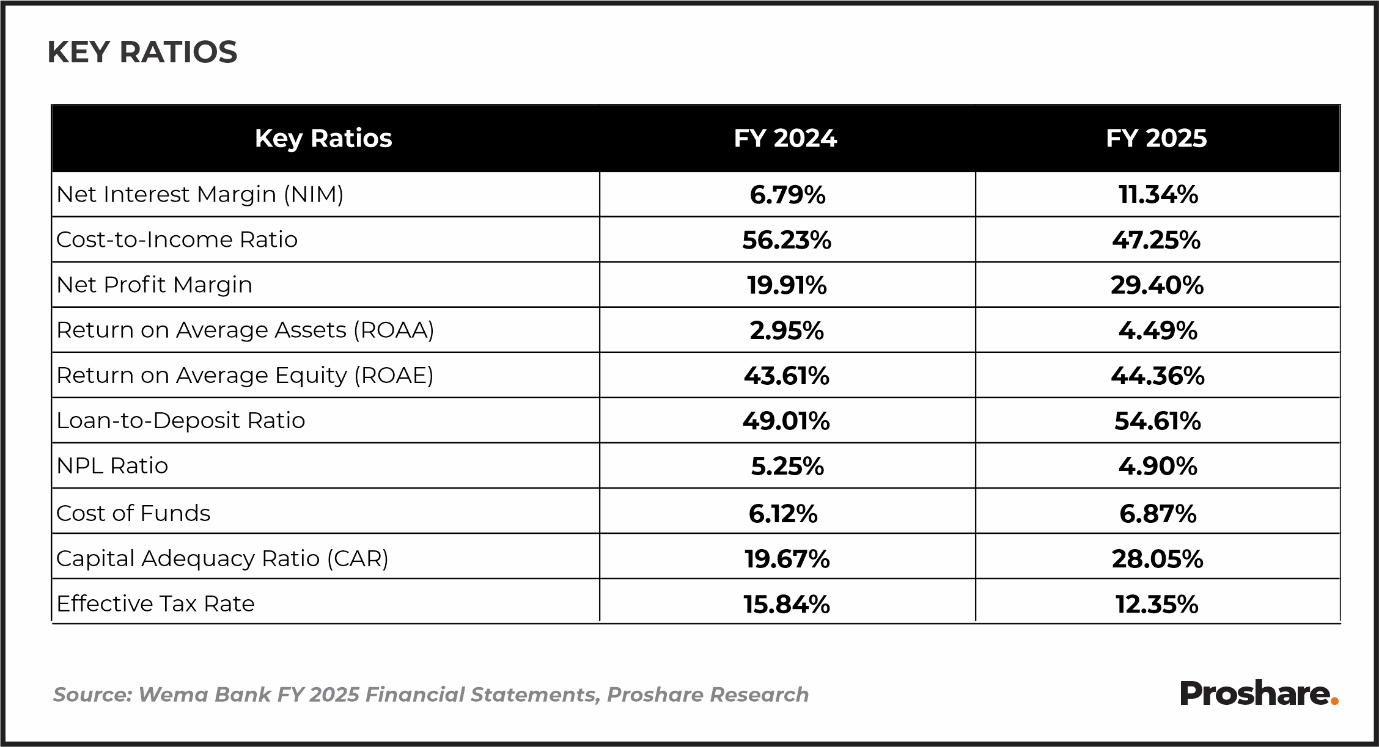
The ROAA of 4.49% is outstanding by Nigerian mid-tier banking standards and reflects the high-yield, high-NIM environment of FY 2025. The ROAE of 44.36% is equally elevated but benefits from the timing of the capital raise, since equity was largely injected towards the latter part of FY 2024 and FY 2025; as a result, the average denominator was lower than the year-end equity of N620.46bn.
The decline in the cost of funds to 6.87% in an environment where the MPR was above 25% is remarkable and directly attributable to the CASA deposit base. This structural funding advantage is Wema Bank’s most durable competitive moat, as it effectively means the bank borrows cheaply from millions of current and savings account holders while deploying at market-rate lending yields. Sustaining and growing this CASA franchise through ALAT and corporate banking deepening is the primary long-term value driver (see Table 7 below).
Table 7:
Dividend Policy and Shareholder Returns
Wema Bank increased its dividend per share to N1.25 in FY 2025, translating to a dividend yield of 4.77%. Despite the increase, its payout ratio was relatively conservative, reflecting a strategic preference for earnings retention to support growth and capital adequacy.
The sustainability of the dividend is supported by strong earnings and capital buffers, although future payouts will likely remain moderated by the bank’s expansion strategy and capital requirements.
Strategic Positioning and Growth Drivers
- ALAT Digital Platform and Competitive Positioning
Wema Bank’s primary competitive differentiator is the ALAT digital banking platform, Nigeria’s first fully digital bank, launched in 2017. ALAT provides a cost-effective retail customer acquisition channel that bypasses the branch infrastructure costs that burden legacy bank models. The platform’s contribution to fee income growth (+35.93% to N75.55bn in FY 2025) and to the CASA deposit franchise is qualitatively visible in the financial results.
The digital banking trend in Nigeria is accelerating, driven by smartphone penetration and mobile data accessibility. Wema Bank is competitively positioned to capture a disproportionate share of the growing digital-native customer segment, particularly among millennials and Gen Z. The risk, however, is that larger competitors (including GTCO’s Habari, Access Bank’s digital ecosystem, and standalone fintech challengers like Kuda and Opay) are making significant digital investments that could erode Wema’s first-mover advantage.
- Growth Strategy: Retail, SME and Corporate Lending
Wema’s loan book composition appears balanced among retail, SME, and corporate lending, consistent with the deposit mix, which includes both retail and corporate current and savings accounts. The corporate segment dominates by value (corporate current accounts of N1.03trn and savings of N1.11trn), while retail provides CASA optionality and cross-selling opportunities.
We expect Wema’s growth strategy over FY 2026-2027 to focus on deepening corporate banking relationships (leveraging the working-capital-financing opportunity in a high-trade-finance-demand economy), expanding SME lending through digital channels, and growing the retail deposit base through ALAT to further diversify and cheapen its funding structure. The N193.52bn fresh equity capital, once fully deployed into the loan book, will be the primary earnings driver.
Valuation Analysis
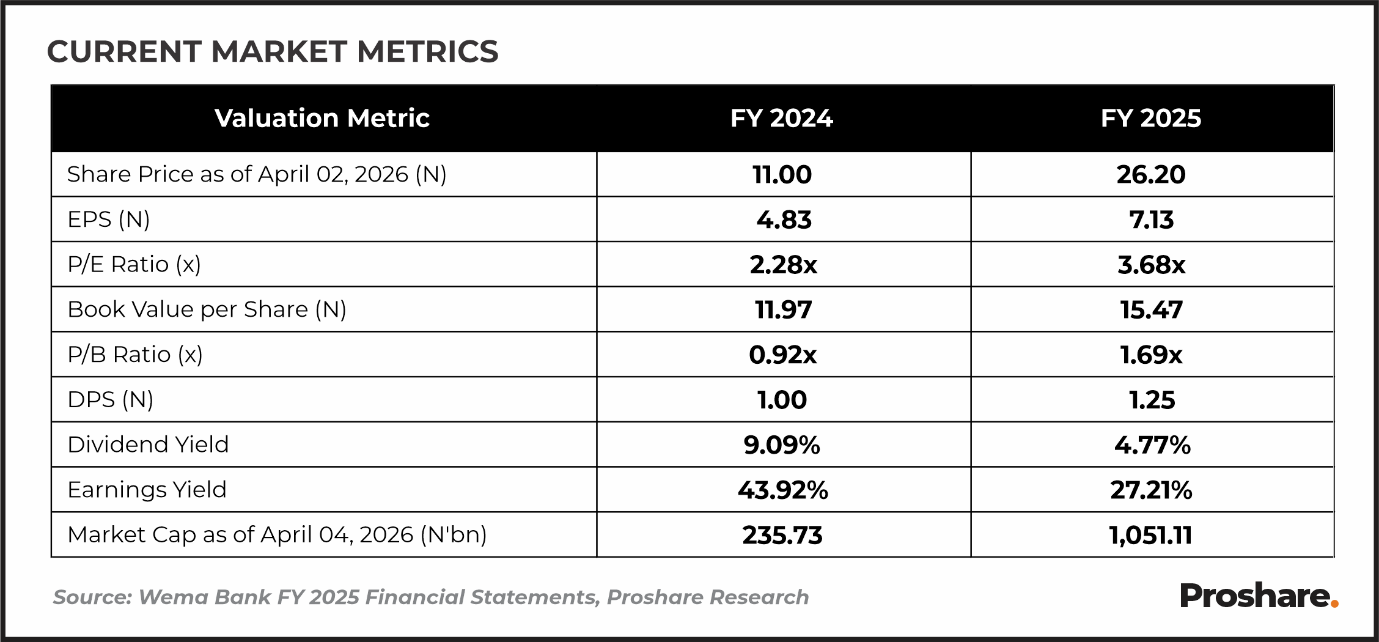
Wema Bank seems well-valued on an earnings basis with a price-to-earnings ratio of 3.68x and an earnings yield of 27.21%. The price-to-book ratio of 1.69x indicates improved profitability and capital strength, suggesting that the market has begun to price in growth expectations.
The current valuation suggests that, while the stock is not highly priced, investors continue to factor potential risks to earnings sustainability, especially given a possible normalisation of interest rates and credit conditions (see Table 8 below).
Table 8:
Peer Comparison:
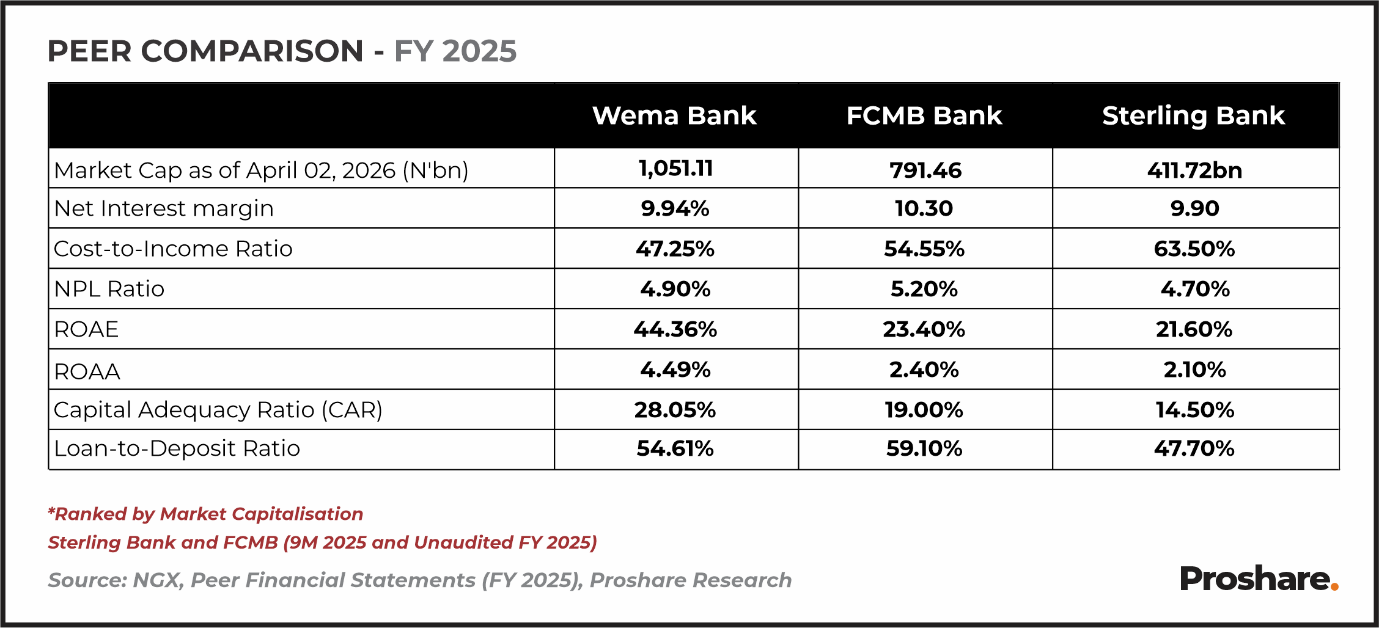
Wema Bank’s FY 2025 results outperformed those of FCMB and Sterling Bank across key metrics, reinforcing its position as the top Tier-II bank. With a market cap of N1.05trn, it commands a premium, reflecting better earnings quality and investor confidence via its digital retail strategy. Its profitability metrics include ROAE at 44.36% and ROAA at 4.49%, which surpasses peers and indicate efficient use of capital and assets. Its NIM of 11.34% exceeds FCMB’s 10.30%, reflecting the bank’s superior asset yield and low-cost funding advantage. The cost-to-income ratio of 47.25% highlights operational discipline and outperformance relative to peers in profit conversion. Wema’s NPL ratio of 4.90% reflects effective credit management. Its capital adequacy ratio of 28.05% exceeds peers, supporting growth and loss absorption, while a loan-to-deposit ratio of 54.61% indicates prudent liquidity deployment (see Table 9 below).
Table 9:
Investment Interpretation and Forward Outlook
Looking ahead to FY 2026, earnings growth is expected to moderate as the impact of high interest rates begins to taper. Net interest margin is likely to compress in the event of monetary easing, while loan growth may slow as risk considerations become more prominent.
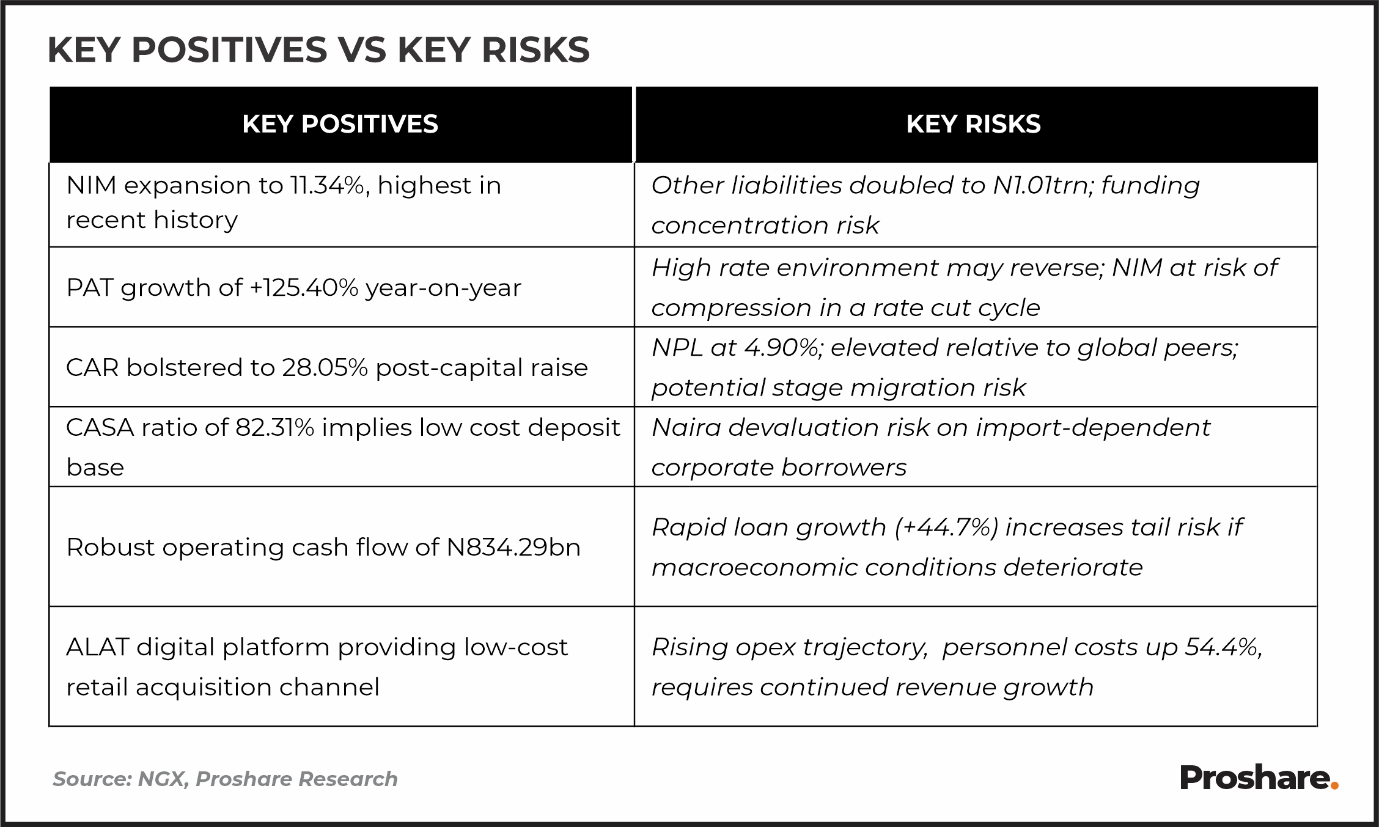
Key risks to the outlook include exchange rate volatility, which could impair borrower repayment capacity, and interest rate risk, which could significantly impact net interest income. Additionally, the rapid expansion of the loan book raises the possibility of asset quality deterioration if macroeconomic conditions weaken. Regulatory developments also remain a potential source of uncertainty (see Table 10 below).
Table 10:
Analyst’s Position
- Is FY 2025 a Peak Earnings Year or a Sustainable Base?
We believe FY 2025 marks a cyclical peak in earnings margins, but not in the overall earnings trend. The NIM of 11.34%, a net profit margin of 29.40%, and ROAE of 44.36% are all above-normal cycle metrics that are expected to decline as interest rates fall. Nevertheless, the key structural factors, such as a rapidly growing loan portfolio, a low-cost CASA deposit franchise, and an expanding digital banking presence, will support continued growth in absolute earnings despite normalising margins, with FY 2027 potentially reaching a new, higher earnings baseline.
- Quality of Earnings Assessment
Earnings quality is high; cash conversion of interest income is nearly perfect, with interest received of N576.07bn matching interest accrued. Operating cash flow (N834.29bn) substantially exceeds PAT (N194.48bn) after adjusting for deposit-driven working capital, and impairment provisions seem well-calibrated to loan growth. The main concern is the drop in other operating income from N17.29bn in FY 2024 to N392.57m, a N16.89bn swing likely reflecting non-recurring FY 2024 gains. Excluding this, FY 2024’s underlying non-interest income was about N61.91bn, versus the reported N78.80bn, making FY 2025’s N85.32bn a 38.82% increase on a like-for-like basis. Recurring earnings are thus significantly stronger than the headline figures.
- Balance Sheet Resilience
With a CAR of 28.05%, a CASA ratio of 82.31%, and a declining NPL ratio, Wema Bank’s balance sheet has rarely been stronger. The main vulnerability (the increase in other liabilities) warrants transparency but is offset by the N940.82bn liquid cash buffer. Hence, balance sheet resilience remains strong, which is expected to reinforce investor confidence.
Capital market analysts (Meristem, Lead Capital, and PAC Research) assigned a ‘Hold’ rating to Wema Bank. The bank’s solid FY 2025 performance and better capital position are largely reflected in its current valuation. However, key profitability metrics seem to be at cyclical peaks. Although the bank offers attractive earnings yield and growth prospects, notable risks such as margin compression, deteriorating asset quality, and macroeconomic volatility remain, which could negatively affect it. Consequently, Apel recommended a ‘Sell’, while Capital Bancorp issued a ‘Buy’ recommendation.