

The Unity Bank-Providus Bank merger has continued to spark intense debate, with critics warning that this gamble could end in catastrophe, echoing past failures. History shows that such mergers often ravage economies and leave stakeholders reeling. Ironically, Unity Bank itself is a product of a failed merger of weaklings, plagued by poor leadership and decades of unmet expectations. Now, this struggling entity is betting on a relatively unknown digital bank, Providus, to save the day. It’s déjà vu all over again – a recipe for disaster, with stakeholders’ interests hanging in the balance. Will this merger be the exception, or just another cautionary tale?
The Merger of the weaklings Plagued by Poor Leadership
In Nigeria, the past is littered with unsavoury bank mergers experiences .Both First Bank and Union Bank ran into stormy waters partially because of this in the past . Though the first survived and recovered , the second is yet to do so . While Union Bank still maintains its going concern , few others with a similar experience were erased completely with the shareholders gnashing their teeth in agony .
Bank PHB, Spring Bank, Afribank Nigeria, Oceanic Bank, Skye Bank, and Heritage Bank all succumbing to different pitfalls . At the heart of these failures lies a common thread – inadequate leadership. Spring Bank’s struggles with management problems and Skye Bank’s governance issues can be attributed, at least in part, to weak leadership. Similarly, Bank PHB’s aggressive expansion strategy, which ultimately led to its nationalization, may have been driven by poor leadership decisions. These examples highlight the critical role leadership plays in navigating the complexities of mergers and acquisitions.
A worrying pattern has emerged in Nigeria’s banking industry: many failed banks were either struggling before merging or were formed by combining multiple distressed banks. This raises concerns about regulators’ oversight and whether allowing troubled banks to merge is a recipe for disaster. The Unity Bank-Providus Bank merger has brought these fears back to the forefront, with many asking if the same mistakes are being repeated. Will this merger end in another failure, or can it break the mould?
Unity Bank’s financial health before its merger with Providus Bank had been a cause for concern, with a picture of a struggling institution emerging from its deteriorating asset quality, liquidity challenges, and staggering losses. The bank’s gross non-performing loans stood at 6.5% as of March 2025, indicating significant credit risk and asset quality deterioration. This raised concerns about the bank’s lending practices and risk management capabilities, suggesting that Unity Bank’s asset quality was an Achilles’ heel that needed urgent attention.
The liquidity position was another area of concern, with Unity Bank relying on Central Bank of Nigeria (CBN) support, including ₦50.7 billion in short-term facilities. This not only highlighted the bank’s liquidity challenges but also raised questions about its ability to manage its finances effectively. The repeated reliance on regulatory support suggested that Unity Bank’s liquidity management was not robust, making it vulnerable to market shocks.
The bank’s profitability was in sharp decline, with a staggering ₦62.6 billion loss in 2023, reversing from a ₦941 million profit in 2022. Interest expenses exceeded gross earnings, highlighting the bank’s inefficient operations and inability to generate sufficient revenue to cover its costs. This raised concerns about Unity Bank’s business model and whether it was sustainable in the long term.
The capital adequacy ratio was a major red flag, standing at a staggering -76.14% as of 2023, far below the CBN’s 10% requirement. This indicated that Unity Bank’s capital base was insufficient to absorb potential losses, making it a risk to depositors and the broader financial system. The bank’s liabilities exceeded its assets by ₦326.9 billion, raising questions about its solvency and ability to meet its obligations.
Unity Bank’s financial health before its merger with Providus Bank was a cause for concern, with a picture of a struggling institution emerging from its deteriorating asset quality, liquidity challenges, and staggering losses. The bank’s gross non-performing loans stood at 6.5% as of March 2025, indicating significant credit risk and asset quality deterioration. This raised concerns about the bank’s lending practices and risk management capabilities, suggesting that Unity Bank’s asset quality was an Achilles’ heel that needed urgent attention.
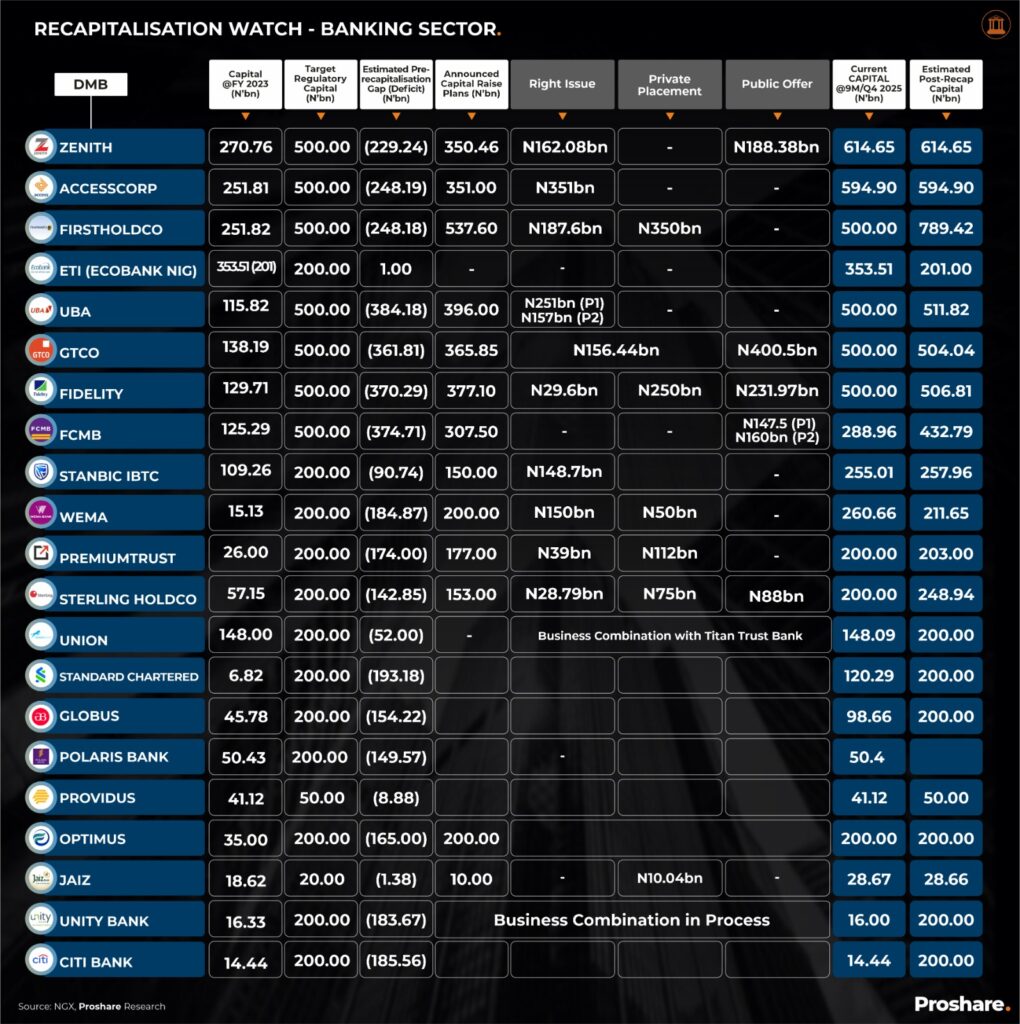
The genesis of Unity Bank’s woes can be traced back to its 2006 merger, which brought together nine struggling banks, including Bank of the North Ltd, Intercity Bank Plc, and Tropical Commercial Bank Plc, among others. While the merger may have been a strategic move for the top brass, it proved to be a bitter pill for ordinary shareholders, who have been left to grapple with the consequences of a bloated balance sheet, operational inefficiencies, and a legacy of poor management. The experiment, touted as a recipe for synergy and growth, has instead become a cautionary tale of how mergers can go awry, leaving shareholders to wonder if the pain was worth the gain.
Leaders Living Big At Expense of Ordinary Shareholders
While ,the top brass might be singing a happy tune , it was a deleterious experience for the ordinary shareholders in the last two decades.This differential may not be farfetched. For decades,the plight of Unity Bank’s ordinary shareholders in Unity Bank was a heartbreaking tale of prolonged suffering, as they’ve been denied both dividend payouts and capital appreciation for nearly two decades, their investments effectively trapped in a perpetual state of stagnation, with no respite in sight; their hopes dashed, their patience worn thin, and their trust in the bank’s leadership severely eroded, as they’ve watched helplessly as their hard-earned savings dwindle in value, a stark reminder of the devastating consequences of poor corporate governance and ineffective management
But more painfully , it was a stark contrast between the opulent lifestyles of Unity Bank’s top management and the woeful experiences of ordinary shareholders, a harsh reality that plagued the bank. While executives revelled in fleets of luxury cars and palatial apartments, the common shareholder was left to navigate a parlous landscape of miserable dividends, if given at all, capital erosion, and broken promises, exemplified by the bank’s struggles and deteriorating financial health.
It was a tale of two realities, where the custodians of the bank thrived at the expense of those who had put their faith and resources into the system. And as regulatory authorities turned a blind eye, the chasm between the haves and have-nots widened, leaving ordinary shareholders to wonder if their investments were merely a license to print money for the privileged few.
Sequel to that ugly past scenario, the proposed merger between Unity Bank and Providus Bank, while a welcome development, is loaded with deep-seated reservations .
Regulatory Authorities Controversial Oversight
Unfortunately, the agony of the ordinary shareholders . either by commission or omission, could be blamed on an alleged conspiracy between the regulatory authorities and the top management. Analysts believe the regulatory authorities have played a critical role, loaded with some reservations, in the past and are currently doing so. First, gambling with taxpayers’ money in a deal that usually favors the crooks and the top management at the expense of the ordinary shareholders is nothing but appalling. Second, non-performing executives are never held responsible, and when a bank fails, they bring the taxpayers’ money to rescue a distressed bank, like Unity Bank, and others, for another executive to feast on at the expense of the ordinary shareholders. The Unity and Providus merger is a fresh experiment.
Most contentiously is the fund,a sort of regulatory indulgence ,extended to the merging partners and other controversial elements in the merger that have continued to generated a heated controversy for many reasons .The Central Bank of Nigeria’s approval of a ₦700 billion financial accommodation, later revised to ₦540 billion, has raised concerns about the bank’s capital adequacy and accounting practices. This accommodation is structured as a 20-year term loan with bond-like features, but is being treated as Tier 1 capital, despite being a repayable debt. This has sparked questions about the CBN’s interpretation of capital requirements and whether it’s a case of regulatory forbearance or a genuine attempt to strengthen the banking sector.
The treatment of this accommodation as Tier 1 capital is particularly contentious, as it may not meet the required maturity of a perpetual financial instrument. Typically, Tier 1 capital consists of permanent instruments, such as common shares, that can absorb losses without triggering insolvency. The 20-year maturity date attached to the accommodation raises doubts about its classification as Tier 1 capital. Furthermore, the instrument does not meet the convertibility requirement, meaning that there is no principal repayment requirement, which is a key characteristic of debt instruments.
Another area of concern is Unity Bank’s Plant, Property, and Equipment (PPE) value, which jumped from ₦24 billion in 2023 to over ₦690 billion, a 2,800% increase. This has raised concerns about asset inflation and whether the valuation is justified. While revaluation is allowed under IFRS, the scale of the increase has sparked skepticism. The bank’s history of struggles, including a previous merger that failed to yield expected results, adds to the concerns about its governance and whether it’s a repeat of past mistakes.
The regulatory precedent set by the CBN’s approval of the financial accommodation may have far-reaching implications, potentially creating a moral hazard and encouraging other banks to seek similar treatment. The lack of transparency and accounting gymnastics employed in this deal have raised questions about the CBN’s role in regulating the banking sector and ensuring the stability of the financial system.
Despite the controversy surrounding the above loopholes , the regulatory authorities are building their hope on one rationale: the merger between Unity Bank and Providus Bank marks a significant milestone in Nigeria’s banking sector, combining complementary strengths to create a stronger, more competitive financial institution. To them , Unity Bank brings its extensive retail footprint of over 472 branches nationwide, strong SME banking presence, and decades-long market presence, while Providus Bank contributes innovative digital banking capabilities, niche corporate banking expertise, and a robust balance sheet with assets of N2.5 trillion.
But the above views are not enough to translate the dream behind the merger to reality or warrant the approval of that merger . This merger of Unity Bank and Providus Bank has has to raise eyebrows in the Nigerian banking sector, with many questioning whether the new entity can overcome the deep-seated issues that have plagued the two banks in the past. The real challenge before the leadership of Unity Providus Bank is how to adopt a transformative approach that will address the bank’s operational inefficiencies, risk management, and corporate governance issues. A mere merger of entities will not suffice; what is required is a fundamental overhaul of the bank’s systems, processes, and culture.
Where Unity Bank Leadership Were Expected To Do
In today’s fast-paced business environment, companies must look beyond short-term gains and focus on competing for the future. This means excelling in three critical stages of competition: industry foresight and intellectual leadership, foreshortening migration paths, and market position and market share.
The first stage, industry foresight and intellectual leadership, requires companies to imagine the future and conceive new types of customer benefits or radically new ways of delivering existing benefits. This involves gaining a deeper understanding of trends and discontinuities, and using that insight to transform industry boundaries and create new competitive space. Companies that excel in this stage are able to anticipate and shape the future, rather than simply reacting to it.
The second stage, foreshortening migration paths, involves actively shaping the emergence of the future industry structure to one’s own advantage. This requires accumulating necessary competencies, testing and proving out alternate product and service concepts, attracting coalition partners, and constructing the required infrastructure. Companies that succeed in this stage are able to influence the direction of industry development and create a favorable environment for their own success.
The final stage, market position and market share, is where companies compete for dominance within a well-defined industry structure. This involves innovation focused on product line extensions, efficiency improvement, and marginal gains in product or service differentiation. Companies that excel in this stage are able to leverage their strengths to maintain market leadership and drive growth.
To gain competitive advantage and become an industry leader, a company must compete for the future and excel in all three stages. This requires a forward-thinking approach, a willingness to take calculated risks, and a commitment to innovation and continuous improvement. By focusing on these three stages, companies can position themselves for long-term success and create a sustainable competitive advantage.
In essence, competing for the future is not just about winning in the marketplace; it’s about shaping the marketplace itself. It’s about creating a new reality, rather than simply competing in the existing one. Companies that understand this and are able to excel in the three stages of competition will be the ones that thrive in the years to come.
What Unity Bank Past Leaders Resorted To Instead
No leadership of Unity Bank since its inception to its merger with Providus Bank proved it had the joker above .Despite a succession of leaders at the helm of Unity Bank, the institution’s fortunes have remained stagnant, raising questions about the effectiveness of its governance and management. From Falalu Bello’s tenure as the inaugural CEO to Oluwatomi Somefun’s recent retirement, each leader has had a chance to steer the bank towards greatness, but the outcome had been under willing, with the bank struggling to overcome fundamental challenges and meet recapitalization deadlines. .Tomi Somefun’s tenure at Unity Bank Plc ,particularly , was marked by stagnation and missed opportunities, leaving the institution with significant challenges. Her leadership failed to address the bank’s fundamental issues, including a crippling lack of capital and poor financial performance.
The bank’s inability to capitalize on growth opportunities resulted in value destruction for shareholders, eroding investor confidence and leaving the institution vulnerable to market shocks. Even the recapitalization was not until certain controversial funds came from the regulatory authorities and a neophyte digital bank came to its rescue.
Oluwatomi Somefun and other past leadership left Unity Bank a concerning case of a company devoting too much energy to preserving the past and not enough to creating the future. A glance at the bank’s initiatives revealed a plethora of projects aimed at improving operational efficiency, but few that suggested a clear vision for the future. The bank’s track record on new business creation was uninspiring, and its influence on setting new industry standards was negligible. It was a company that was more rule-taker than rule-maker, more focused on catching up with competitors than building advantages new to the industry. This defensive approach was reflected in the bank’s transformation agenda, which seemed driven more by competitors’ actions than its own unique vision of the competition.
Somefunn and other CEOs could not be blamed for the above attitude .When corporate giants stumble, the knife cuts deep. Faced with stagnant growth, declining margins, and eroding market share, executives often resort to radical restructuring – shedding underperforming businesses and trimming fat to boost productivity. The reality is that those executives who don’t have the stomach for emergency room surgery soon find themselves out of a job.
Leaders facing stagnant growth often find themselves caught between a rock and a hard place, forced to make tough decisions to boost Return on Investment (ROI). There are two approaches to boosting Return on Investment (ROI): the denominator route and the numerator route. The denominator route involves cutting costs and assets to make the company look leaner and more efficient, providing a quick fix and short-term wins for shareholders. In contrast, the numerator route focuses on growing revenue and profits through innovation, investing in new capabilities, and driving growth, leading to more sustainable returns.
In such circumstances, cutting costs and assets might seem like the most viable option, especially when the pressure from shareholders is intense. This approach, often referred to as the denominator route, can provide a quick fix, making the company look leaner and more efficient, and giving shareholders a short-term win. On the other hand, focusing on growing revenue and profits, known as the numerator route, requires a more nuanced approach, involving innovation, investing in new capabilities, and driving growth, which can lead to more sustainable returns.
The denominator route is often preferred due to its ease of execution and desire for immediate results, rather than a thoughtful strategy for sustainable growth by leaders of any organization classified as a laggard . This appears to be the choice that is attractive to the Unity Bank leadership , both past and present . The limitations of this approach are evident: it disrupts lives, destroys communities, and undermines future growth. Denominator management is a short-term game that can lead to a loss of competitive edge, innovation capacity, and talent. Leaders who prioritize cost-cutting over growth risk sacrificing long-term success for short-term gains.
The Ways Out
Though the merger is capable of boosting its capital base, just as the starting point of successful strategies is acquiring, retaining, and developing resources of at least a threshold standard, is imperative, however, possession of resources does not guarantee strategic success. This is because strategic capability is essentially concerned with how these resources are deployed, managed, controlled, and, in the case of people, motivated, to create competencies in those activities and business processes needed to run the business.
The strategic position of any company depends on its people – the heart of strategy. The knowledge and experience of people can be the key factors enabling the success of strategies. But they can also hinder the adoption of new strategies too. Human resources may hinder strategy if they are not tailored to the types of strategies being pursued.In the final analysis, the success or failure of Unity Providus Bank depends on those at helms of affairs. Surely, dillittantes like those in the past cannot make the difference.
To succeed, the new leaders need a robust strategic foresight architecture that enables them to anticipate and shape the future. Strategic foresight is the ability to anticipate and prepare for potential future developments, involving scanning the horizon, identifying trends and discontinuities, and using that insight to inform strategic decisions. Companies with strong strategic foresight can identify emerging opportunities and threats, develop innovative products and services, create new markets, and anticipate and mitigate risks. Setting ambitious goals that push a company beyond its comfort zone is also crucial, requiring a willingness to take calculated risks and invest in new capabilities. Companies that stretch can achieve significant growth and innovation, develop new skills and capabilities, and outmaneuver competitors.
Maximizing resources to achieve strategic objectives is also essential, including leveraging partnerships, technology, and talent to drive growth and innovation. Companies that leverage effectively can access new markets and customers, develop new products and services, and improve operational efficiency. To succeed in the race for competitive advantage, companies must develop a robust strategic foresight architecture that incorporates stretch and leverage, involving building a competitive culture of innovation and experimentation, investing in strategic foresight and analytics, setting ambitious goals and taking calculated risks, and leveraging partnerships, technology, and talent to drive growth. By combining strategic foresight, stretch, and leverage, companies can create a sustainable competitive advantage and thrive in a rapidly changing business environment.