
Uncertainty Over Union Bank : Can Yetunde Oni Rescue It From Relegation ?

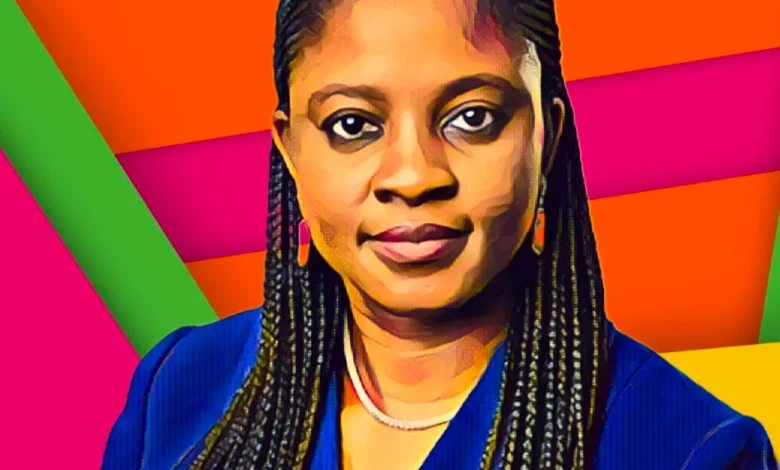
Yetunde Oni’s appointment as Managing Director and CEO of Union Bank of Nigeria was met with high expectations, given her impressive 25-year track record in banking and reputation for dynamic leadership. However, the optimism has been short-lived, as Union Bank struggles to meet the Central Bank of Nigeria’s recapitalization deadline, leaving stakeholders anxious about the bank’s future. Despite Oni’s credentials, including an Economics degree from the University of Ibadan and an MBA from Bangor University, the bank’s inability to secure a suitor or meet the deadline has dashed hopes for a turnaround.
Her tenure as Union Bank’s leader is under scrutiny as the recapitalization deadline looms. Her inability to swiftly close the deal on foreign investment, particularly from the United Arab Emirates, raises concerns about her capacity to navigate the bank through these challenging times. The clock is ticking, and any further delay could push the bank into a regulatory grey zone, inviting supervisory restrictions, rating downgrades, or forced strategic options, including dilution or restructuring under regulatory guidance. Stakeholders are questioning whether Oni has the mettle to deliver, and the pressure is mounting.
This uncertainty is happening at a critical time, as the Central Bank of Nigeria’s (CBN) recapitalization deadline looms in March 2026. Union Bank’s management is trying to navigate these challenges, but the clock is ticking
Truly, when She took the helm, Union Bank was still facing significant headwinds, including a tumultuous acquisition by Titan Trust Bank, regulatory scrutiny, and a competitive banking landscape. Union Bank of Nigeria was in a precarious position. The bank’s merger with Titan Trust Bank had just been completed, but it was done amidst controversy and regulatory intervention. The Central Bank of Nigeria had dissolved the previous board due to concerns over debt-funded acquisition, leaving the bank with significant challenges.
Its financial health was not in good shape too when she came . With a capital shortfall of N51.9 billion to meet the CBN’s minimum requirement, impairment charges skyrocketing by 1208% to N58.5 billion, and a hefty N226 billion FX revaluation loss, the bank’s financial health was fragile. The appointment of Yetunde Oni as MD/CEO was likely a move to turn the ship around, but the task ahead was daunting, to say the least.
But she was expected to have made the difference . Today , nothing spectacular has changed, and this may not spring any surprise . Turning around a bank like Union Bank is not for a dilettante not for merely intellectually curious but for those not content to follow, who desire to rewrite the rules of the game ,unafraid of orthodoxy, more inclined to build than to cut , those concerned to make the difference than making career and those who absolutely committed to staking out the future first. Despite the impressive credentials flaunted by Oni , the case of Union is just too tough for her to handle . Union Bank today remains partly a laggard , partly a distressed bank after successive dillitanntes at the helm of affairs. They live big , yet the bank remains in doldrums.
Union Bank in the Eye of Its Leaders:Painting A Different Impression
Unfortunately, the leadership believed everybody is gullible, beating her chest and flaunting its miserable 2024 results. The leadership under Yetunde Oni, is especially gratifying to see the bank’s hard work paying off. “With a 58% increase in gross earnings and a 20% growth in profit before tax, we’re delivering value to our stakeholders. Our strategic priorities, centered around scaling our digital play and driving hypergrowth in target sectors, are yielding results. The launch of our digital lending platform, UnionKash, has been a huge success, with over 14,000 customers accessing soft loans. We’re committed to maintaining strong governance frameworks, ensuring regulatory compliance, and driving sustainable profitability.”
“At the beginning of the year, our top priority was to keep the momentum going with a strong focus on stability following the intervention of the Central Bank of Nigeria. We also continued with the planned strategic priorities, which are centred around scaling our digital play, driving hypergrowth in target sectors, optimising our wholesale bank structure, aggressively ensuring recoveries of past-due obligations, and orchestrating a robust ecosystem play through existing and new partnerships”
The Acting Chief Financial Officer, Oluwagbenga Adeoye, noted that our H1 2024 financial performance is a testament to the bank’s resilience, given the challenging economic environment. “We’ve navigated inflation, exchange rate volatility, and increased operational costs to deliver a strong performance. Our cost-to-income ratio remains below 50%, and we’re confident in our ability to sustain positive momentum.”
The tendency of the leadership of Union Bank of using a historical benchmarking to measure its performance by commission or omission is disingenuous. While it is a common practice, its significant limitations compared to industry/sector benchmarking and best-in-class benchmarking makes deceptive . By solely focusing on past performance, organisations risk complacency and fail to account for changes in the market or industry. This inward-looking approach can lead to incremental improvements, but may not address the need for transformative change. In contrast, industry/sector benchmarking provides insights into comparative performance, while best-in-class benchmarking encourages organisations to adopt innovative practices from outside their industry, driving more significant improvements.
The Realities Staring the Investors In the Eye
When either an industry/sector benchmarking or best-in-class benchmarking is employed , the laggard picture of this bank become palpable to the investors . Union Bank is like a company that succeeds in today’s market but fails to create the markets of tomorrow like a hamster on a wheel – constantly running but going nowhere. They’re stuck in a cycle of diminishing returns, chasing yesterday’s profits with declining margins .A closer look at the numbers reveals some concerning trends. Non-interest income has declined by 3%, while operating expenses have ballooned by 52%. The bank’s net income plummeted to ₦44.798 billion in 2024, a 32.4% decrease from ₦66.292 billion in 2023. Earnings per share have also taken a hit, dropping to ₦1.53 from ₦2.27 in 2023. These declines raise concerns about the bank’s profitability and shareholder value.
The bank’s dismal financial performance has left its shareholders reeling. With a paltry net interest margin, squeezed net profit margins, and a bloated cost-to-income ratio, it’s clear that management has failed to deliver. The bank’s non-performing loan ratio is alarmingly high, a stark reminder of its reckless lending practices, while its anemic earnings per share have eroded shareholder value. Year after year, this bank has underwired its competitors, leaving investors to wonder if there’s anyone at the helm. It’s time for a radical overhaul, starting with a change in leadership and a renewed focus on prudent risk management and operational efficiency
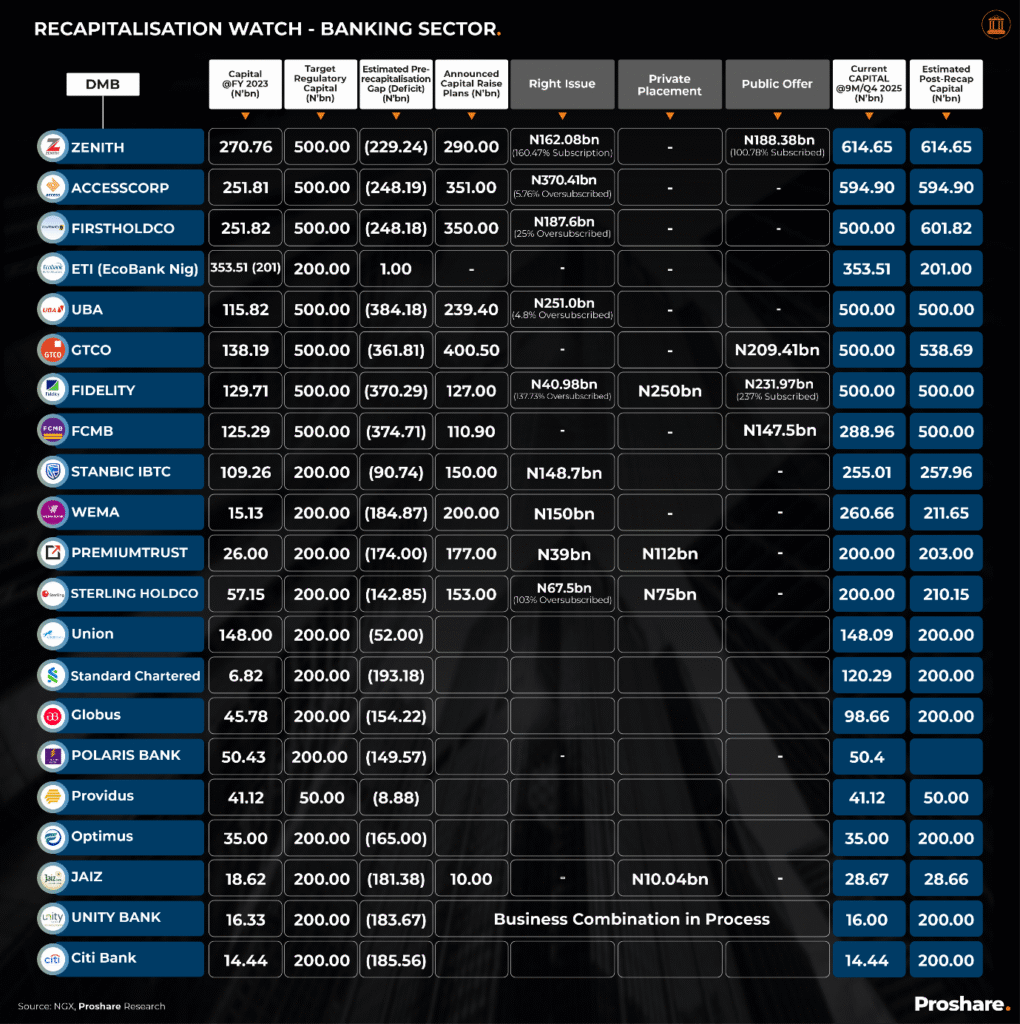
The Central Bank of Nigeria’s intervention and the ongoing recapitalization efforts add to the uncertainty. Union Bank’s recapitalization strategy hinges on prospective foreign investment, but a lingering legal dispute involving former core investor, TGI Group, clouds the process. The bank’s ability to address asset quality concerns, optimize costs, and drive strategic growth initiatives will be crucial in determining its future success.
Union Bank’s Leadership and Laggard Episode
To understand the laggard position of a company in an industry is not difficult: look at the high-profile initiatives that have been launched recently, issues that are preoccupying senior management, the criteria and benchmarks by which progress is being measured, the track record of new business creation, the dreams and fears on the faces of employees, and the company’s ability to shape that future and regenerate success again and again in the years and decades to come.
From the above perspectives , Union Bank, under the leadership of Yetunde Oni and its past leadership presents a concerning case of a company devoting too much energy to preserving the past and not enough to creating the future. As the banking landscape undergoes seismic shifts, Union Bank’s senior management seems more focused on reengineering core processes than regenerating core strategies, leading to its stagnancy .
A glance at the bank’s initiatives reveals a plethora of projects aimed at improving operational efficiency, but few that suggest a clear vision for the future. The bank’s track record on new business creation is uninspiring, and its influence on setting new industry standards is negligible. It’s a company that’s more rule-taker than rule-maker, more focused on catching up with competitors than building advantages new to the industry.This defensive approach is reflected in the bank’s transformation agenda, which seems driven more by competitors’ actions than its own unique vision of the future.
If Yetunde Oni and her team gaze into the future, they would do well to ask themselves: what’s the balance between hope and anxiety in our company? Is it a sense of opportunity or vulnerability that’s driving our decisions? The answers might just reveal a company that’s stuck in the past, blind to the future it’s creating. Senior managers of Union Bank might be claiming they’re focused on the future, but their actions tell a different story.
One fact stares a good analyst in the eyes :The leadership of Union Bank is facing a daunting task: turning the bank around that requires more than just incremental changes; that demands a fundamental shift in focus towards shaping the future.
A company that is ready to come out of the treadmill is expected to invest enough time and energy in preparing for tomorrow , build new core competencies , pioneer new product concepts . The answers lie in looking outward, understanding the bigger picture, and thinking long-term. Are Yetunde Oni and her team investing enough time and energy in preparing for tomorrow, or are they stuck optimizing yesterday’s success? They must answer some critical questions : what new core competencies will they build, what new product concepts will they pioneer?
No doubt , leaders of Union Bank are stuck in a cycle of reacting to the present, rather than shaping the future. They spend a fraction of their time peering over the horizon, and an even smaller sliver building a collective point of view about what’s next.
This lack of focus on the future is a major risk, as it leaves companies vulnerable to disruption and unable to capitalize on emerging opportunities. Developing a clear, distinctive point of view about the future requires a significant investment of senior management’s time and energy. It’s not a one-time task, but an ongoing process of refining and adjusting as the future unfolds.
This is not to say its leaders are lazy. In fact, analysts believed most of them are working harder than ever, with stress and burnout a constant companion. But the problem is that these questions challenge the very foundations of their power and expertise. They force these leaders to confront the possibility that their knowledge and experience may be irrelevant or even wrong-headed for the future.
This is why restructuring and reengineering often take the center stage of the operations .of both the past and the present leadership of this bank These tasks are tangible, actionable, and safe. But they only allow leaders to focus on optimizing the present, rather than confronting the uncertainty of the future and comes at a cost. By neglecting the future, companies risk being left behind, stuck on a treadmill of declining margins and profits.
The real challenge for leaders is to find the intellectual energy to tackle those tough questions, to imagine and create the future, rather than just optimizing the past. It requires a willingness to be vulnerable, to admit uncertainty, and to challenge their own assumptions. The future belongs to those who are brave enough to question the present.
The fall of the old Union Bank could be partly linked to the above attitude. However , Union Bank is not alone. The past few decades have witnessed the downfall of once-mighty companies, their dominance eroded by the relentless tide of industry change. Sears, General Motors, IBM, and others were giants of their time, but their inability to adapt to shifting landscapes has left them struggling to stay relevant. They coasted on past successes, relying on linear extrapolations of growth, and were managed, not led; maintained, not innovated. The signs of disruption were there, but leaders cling to assumptions, unwilling to challenge their own beliefs and adapt.
The result is a painful reckoning, with restructuring and downsizing becoming the norm. These measures address symptoms, not the disease – a failure of imagination, a lack of willingness to reinvent and reimagine the future. Companies must challenge assumptions, innovate, and lead to survive. Those that fail will be left on the roadside, relics of a bygone era. The future belongs to those brave enough to shape it
But this attitude may not be farfetched . Leaders facing stagnant growth often find themselves caught between a rock and a hard place, forced to make tough decisions to boost Return on Investment (ROI). In such circumstances, cutting costs and assets might seem like the most viable option, especially when the pressure from shareholders is intense. This approach, often referred to as the denominator route, can provide a quick fix, making the company look leaner and more efficient, and giving shareholders a short-term win. On the other hand, focusing on growing revenue and profits, known as the numerator route, requires a more nuanced approach, involving innovation, investing in new capabilities, and driving growth, which can lead to more sustainable returns.
However, the denominator route is often preferred due to its ease of execution and desire for immediate results, rather than a thoughtful strategy for sustainable growth. Be This appears to be the choice that is attractive to the Union Bank leadership , both past and present .
The limitations of this approach are evident: it disrupts lives, destroys communities, and undermines future growth. Denominator management is a short-term game that can lead to a loss of competitive edge, innovation capacity, and talent. Leaders who prioritize cost-cutting over growth risk sacrificing long-term success for short-term gains.
The challenge is to strike a balance – cutting costs where necessary while investing in growth where possible. However, this requires leaders to take a long-term view, invest in uncertainty, and trust their people to deliver, which can be daunting, especially when faced with intense pressure for immediate results.
Instead of going for the balancing act , Union Bank’s leadership has embarked on a harvest strategy, prioritizing cost-cutting over growth and innovation. While this approach may have yielded short-term gains, it’s a recipe for long-term pain. By slashing costs and assets, the bank may have boosted productivity and profits, but it’s likely to undermine its ability to innovate, adapt, and grow. The consequences are already evident: a weakened competitive edge, loss of talent, and a diminished capacity to invest in new capabilities. It’s a classic case of prioritizing short-term shareholder value over long-term sustainability
Union Bank’s restructuring efforts, aimed at boosting efficiency and cutting costs, may have yielded short-term gains, but they risk undermining the bank’s long-term growth and prosperity.To truly succeed, the bank needs to look beyond reengineering and focus on building new capabilities, creating new markets, and driving innovation. It’s time for Union Bank to take the leap and prioritize numerator growth – investing in innovation, expanding into new markets, and building new capabilities – rather than just focusing on short-term cost-cutting measures .
The Winning Jokers For The Expected Turnaround
The battle for the future is raging, and Union Bank’s leadership is at a crossroads. To succeed, they need a leader who can excel in the three stages of competition: industry foresight, shaping migration paths, and market position. But the question remain: does Yetunde Oni have what it takes to lead the charge?
The first stage, competition for industry foresight, requires a leader who can imagine the future and anticipate disruptions. Can Oni and her team envision a transformed banking landscape and position Union Bank at the forefront? The bank’s recent digital initiatives, such as UnionKash, suggest they’re moving in the right direction, but more is needed.
The second stage, competition to foreshorten migration paths, demands a leader who can shape the industry’s evolution. Can Oni accumulate the necessary competencies, attract partners, and build infrastructure to support growth? The bank’s recapitalization efforts and partnerships will be crucial in determining its success.
The final stage, competition for market position and market share, requires a leader who can drive innovation and efficiency. Oni’s focus on digital transformation and customer-centricity is encouraging, but the bank’s recent financial performance raises concerns.
To excel, Union Bank’s leader must have strategic foresight, architectural prowess, and the ability to stretch and leverage resources. They must be able to imagine the future, shape it, and execute flawlessly. A leader with strategic foresight possesses the ability to anticipate and prepare for future challenges and opportunities. They’re not just reacting to the present; they’re proactively shaping the future. This means they’re constantly scanning the horizon, identifying trends, and making informed decisions that position their organization for success. In the context of Union Bank, strategic foresight would enable Yetunde Oni to anticipate industry shifts, regulatory changes, and emerging technologies, allowing her to position the bank for long-term growth and sustainability.
Architecture is about designing and building the organizational structures, systems, and processes needed to achieve strategic goals. A leader with strong architectural skills can create an organization that’s agile, efficient, and adaptable. For Union Bank, this means creating structures that support innovation, talent development, and customer-centricity. By building the right architecture, has the right talent, and fosters a culture of innovation, Oni can drive meaningful change and position the bank for long-term success.
Stretch is about pushing the organization to achieve more than it thought possible. A leader who embodies stretch is one who sets ambitious goals, takes calculated risks, and drives innovation. For Union Bank, this means setting bold targets for growth, innovation, and customer acquisition. By pushing the organization to stretch, Oni can unlock new opportunities, drive efficiency, and position the bank as a leader in the Nigerian banking sector.
Leverage is about using resources, partnerships, and networks to amplify impact. A leader who understands leverage can use the bank’s strengths to drive growth, forge strategic partnerships, and access new markets. For Union Bank, leverage might mean partnering with fintechs, leveraging data analytics to drive decision-making, or using the bank’s network to expand into new regions. By using leverage effectively, Oni can drive growth, improve efficiency, and position the bank for long-term success.
These four elements – strategic foresight, architecture, stretch, and leverage – are interconnected and interdependent. A leader who can wield them effectively can drive meaningful change, position their organization for success, and achieve their goals. For Yetunde Oni and Union Bank, the question is whether they can harness these powers to turn the bank around and secure its future